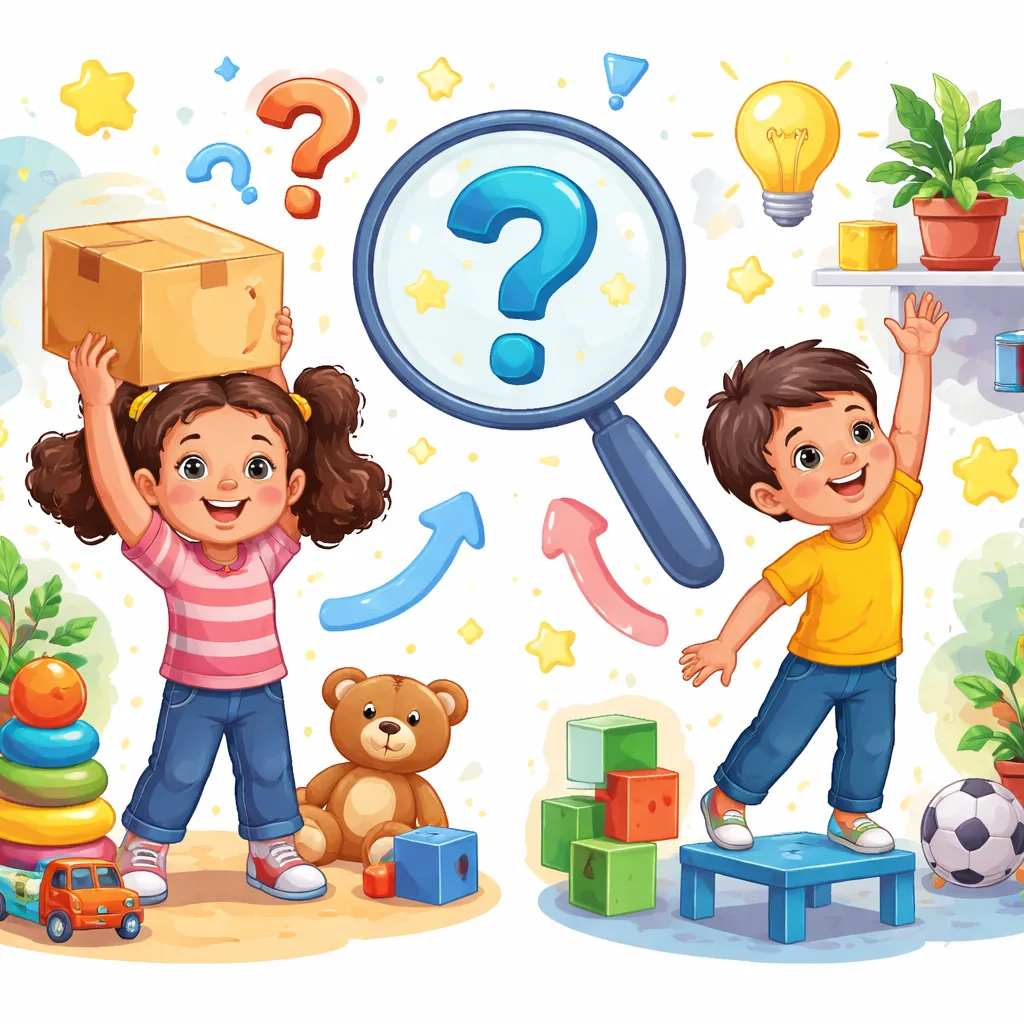

Hello, word explorer! Have you ever picked up a heavy box? Or put your hand up in class? How do you talk about that? Do you lift the box? Or do you raise your hand? They both seem to mean moving something upward. But are they the same? They are like two different kinds of upward movement. One is a powerful weightlifter's heave. One is a careful, controlled hoist. Let's find out! Today, we explore the word friends "lift" and "raise". Knowing their secret is a superpower. It makes you a master of upward motion. Let's start our lifting adventure!
First, let's be Motion Detectives. Listen at home. Here are two sentences. "Can you help me lift this heavy suitcase onto the luggage rack?" "Please raise the window blind to let in the morning light." They both talk about moving up. A suitcase. A blind. Do they sound the same? One feels like using strength against weight. One feels like a deliberate, often lighter, upward move. Can you sense it? Great observation! Now, let's look at the action.
Adventure! Inside the World of Moving Up
Welcome to the world of moving up! "Lift" and "raise" are two different upward movers. Think of "lift" as a powerful weightlifter. It is about moving something heavy upward, often with effort. Think of "raise" as a careful flag-hoister. It is about moving something to a higher position or level, often in a controlled way. Both are about upward motion. But they move in slightly different ways. Let's learn about each mover.
The Weightlifter vs. The Flag-Hoister Think about the word "lift". "Lift" feels like a weightlifter. It emphasizes the effort of moving something upward, especially against gravity. It is often about physical objects. I lift weights. The crane lifts the beam. The fog lifts. It suggests overcoming weight. Now, think about "raise". "Raise" feels like a flag-hoister. It emphasizes the result of moving something to a higher position or level. It can be physical or abstract. Raise your hand. Raise the price. Raise a family. "Lift" is the weightlifter. "Raise" is the flag-hoister. One is about effort. The other is about the result.
Effort Against Weight vs. Moving to a Higher Level Let's compare their focus. "Lift" often, but not always, deals with heavier objects and the physical effort. You lift a child, lift a ban, or lift your spirits. "Raise" is about the action of increasing or elevating. It is often used for non-physical things. You raise a question, raise your voice, or raise animals. "Lift" can be about removing (lift a ban). "Raise" is about increasing (raise standards). One is about upward force. The other is about upward change.
Their Special Word Partners and Common Contexts Words have best friends. "Lift" loves to team up with heavy or burdensome things. Lift off. Lift a finger. Lift your head. It is about effort. "Raise" teams up with levels and awareness. Raise the bar. Raise awareness. Raise money. Note: We say "lift a suitcase". We say "raise your hand". They are often fixed.
Let's visit a school scene. In gym class, you might lift a light dumbbell to build strength. This is about the physical effort of moving weight. In class, you raise your hand to ask a question. This is the controlled action of moving your hand up. Using "raise" for the dumbbell is okay, but "lift" is more common for weights. Using "lift" for your hand is odd; we always say "raise your hand".
Now, let's go to the playground. You and a friend try to lift a big log to build a fort. This requires combined strength. You are on the seesaw. You push off the ground to raise your side into the air. The word "lift" paints the effort with the heavy log. The word "raise" paints the controlled upward movement of the seesaw.
Our Little Discovery So, what did we find? "Lift" and "raise" are both about moving upward. But they have different feelings. "Lift" often emphasizes the effort of moving something upward, especially something heavy or burdensome. "Raise" often focuses on the action of moving something to a higher position or level, and it is used for both physical and abstract things. You lift a heavy box. You raise a flag. Knowing this helps you choose the perfect word for upward movement.
Challenge! Become an Upward Motion Word Champion
Ready for a fun test? Let's try your new skills!
"The Best Choice" Challenge Let's imagine a nature scene. An ant finds a large seed. It works with other ants to lift the heavy seed and carry it home. This is an effort against weight. A sunflower grows in a field. It slowly turns its head to raise its face toward the sun. This is a controlled movement to a higher position. "Lift" wins for the ants' heavy effort. "Raise" is the champion for the sunflower's deliberate tilt.
"My Sentence Show" Your turn to create! Here is your scene: Helping in the garden. Can you make two sentences? Use "lift" in one. Use "raise" in the other. Try it! Here is an example: "I need to lift this heavy bag of soil to fill the planter." This is about the effort with a heavy object. "We should raise the bird feeder higher so the squirrels can't reach it." This is about moving it to a higher level. Your sentences will show two kinds of upward actions!
"Eagle Eyes" Search Look at this sentence. Can you find the word that could be better? Let's check a home context. "Could you please lift the volume on the TV? I can't hear it very well." Hmm. We usually talk about increasing the volume level, not physically lifting it. The word "raise" is the common and correct choice for increasing levels like sound. "Could you please raise the volume on the TV? I can't hear it very well." "Lift" is for physical objects. Did you spot it? Excellent word work!
Harvest and Action! Turn Knowledge Into Your Superpower
Great exploring! We started thinking "lift" and "raise" were the same. Now we know they are two different upward movers. We can feel the effort of the weightlifter with "lift". We can see the control of the flag-hoister with "raise". You can now talk about moving things up with perfect accuracy. This is a great skill for helping and learning.
What you can learn from this article: You can now feel that "lift" is often used when talking about the effort of moving something heavy upward, like lifting a box, lifting weights, or even lifting someone's mood. You can feel that "raise" is often used for moving something to a higher position or level, especially in a controlled way, like raising your hand, raising a flag, or raising a question. You know that you "lift" heavy things, but you "raise" your expectations. You learned to match the word to the action: "lift" for effort against weight, "raise" for controlled upward movement or increase.
Life practice application: Try your new skill today! If something is heavy, you lift it. If you want to increase something, you raise it. Help someone. Can you lift something for them? Can you raise a good point? You are now a master of upward motion words! Keep helping and communicating clearly.