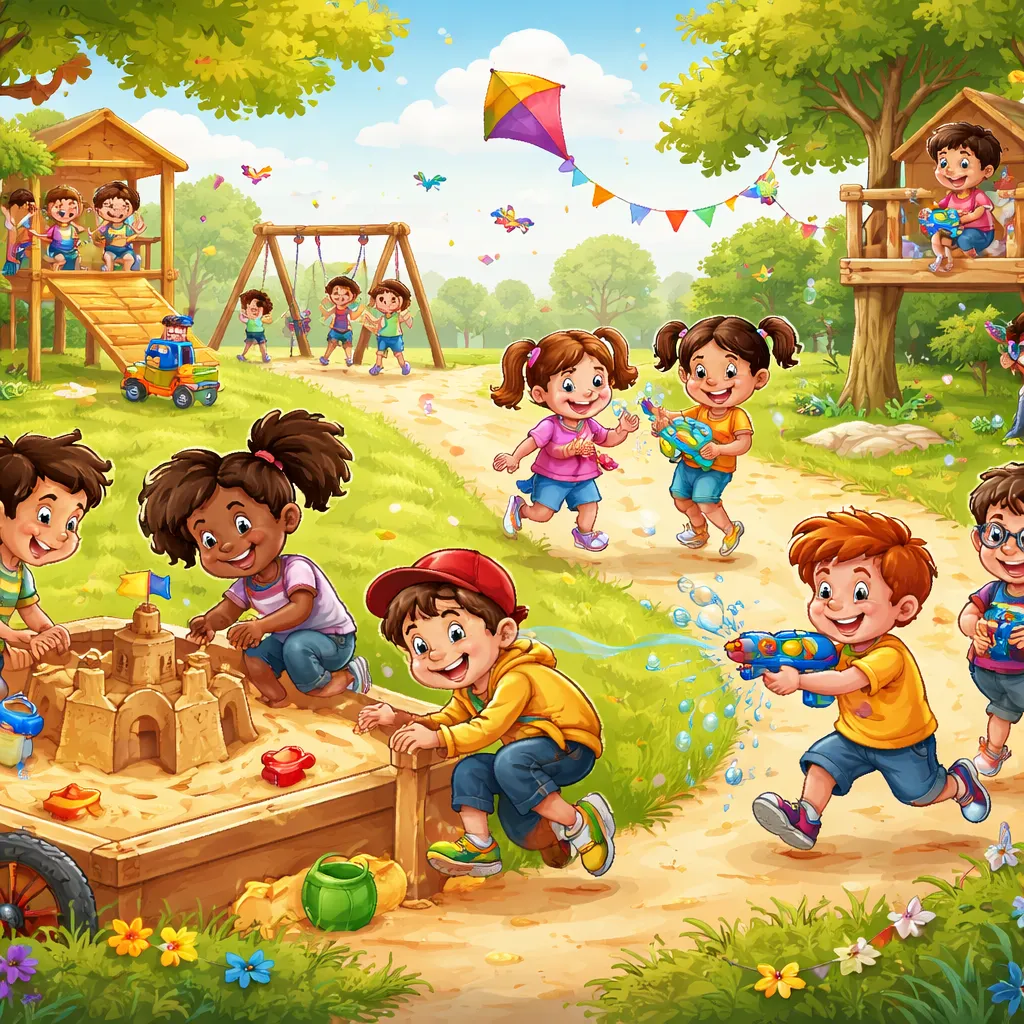

Hello, word explorer! Have you ever had a great time with friends? Maybe building a fort. Or just laughing together. How do you talk about that? Do you play a game? Or do you have fun? They both seem to mean enjoying yourself. But are they the same? They are like two parts of a great video game. One is pressing the buttons and controlling the character. One is the excitement and joy you feel while doing it. Let's find out! Today, we explore the word friends "play" and "have fun". Knowing their secret is a superpower. It makes you a master of describing your awesome time. Let's start our fun adventure!
First, let's be Fun Detectives. Listen at home. Here are two sentences. "My brother and I play a board game together every Saturday morning." "We always have fun when our cousins come to visit." They both talk about good times. A board game. A visit. Do they sound the same? One feels like the activity you do. One feels like the happy feeling you get. Can you sense it? Great observation! Now, let's look at the controller.
Adventure! Inside the World of Enjoyment
Welcome to the world of enjoyment! "Play" and "have fun" are two different parts of a great game. Think of "play" as the game controller in your hands. It is the action, the activity. Think of "have fun" as the laugh in your belly. It is the feeling, the experience. Both are about enjoyment. But one is the doing and the other is the feeling. Let's learn about each part.
The Game Controller vs. The Laugh in Your Belly Think about the word "play". "Play" feels like the game controller. It is the action word. It means to do an activity for enjoyment, especially a game, or to take part in a sport. It is the thing you do. I play the piano. Let's play tag. The cat plays with a string. It is an active verb. Now, think about "have fun". "Have fun" feels like the laugh in your belly. It is a phrase about the feeling. It means to enjoy yourself, to experience pleasure. It is the result of the activity. Did you have fun at the party? We have fun just talking. "Play" is the controller. "Have fun" is the laugh. One is the action. The other is the feeling.
The Activity vs. The Feeling of Enjoyment Let's compare their focus. "Play" is about the specific activity. It answers "what are you doing?" You can play soccer, play a role, or play a trick. It is about engaging in an activity. "Have fun" is about the emotional result. It answers "how did it feel?" You can have fun at the beach, have fun learning, or have fun watching a movie. "Play" is the doing. "Have fun" is the enjoying. One is the action. The other is the experience.
Their Special Word Partners and Grammar Words have best friends. "Play" loves to team up with games, instruments, and sports. Play a part. Play fair. Play it cool. It is followed by an object. "Have fun" is a phrase by itself. It can be followed by an -ing verb. Have fun swimming! Have a blast. Have the time of your life. Note: We say "play a game". We say "have a good time". They are different.
Let's visit a school scene. In gym class, you play dodgeball. This is the specific sport you are doing. After the game, even if you lost, you can say, "I had fun!" This is about the enjoyable experience. Using "have fun" for the specific action of dodgeball is not precise. Using "play" to describe your feeling is wrong. You play the game and have fun while doing it.
Now, let's go to the playground. You play on the swings. This is the activity. While you are swinging, you laugh and smile. You are having fun. The word "play" paints the action of swinging. The phrase "have fun" paints the happy feeling you get from it.
Our Little Discovery So, what did we find? "Play" and "have fun" are both about enjoyment, but they are different. "Play" is a verb for the activity of doing something for enjoyment, like a game or a sport. "Have fun" is a phrase that describes the feeling of enjoyment itself. You play a video game. You have fun while playing it. Knowing this helps you share both your actions and your feelings perfectly.
Challenge! Become a Fun Word Champion
Ready for a fun test? Let's try your new skills!
Challenge Let's imagine a nature scene. A group of dolphin calves chase each other in the waves. They are playing. This is the activity they are doing. While they chase, they jump and make happy sounds. They are having fun. This is the feeling they experience. "Play" wins for describing the chasing activity. "Have fun" is the champion for describing their joyful experience.
Your turn to create! Here is your scene: A rainy afternoon indoors with your family. Can you make two sentences? Use "play" in one. Use "have fun" in the other. Try it! Here is an example: "We decided to play a big game of charades in the living room." This describes the activity. "We all had fun acting out silly clues and guessing." This describes the enjoyable feeling. Your sentences will show the action and the feeling!
Search Look at this sentence. Can you find the part that could be better? Let's check a home context. "We will have fun a new card game that my grandma taught me." Hmm. The phrase "have fun" is about the feeling, but here it's trying to describe the activity of doing the game. The word "play" is the correct choice for the activity. "We will play a new card game that my grandma taught me." You can have fun while you play it. Did you spot it? Excellent word work!
Harvest and Action! Turn Knowledge Into Your Superpower
Great exploring! We started thinking "play" and "have fun" were the same. Now we know they are two parts of a great time. We can use the game controller of "play" for the action. We can feel the laugh in our belly with "have fun". You can now talk about your activities and your feelings with perfect accuracy. This is a great skill for sharing your joy.
What you can learn from this article: You can now feel that "play" is the word for the activity of doing something for enjoyment, like playing a game, a sport, or a musical instrument. You can feel that "have fun" is a phrase that means to enjoy yourself, to experience pleasure and happiness during an activity. You know that you "play" hide-and-seek, and you "have fun" while you're doing it. You learned that "play" is the action, and "have fun" is the feeling.
Life practice application: Try your new skill today! Tell a friend what you want to play. After you finish, tell them if you had fun. Ask your family: "What should we play?" and "Did you have fun?" You are now a master of fun words! Keep playing and having wonderful fun.