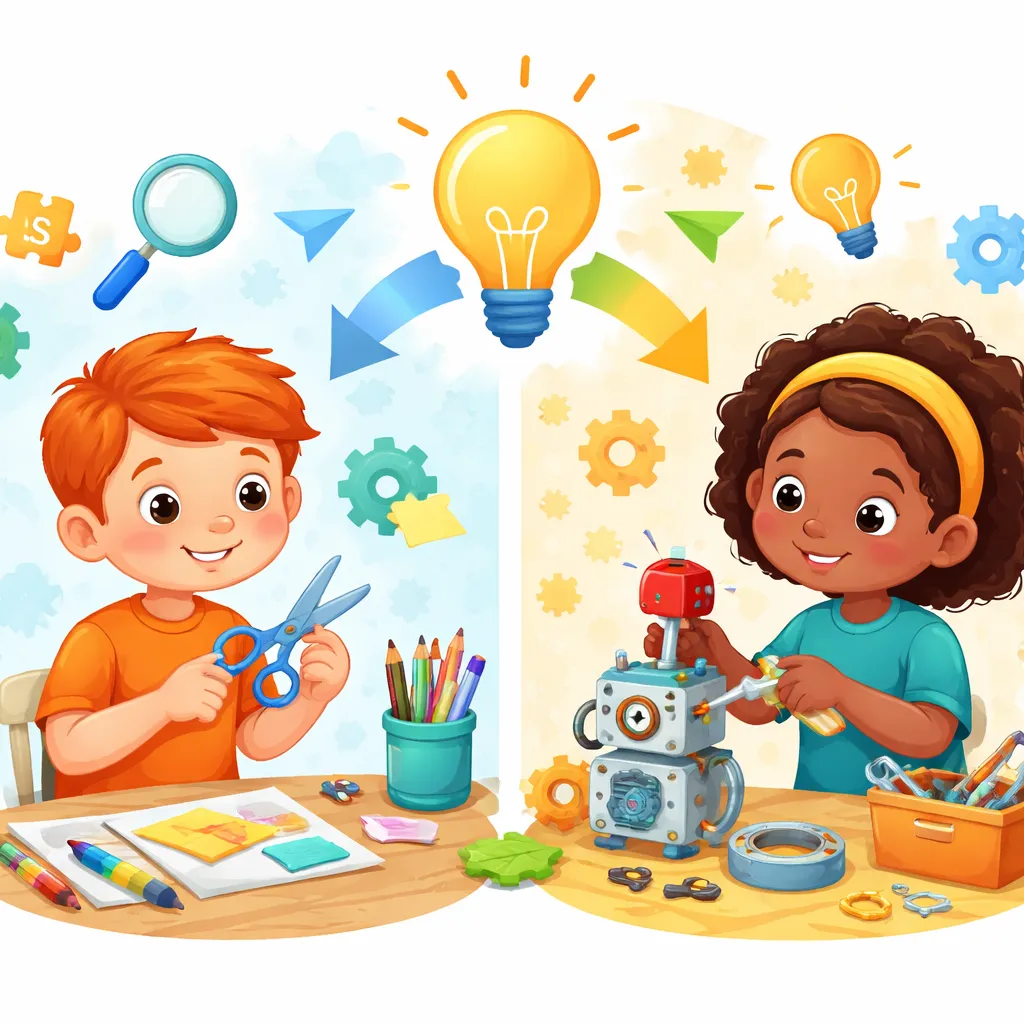

Hey there, word explorer! Have you ever picked up a tool? Maybe a pencil for drawing. Or a cool gadget for a project. How do you talk about that? Do you use the pencil? Or do you utilize it? They both seem to mean doing something with an object. But are they the same? They are like two different approaches to a toolbox. One is grabbing a simple, trusty hammer. One is selecting a special attachment for a precise job. Let's find out! Today, we explore the word friends "use" and "utilize". Knowing their secret is a thinking superpower. It helps you sound smart and precise. Let's start our tool-wielding adventure!
First, let's be Word Scientists. Listen at home. Here are two sentences. "I use a spoon to eat my soup." "A chef might utilize every part of a vegetable to reduce waste." They both talk about employing something. A spoon. Vegetable parts. Do they sound the same? One feels simple and everyday. One feels clever and efficient. Can you sense it? Great observation! Now, let's examine these tools.
Adventure! Inside the World of Employing Things
Welcome to the world of employing things! "Use" and "utilize" are two different toolboxes. Think of "use" as a basic, open toolbox. It holds all the simple tools for everyday jobs. Think of "utilize" as a high-tech toolkit. It is for making the most of a resource in a smart way. Both are about putting something into action. But they do it with different styles. Let's learn about each one.
The Basic Toolbox vs. The High-Tech Kit Think about the word "use". "Use" feels like a basic, open toolbox. It is the simple, common word for employing something. It works for almost any situation. You use a key to open a door. You use your eyes to see. It is direct and clear. Now, think about "utilize". "Utilize" feels like a high-tech toolkit. It means to use something in a clever, effective, or unusual way to get a specific result. Engineers utilize solar power. We can utilize old jars for storage. "Use" is the basic toolbox. "Utilize" is the high-tech kit. One is for any job. The other is for a strategic job.
The Everyday Action vs. The Strategic Action Let's compare their approach. "Use" is the everyday, all-purpose word. It is casual and neutral. Did you use my glue? I use this app for weather. It doesn't imply any special strategy. "Utilize" suggests a thoughtful, efficient, or purposeful use. It often implies making good use of what's available. The team will utilize the data. Plants utilize sunlight for energy. "Use" is for common actions. "Utilize" is for strategic actions. One is general. The other is specific and smart.
Their Special Word Partners and Common Contexts Words have best friends. "Use" loves to team up with everyday objects and actions. Use your phone. Use the bathroom. Get some use out of it. It is extremely common and flexible. "Utilize" has its own special teams. It often pairs with words about resources, systems, and opportunities. Utilize resources. Utilize a method. Utilize space efficiently. Note: We say "make use of". We don't say "make utilize of". They are different.
Let's visit a school scene. In art class, you use a blue crayon to color the sky. This is a simple, direct action. Now, in a science project, you might utilize recycled plastic bottles to build a model ecosystem. This shows you are using them in a clever, purposeful way. Using "utilize" for the crayon is too fancy. Using "use" for the bottles is fine, but "utilize" highlights the clever, purposeful repurposing.
Now, let's go to the playground. You use the swing to go high. This is the simple, intended action. Later, you and your friends utilize the whole playset—the slide, the tower, the bridge—to create an elaborate obstacle course. This shows you are making strategic, creative use of all the equipment. The word "use" paints the simple swinging. The word "utilize" paints the creative obstacle course planning.
Our Little Discovery So, what did we find? "Use" and "utilize" both mean to employ something. But they are used differently. "Use" is the simple, everyday word for employing any object or method. It is common and casual. "Utilize" is a more formal word. It means to use something in a clever, effective, or strategic way, often to achieve a specific purpose. You use a computer. A programmer might utilize a computer's full power. Knowing this helps you choose the right tool for your sentence.
Challenge! Become a Word Tool Expert
Ready for a fun test? Let's try your new skills!
"The Best Choice" Challenge Let's imagine a nature scene. A monkey picks up a stick. It uses the stick to scratch its back. This is a simple, direct use of a tool. Now, a clever crow finds a hard nut. It drops the nut on a road. Cars drive over it and crack the shell. The crow has utilized the traffic as a tool. This is a clever, strategic use of a resource. "Use" wins for the simple back scratch. "Utilize" is the champion for the crow's clever problem-solving.
"My Sentence Show" Your turn to create! Here is your scene: Building a fort in the living room. Can you make two sentences? Use "use" in one. Use "utilize" in the other. Try it! Here is an example: "We can use these blankets for the walls." This is a simple, direct statement. "We can utilize the space under the table as our secret door." This suggests a clever, strategic use of the available space. Your sentences will show two levels of thinking!
"Eagle Eyes" Search Look at this sentence. Can you find the word that could be better? Let's check a home context. "I utilized a pencil to write my name on the paper for the test." Hmm. Writing your name is a very simple, standard action. The word "used" is the natural, everyday choice. "I used a pencil to write my name on the paper for the test." "Utilized" sounds much too formal and fancy for this simple task. Did you spot it? Excellent word work!
Harvest and Action! Turn Knowledge Into Your Superpower
Great exploring! We started thinking "use" and "utilize" were the same. Now we know they are two different levels of employing things. We can open the basic toolbox of "use". We can open the high-tech kit of "utilize". You can now describe how you employ things with perfect accuracy. This is a great skill for thinking and explaining projects.
What you can learn from this article: You can now feel that "use" is the simple, common, everyday word for employing an object, tool, or method for any purpose. You can feel that "utilize" is a more formal word that means to use something in a clever, effective, or strategic way to achieve a specific goal. You know that you "use" a fork to eat, but a scientist might "utilize" a chemical reaction. You learned to match the word to the situation: "use" for everyday actions, "utilize" for strategic, clever applications.
Life practice application: Try your new skill today! Look at an object. How do you normally use it? Can you think of a clever way to utilize it? Explain a school project. Did you simply use materials, or did you utilize them in a smart way? Listen to how teachers and documentaries use these words. You are now a master of tool words! Keep thinking creatively about the world around you.