
Hello, word explorer! Have you ever done your homework? Or seen someone building a house? How do you talk about that? Do you work on your assignment? Or do builders labor on the construction site? They both seem to mean putting in effort. But are they the same? They are like two different engines. One is a reliable, everyday car engine. One is a powerful, heavy-duty truck engine. Let's find out! Today, we explore the word friends "work" and "labor". Knowing their secret is a superpower. It makes you a master of talking about effort. Let's start our engine adventure!
First, let's be Effort Detectives. Listen at home. Here are two sentences. "I have to work on my science project for an hour after school." "The movers will labor all day to carry the heavy furniture into the new house." They both talk about effort. A science project. Moving furniture. Do they sound the same? One feels like a general task. One feels like hard, physical effort. Can you sense it? Great observation! Now, let's look at the engine.
Adventure! Inside the World of Effort
Welcome to the world of effort! "Work" and "labor" are two different engines. Think of "work" as a reliable, everyday car engine. It gets you where you need to go, for any task. Think of "labor" as a powerful, heavy-duty truck engine. It is for big, tough, and often physical jobs. Both are about getting things done. But they handle different loads. Let's learn about each engine.
The Car Engine vs. The Truck Engine Think about the word "work". "Work" feels like a car engine. It is the common, everyday word. It means to do an activity that needs effort. It is very general. I work at my desk. The clock works. This plan will work. It can be mental, physical, easy, or hard. Now, think about "labor". "Labor" feels like a truck engine. It is a stronger, more formal word. It often means to do hard physical work, or to work with great effort. It suggests difficulty. They labor in the fields. She was in labor. The engine labored up the hill. "Work" is the car engine. "Labor" is the truck engine. One is general. The other is for heavy loads.
General Effort vs. Hard, Physical Effort Let's compare their load. "Work" is a neutral word for any kind of effort. You can work a puzzle, work a job, or a machine can work. It doesn't specify how hard it is. "Labor" emphasizes the difficulty and strain of the work. It is often about physical toil or struggling. Men and women labor to build roads. The writer labored over the sentence. "Work" is for any task. "Labor" is for tough tasks. One is a walk. The other is a hard hike.
Their Special Word Partners and Common Uses Words have best friends. "Work" loves to team up in countless common phrases. Work out. Work on it. Work of art. It is very flexible. "Labor" has its own special, often more serious teams. Labor of love. Labor union. Labor Day. Note: We say "go to work". We say "manual labor" (physical work). They are different.
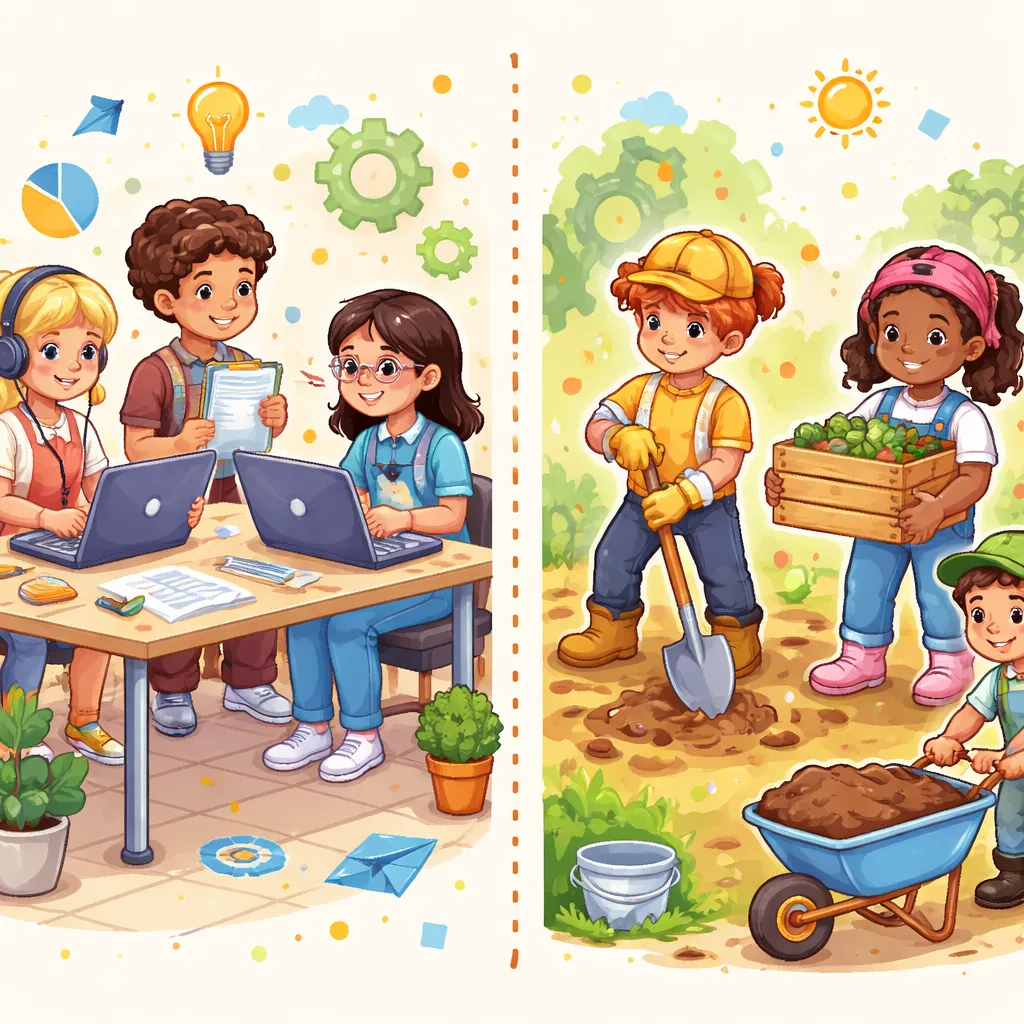
Let's visit a school scene. You work on a group presentation with your classmates. This is a general effort, maybe at a desk. Now, imagine the school's gardening club. They are moving big bags of soil and digging new beds. They are laboring under the hot sun. This is hard, physical work. Using "labor" for the presentation is too strong. Using "work" for the gardening is okay, but "labor" better captures the physical strain.
Now, let's go to the playground. You work on your skateboarding trick, trying again and again. This is effort, but not necessarily heavy. You see workers installing new playground equipment. They labor to mix concrete and lift heavy metal parts. The word "work" paints your practice. The word "labor" paints the workers' strenuous job.
Our Little Discovery So, what did we find? "Work" and "labor" are both about effort. But they are used for different levels. "Work" is the common, general word for any activity that needs effort. It can be easy or hard, mental or physical. "Labor" is a stronger word. It often means hard physical work, or working with great difficulty. You work on a computer. You labor on a farm. Knowing this helps you describe effort perfectly.
Challenge! Become an Effort Word Champion
Ready for a thoughtful test? Let's try your new skills!
"The Best Choice" Challenge Let's imagine a nature scene. A bee flies from flower to flower. It is doing its job. The bee will work to collect nectar all day. This is its general, ongoing activity. Now, watch an ant. It is carrying a piece of food that is much larger than itself. The ant strains and struggles. The ant will labor to drag the heavy load back to the nest. This is a specific act of hard, strenuous effort. "Work" wins for the bee's regular job. "Labor" is the champion for the ant's difficult struggle.
"My Sentence Show" Your turn to create! Here is your scene: Helping to clean out the garage. Can you make two sentences? Use "work" in one. Use "labor" in the other. Try it! Here is an example: "My sister and I will work together to sort the old books into boxes." This is a cooperative, general effort. "My dad will labor to move the heavy, old freezer by himself." This is a difficult, strenuous task. Your sentences will show two levels of effort!
"Eagle Eyes" Search Look at this sentence. Can you find the word that could be better? Let's check a home context. "I labored on my math worksheet for fifteen minutes before dinner; it was pretty easy." Hmm. The word "labored" suggests hard, strenuous effort, but the worksheet was easy. The word "worked" is the correct, neutral choice. "I worked on my math worksheet for fifteen minutes before dinner; it was pretty easy." "Labored" doesn't match the easy task. Did you spot it? Excellent word work!
Harvest and Action! Turn Knowledge Into Your Superpower
Great exploring! We started thinking "work" and "labor" were the same. Now we know they are two different engines. We can use the car engine of "work" for everyday tasks. We can use the truck engine of "labor" for heavy-duty jobs. You can now talk about effort with perfect accuracy. This is a great skill for understanding and respecting all kinds of work.
What you can learn from this article: You can now feel that "work" is the common, everyday word for any activity that needs effort, whether it's a job, homework, or a machine functioning. You can feel that "labor" is a stronger, more formal word that often means hard physical work or working with great difficulty and strain. You know that you "work" on a puzzle, but construction workers "labor" to build a bridge. You learned to match the word to the effort: "work" for general effort, "labor" for hard, strenuous effort.
Life practice application: Try your new skill today! Think about your chores. Do you work on them or labor at them? Thank people who labor in hard jobs. Listen to the news. Do they talk about "work" or "labor"? You are now a master of effort words! Respect all effort, from light work to hard labor.