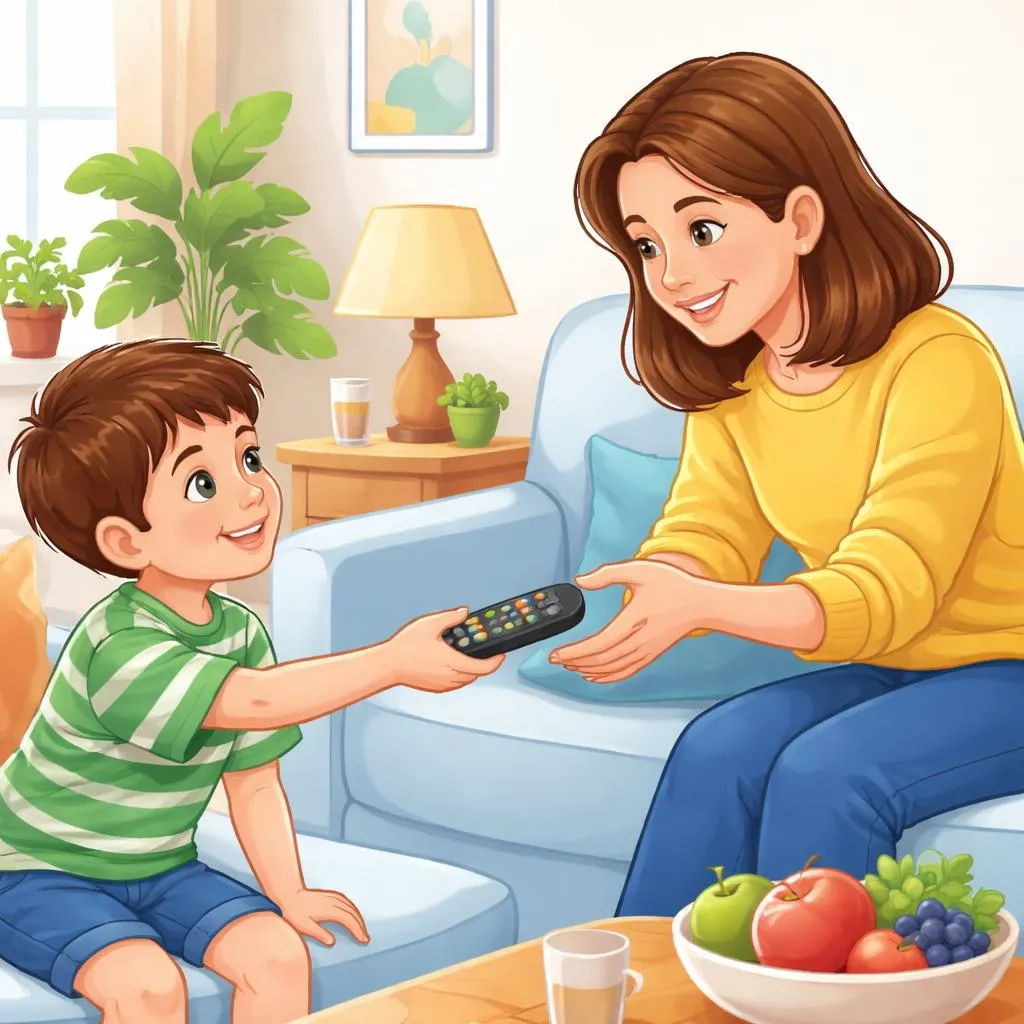

What Do These Expressions Mean? “Give it to me” and “pass it here” both ask someone to hand you an object. They request that a person transfers an item to your hand. Children hear these words when parents need something they are holding. Both ask for cooperation.
“Give it to me” means place the object directly into my hand. It is direct and clear. A parent says it when a child holds something dangerous. It feels urgent and firm.
“Pass it here” means move the object to me, often across a space. It is slightly softer and more cooperative. A child says it when reaching for a crayon across a table. It feels casual and friendly.
These expressions seem similar. Both ask for an object to change hands. Both request help. But one can feel demanding while the other feels polite.
What's the Difference? One is more direct. The other is more casual. “Give it to me” is very clear. It works well for safety or urgency. It can sound harsh if your voice is sharp.
“Pass it here” is softer and more of a request. It implies sharing or helping. It works well at a table or in a game. It rarely sounds rude.
Think of a child holding scissors by the blade. “Give it to me” is the right choice. Speed matters. Safety matters. “Pass it here” would be too slow.
Now think of a child with the salt shaker. “Pass it here, please” is perfect. “Give it to me” would sound strange. One is for safety. One is for manners.
One is for taking. One is for sharing. “Give it to me” focuses on you getting the item. “Pass it here” focuses on the movement between people. Choose based on relationship and risk.
Also, “pass it here” usually travels across a space. “Give it to me” can be from right next to you. Distance matters.
When Do We Use Each One? Use “give it to me” for urgent or direct requests. Use it for safety, clear instructions, or when you are close. Use it with people you know well. It fits quick, necessary moments.
Examples for urgency: “Give me the scissors. They are sharp.” “Give me your hand. I need to clean the cut.” “Give me the phone. I need to call for help.”
Use “pass it here” for casual, polite requests. Use it at the table, in a car, or across a room. Use it when you want to sound kind. It fits everyday sharing.
Examples for politeness: “Pass the water, please. I am thirsty.” “Pass the remote here. I want to change the channel.” “Can you pass that book here? Thank you.”
Children need both phrases. “Give it to me” for safety and urgency. “Pass it here” for manners and sharing. One protects. One connects.
Example Sentences for Kids Give it to me: “Give me the toy. It is time to clean up.” “Give me your plate. I will wash it.” “Give me the map. I know where we are going.”
Pass it here: “Pass the glue here. I need to fix this.” “Pass the crayons here when you are done.” “Can you pass the snack here? Thank you.”
Notice “give it to me” often has a direct object. “Pass it here” often says “please” or “can you.” One is for orders. One is for requests. Match your words to the situation.
Parents can use both. “Give me your shoes. They are muddy.” (direct) “Pass the napkins here, please.” (polite) Children learn tone from your example.
Common Mistakes to Avoid Some children say “give it to me” when they should say “pass it here.” That sounds bossy at the dinner table. For shared items, use the softer phrase. Manners matter.
Wrong: “Give me the butter.” Right: “Please pass the butter here.”
Another mistake: saying “pass it here” for something urgent. If a child is about to drop glass, say “give it to me.” Speed is kind in danger. Do not worry about politeness in emergencies.
Wrong: “Pass the glass carefully” (as it falls). Right: “Give it to me now!”
Some learners forget to say “please” with “give it to me.” Add “please” whenever you can. Urgency does not mean rudeness. “Give it to me, please” is still fast and kind.
Also avoid grabbing while you speak. Use your words first. If the child does not respond, then reach. Hands should wait for words when possible. Respect teaches respect.
Easy Memory Tips Think of “give it to me” as a hand reaching out fast. The hand is open but urgent. Safety or need drives the speed. Direct and clear.
Think of “pass it here” as a hand waving gently. The hand invites the object across a space. Sharing and cooperation drive the motion. Polite and warm.
Another trick: remember the distance. “Give” works close up. “Pass” works across a space. Close gets “give it to me.” Across gets “pass it here.”
Parents can say: “Give for close and quick. Pass for table or a lick.” That means near and urgent gets “give.” Across a table or room gets “pass.”
Practice at dinner. “Pass the bread, please.” (across table) “Give me your cup so I can refill it.” (close up) Your child learns the difference naturally.
Quick Practice Time Let us try a small exercise. Choose the better phrase for each situation.
Your child is holding a wiggly glass of water far from the table. It might spill. a) “Pass it here carefully.” b) “Give it to me right now, please.”
Your family is eating dinner. The salt is near your child, far from you. a) “Give me the salt.” b) “Please pass the salt here.”
Answers: 1 – b. A possible spill needs the direct “give it to me.” 2 – b. A dinner table fits the polite “pass it here.”
Fill in the blank: “When I need a pencil that my friend is using across the desk, I say ______.” (“Pass it here” fits a classroom sharing moment.)
One more: “When my little sister is about to put a coin in her mouth, I say ______.” (“Give it to me” fits choking hazard urgency.)
Asking for things is part of life. “Give it to me” protects in danger. “Pass it here” shares in kindness. Both get you what you need. One saves. One connects.
Wrap-up “Give it to me” hands an object directly, often with urgency. “Pass it here” moves an object across space with politeness. Use “give” for safety and close urgent needs. Use “pass” for tables and kind sharing. Both phrases ask for help. Kind words make the help feel good for everyone.