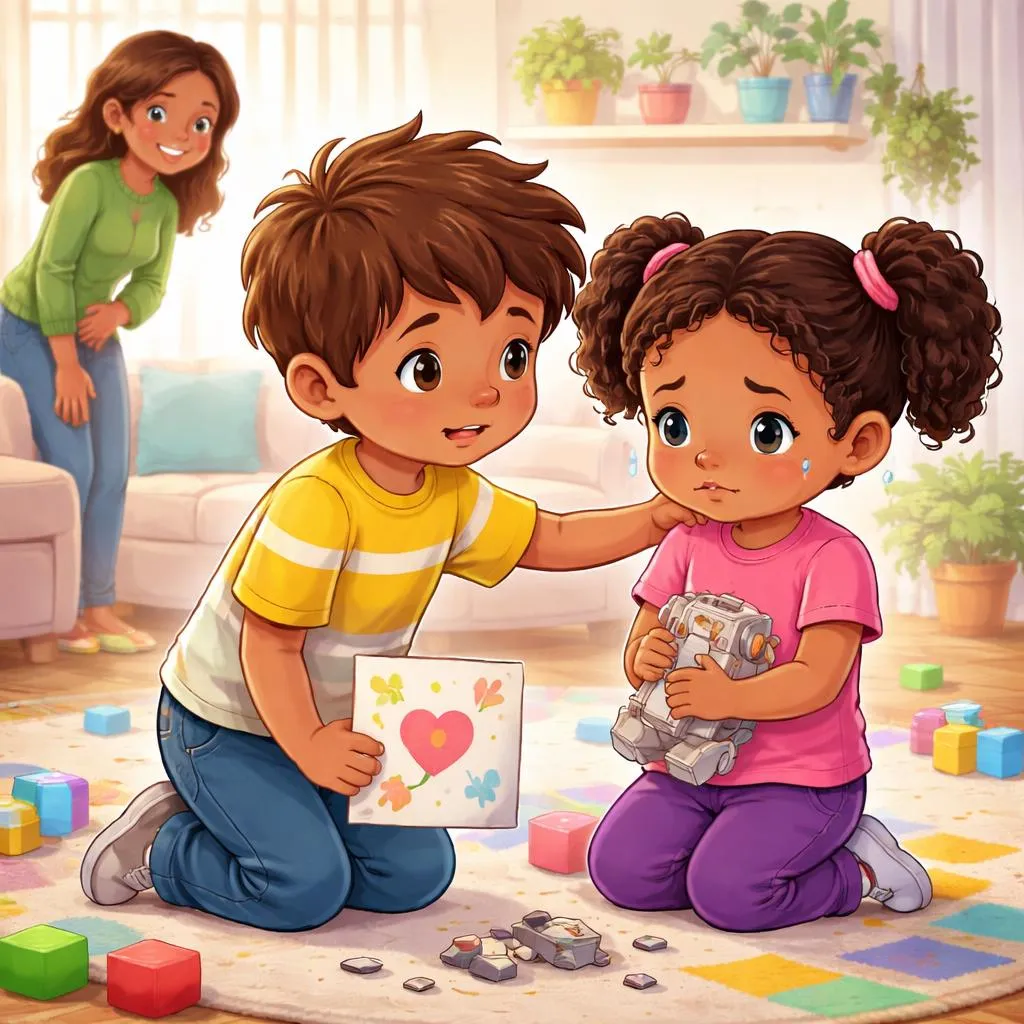

What Do These Expressions Mean? “Say sorry” and “apologize” both tell someone to express regret for a mistake or hurt. They instruct a child to admit they were wrong and show they feel bad. Children hear these words after hitting, breaking something, or saying something mean. Both repair relationships.
“Say sorry” means speak the words “I'm sorry” to the person you hurt. It is simple and direct. A parent says it when a child pushes a friend. It teaches the basic phrase.
“Apologize” means express regret, which can include saying sorry and also explaining why you were wrong. It sounds more formal and mature. A parent says it for bigger mistakes or when a deeper understanding is needed. It teaches the full act of making amends.
These expressions seem similar. Both say “admit you did something wrong.” Both help heal hurt feelings. But one is about the words while one is about the full act of making things right.
What's the Difference? One is about saying the word. One is about the full act of making amends. “Say sorry” teaches the phrase. It is the first step in apologizing. It is for young children learning the words.
“Apologize” is about the whole process. It includes saying sorry, explaining why you were wrong, and trying to fix the hurt. It is for older children who can understand cause and effect. It teaches deeper responsibility.
Think of a child who broke a friend's toy. “Say sorry to your friend” teaches the words. “Apologize by saying sorry and offering to fix the toy” teaches the full repair. One is the minimum. One is the complete act.
One is for everyday mistakes. The other is for bigger hurts. “Say sorry” works for small accidents. “Apologize” works for intentional meanness or big mistakes. Use the first for small things. Use the second for bigger lessons.
Also, “apologize” can feel very grown-up. A young child may not understand the word. Teach “say sorry” first. Then introduce “apologize” as they grow.
When Do We Use Each One? Use “say sorry” for small, everyday mistakes. Use it for accidental bumps, forgotten promises, or minor messes. Use it to teach the basic habit. It fits quick repairs.
Examples at home: “Say sorry for pushing your brother.” “You broke the crayon. Say sorry and give it back.” “Say sorry. You didn't mean to bump her.”
Use “apologize” for bigger mistakes and deeper lessons. Use it when a child was mean on purpose or caused significant harm. Use it to teach the full process of making amends. It fits important teaching moments.
Examples for deeper apologies: “You called your friend a name. You need to apologize and tell her why it was wrong.” “You lied to me. I need a real apology, not just sorry.” “Apologize for breaking the window. Then help pay for it with your allowance.”
Children need both phrases. “Say sorry” for small accidents. “Apologize” for bigger mistakes and learning to make things right. Both build responsible children.
Example Sentences for Kids Say sorry: “Say sorry for grabbing the toy.” “You stepped on her foot. Say sorry.” “Say sorry and then ask if she is okay.”
Apologize: “You need to apologize for spreading that rumor.” “Apologize to your teacher for your behavior.” “A real apology means saying sorry and explaining how you will do better.”
Notice “say sorry” is quick and simple. “Apologize” is deeper and more formal. Children learn both. One for small fixes. One for big repairs.
Parents can use both. Small bump: “say sorry.” Big hurt: “you need to apologize and make it right.” Children learn different levels of responsibility.
Common Mistakes to Avoid Some parents force a child to say sorry when they don't mean it. A forced “sorry” teaches nothing. Instead, talk about why the child should feel sorry. Then help them apologize from the heart.
Wrong: “Say sorry right now!” (child mumbles “sorry” without feeling). Better: “How would you feel if someone did that to you? That's why we apologize.”
Another mistake: accepting “sorry” as enough for a big hurt. If a child was cruel, “sorry” is not enough. They need to apologize fully and show change. Teach that apologies come with changed behavior.
Wrong: Child hits friend. Says “sorry.” Parent says “okay.” Better: “Sorry is a start. Now what will you do to make sure you don't hit again?”
Some learners forget that an apology can be written. A shy child can write a note or draw a picture. The words matter, not just the voice.
Also avoid punishing a child who is trying to apologize. If they say sorry, accept it kindly. Then help them do better next time. Punishment after an apology teaches that it's never safe to admit being wrong.
Easy Memory Tips Think of “say sorry” as a bandage. The bandage covers a small cut. Quick and simple. For small hurts.
Think of “apologize” as a cast for a broken bone. The cast takes time and care. Healing is deeper. For big hurts.
Another trick: remember the size. “Say sorry” is for small mistakes. “Apologize” is for big mistakes. Small gets “say sorry.” Big gets “apologize.”
Parents can say: “Sorry for the little bump. Apologize for a thump.” That means small accidents get “say sorry.” Big, hurtful actions get “apologize.”
Practice at home. Accidental bump: “say sorry.” Mean words to a friend: “you need to apologize fully.” Two different levels. One responsible child.
Quick Practice Time Let us try a small exercise. Choose the better phrase for each situation.
A child accidentally knocks over a friend's block tower while running. a) “Apologize for knocking the tower.” b) “Say sorry. Help him rebuild it.”
A child calls another child a mean name on purpose. The parent wants to teach a deep lesson. a) “Say sorry for the name.” b) “You need to apologize. Tell him why it was wrong and promise not to do it again.”
Answers: 1 – b. An accident fits the quick “say sorry.” 2 – b. Intentional meanness fits the deeper “apologize.”
Fill in the blank: “When my child accidentally steps on someone's foot, I tell them ______.” (“Say sorry” is the quick, simple fix for an accident.)
One more: “When my child breaks a window on purpose, I tell them to ______.” (“Apologize” fits the serious, intentional mistake.)
Sorry heals. “Say sorry” fixes little cracks. “Apologize” mends big breaks. Teach your child both. A child who apologizes well keeps friendships strong.
Wrap-up “Say sorry” teaches the basic words of apology for small, accidental mistakes. “Apologize” teaches the full act of making amends for bigger, intentional hurts. Use “say sorry” for everyday accidents. Use “apologize” when a child needs to understand why they were wrong and show real change. Both phrases heal relationships. A child who learns to apologize grows into an adult who can repair any mistake.