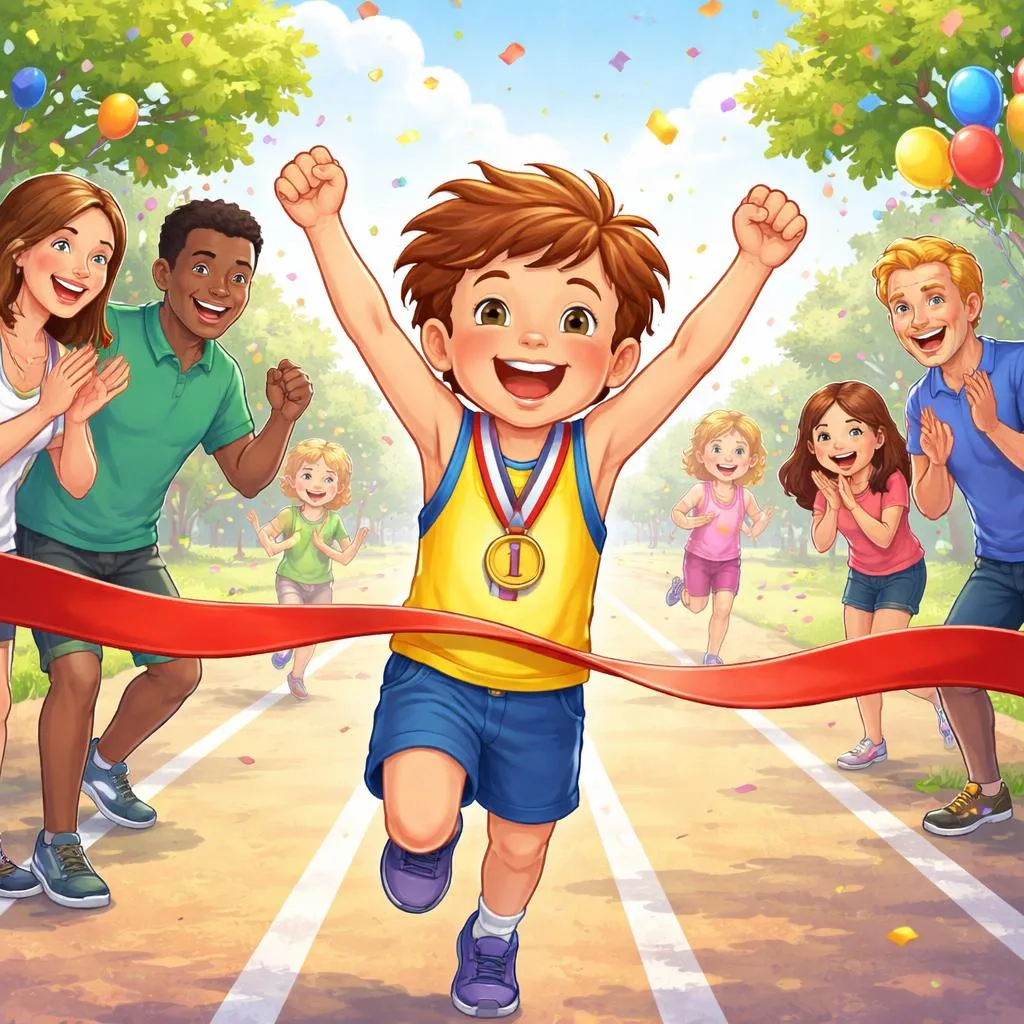

What Do These Expressions Mean? “You win” and “you are the winner” both announce success in a competition. They tell a child that they have beaten others or reached a goal first. Children hear these words after races, games, or contests. Both celebrate achievement.
“You win” means you have beaten the other players in this contest. It is short and excited. A child says it at the end of a board game. It feels like a joyful shout.
“You are the winner” means you are the person who came first. It is clearer and more official. A parent says it at a sports award ceremony. It feels like a formal announcement.
These expressions seem similar. Both celebrate coming in first. Both make the child feel proud. But one is a quick, excited phrase while one is a clear statement.
What's the Difference? One is short and excited. One is clear and official. “You win” is what you shout during a game. It is fast and fun. It fits friendly competition.
“You are the winner” is what you say to make it official. It names the title. It is for ceremonies or big moments. It feels more formal.
Think of a child finishing a board game. “You win! Good game” is perfect. “You are the winner of Monopoly” is also fine but longer. One is for quick play. One is for announcement.
One is for speaking. The other is for writing or formal praise. “You win” is what you say in the moment. “You are the winner” is what a trophy says. Use the first for fun. Use the second for special moments.
Also, “you win” can be used when someone convinces you. “Okay, you win, let's do it your way.” “You are the winner” never means that. Context matters.
When Do We Use Each One? Use “you win” for most everyday games. Use it at the end of races, card games, or video games. Use it to be excited and quick. It fits friendly play.
Examples at home: “You win! That was a great race.” “You win again. You are too fast.” “You win. Good game, buddy.”
Use “you are the winner” for formal or special moments. Use it at an award ceremony, on a certificate, or for a big tournament. Use it to give a title. It fits official praise.
Examples for formality: “You are the winner of the spelling bee. Come get your ribbon.” “You are the winner! Let's put your name on the trophy.” “You are the winner of this year's art contest.”
Children can use both. “You win” for everyday play. “You are the winner” for big moments. Both make a child proud.
Example Sentences for Kids You win: “You win! I can't beat you.” “You win this round. Let's play again.” “You win. That was fun.”
You are the winner: “You are the winner of the reading contest.” “You are the winner! Come to the front.” “You are the winner. I am so proud of you.”
Notice “you win” is short and excited. “You are the winner” is longer and formal. Children learn both. One for play. One for ceremony.
Parents can use both. Finished a game: “you win.” Received a trophy: “you are the winner.” Children learn different celebration words.
Common Mistakes to Avoid Some children say “you win” after every small victory. That is fine for games. But winning is not everything. Teach sportsmanship too.
Wrong: “You win” (child says it while bragging and pointing). Better: “You win. Good game.” (kind tone)
Another mistake: saying “you are the winner” for a game that had no clear winner. If it was a tie or just for fun, say “you did great.” Save “winner” for actual contests.
Wrong: “You are the winner of drawing together.” Better: “You both drew beautiful pictures.”
Some learners forget to congratulate the loser. Winning is fun, but so is being kind. Say “good game” to the other person too. Kindness wins every time.
Also avoid focusing only on winning. “You win” is fun, but “you tried hard” is also important. For every winner, there is someone who learned something. Celebrate both.
Easy Memory Tips Think of “you win” as a high five. Smack. Quick. Fun. For everyday games. Excited and fast.
Think of “you are the winner” as a gold medal. The medal goes around the neck. Official and proud. For ceremonies and big wins.
Another trick: remember the length. “You win” is for quick games. “You are the winner” is for big announcements. Quick gets “you win.” Big gets “you are the winner.”
Parents can say: “Win for a grin. Winner for a dinner of honor.” That means everyday play gets “you win.” Special victory gets “you are the winner.”
Practice at home. Card game: “you win.” Soccer trophy: “you are the winner.” Two different victory levels.
Quick Practice Time Let us try a small exercise. Choose the better phrase for each situation.
A child beats their sibling at a quick game of tic-tac-toe. a) “You are the winner of tic-tac-toe.” b) “You win! Let's play again.”
A child wins first place in a school-wide science fair. The principal is announcing. a) “You win the science fair.” b) “You are the winner of the science fair. Come get your medal.”
Answers: 1 – b. A quick, fun game fits the excited “you win.” 2 – b. A formal school announcement fits the official “you are the winner.”
Fill in the blank: “When my friend wins a video game round, I say ______.” (“You win” is the quick, excited, friendly choice.)
One more: “When the coach hands out trophies at the end of the season, she says ______.” (“You are the winner” fits the formal, proud ceremony moment.)
Winning feels good. “You win” celebrates the fun. “You are the winner” celebrates the honor. Teach your child both. But also teach them that trying is just as good as winning.
Wrap-up “You win” is a quick, excited phrase for everyday games and friendly competition. “You are the winner” is a more formal announcement for ceremonies, trophies, and big victories. Use “you win” for board games, video games, and races. Use “you are the winner” for award ceremonies, contests, and official titles. Both phrases celebrate success. A child who learns to win kindly is a true winner in life.