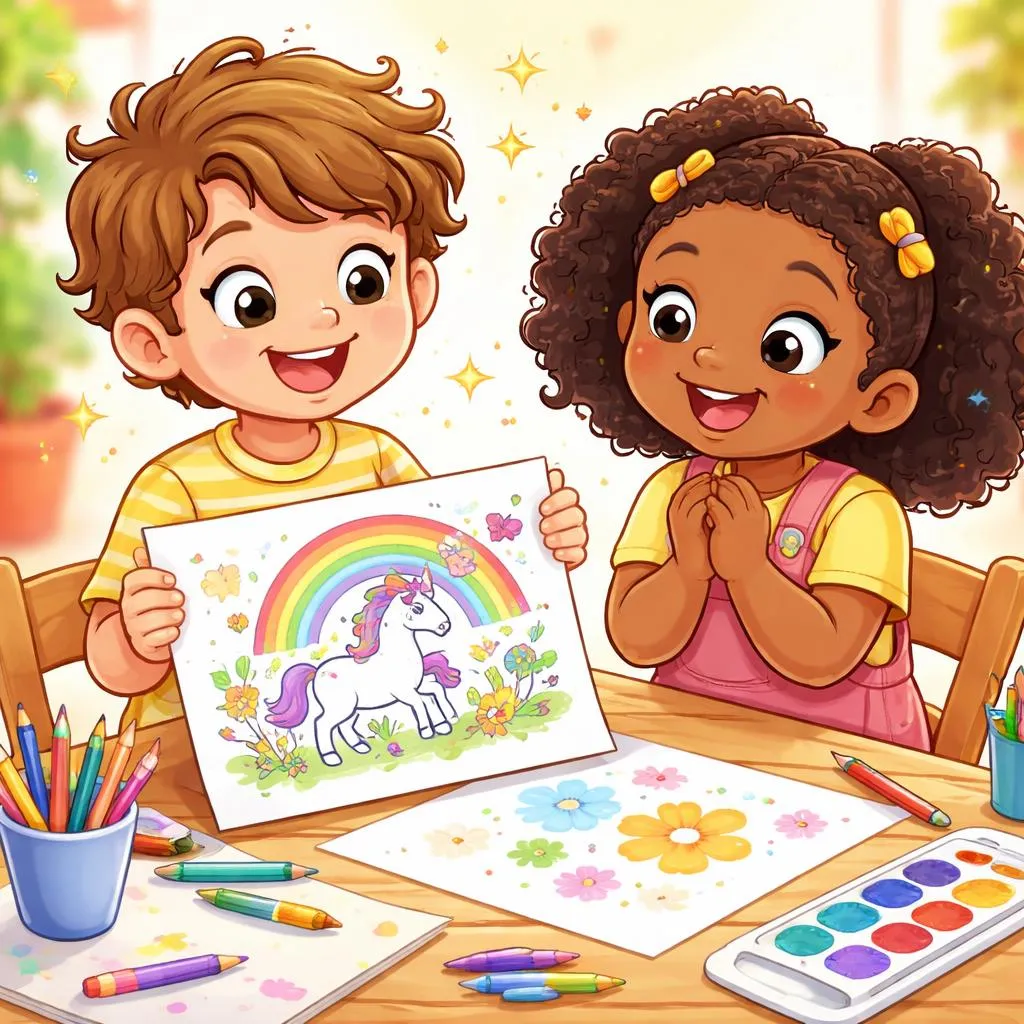

What Do These Expressions Mean? “It's perfect” and “it's flawless” both mean that something has no mistakes or problems. They tell someone that an object or action is exactly right in every way. Children say these words about drawings, cakes, or special moments. Both are strong compliments.
“It's perfect” means it is exactly right with nothing wrong. It is common and warm. A child says it when a puzzle piece snaps in. It is a very positive word.
“It's flawless” means it has no flaws or errors at all. It is stronger and more formal. It is less common in children's speech. It feels like a professional review.
These expressions seem similar. Both say “there is nothing wrong.” Both are high praise. But one is for everyday perfection while one is for flawless, rare perfection.
What's the Difference? One is for everyday “just right.” One is for “no flaws at all.” “It's perfect” works for many things. A perfect snowball, a perfect drawing, a perfect weather day. It is a common, loving word.
“It's flawless” is rarer and more formal. It means there are zero flaws, like a diamond. A child saying “it's flawless” sounds very grown-up. It is correct but unusual.
Think of a child baking a cookie. It is round and golden. “It's perfect” is right. “It's flawless” would be too strong for a cookie. One is for happy satisfaction. One is for rare perfection.
One is for praise. The other is for technical perfection. “It's perfect” is warm. “It's flawless” is cold and analytical. Use the first for love. Use the second for describing a rare gem.
Also, “flawless” is not common in daily child talk. Children learn “perfect” first. Teach “flawless” as a vocabulary word.
When Do We Use Each One? Use “it's perfect” for most high praise. Use it for drawings, gifts, weather, or moments. Use it to show you are very happy. It fits everyday strong compliments.
Examples at home: “Your drawing is perfect. I love it.” “This snowball is perfect for throwing.” “The weather is perfect for a picnic.”
Use “it's flawless” for rare, technical perfection. Use it for performance reviews, diamonds, or incredible art. Use it to describe something without any errors. It fits formal or technical praise.
Examples for formality: “The diamond is flawless. No scratches at all.” “Her dance performance was flawless.” “Your math test was flawless. Every answer was right.”
Children rarely need “flawless.” Mostly, “perfect” is the right word. “Flawless” is good to understand for reading. But for praising a friend, “perfect” is warm.
Example Sentences for Kids It's perfect: “It's perfect! I love the colors.” “This spot is perfect for our picnic.” “Your gift is perfect. Thank you.”
It's flawless: “The ice skater's spin was flawless.” (performance) “The marble statue is flawless.” (art) “Your handwriting on this test is flawless.” (academic praise)
Notice “it's perfect” sounds like a happy hug. “It's flawless” sounds like a professional review. Children learn both. One for love. One for excellence.
Parents can use both. A child's drawing: “it's perfect.” A perfect test score: “your answers were flawless.” Children learn different praise levels.
Common Mistakes to Avoid Some children say “flawless” for everyday things. That sounds too formal or like a robot. Save “flawless” for things that truly have no errors. Use “perfect” for daily happiness.
Wrong: “This sandwich is flawless.” Right: “This sandwich is perfect.”
Another mistake: expecting perfection all the time. Nothing is truly perfect. Teach children that “perfect” is about feeling, not about being error-free. “It's perfect for me” is a kind way to say it.
Wrong: “It's not perfect because the line is crooked.” Better: “I love your drawing. It's perfect to me.”
Some learners forget that “flawless” is rare. Do not use it too often. Save it for special occasions. That keeps the word strong.
Also avoid calling a person “flawless.” Everyone has flaws. That is okay. That is human. Praise effort, not flawlessness.
Easy Memory Tips Think of “it's perfect” as a warm hug. Warm. Happy. Just right. For everyday joy.
Think of “it's flawless” as a magnifying glass. You search for errors and find none. Technical and formal. For rare excellence.
Another trick: remember the feel. “Perfect” is warm and joyful. “Flawless” is cold and technical. Warm gets “perfect.” Technical gets “flawless.”
Parents can say: “Perfect for a happy heart. Flawless for a work of art.” That means everyday joy gets “perfect.” Technical or rare excellence gets “flawless.”
Practice at home. A child's drawing: “it's perfect.” A perfect math test: “your work was flawless.” Two different kinds of praise.
Quick Practice Time Let us try a small exercise. Choose the better phrase for each situation.
A child makes a card for their grandma with crayons. The lines are a little wiggly, but the child loves it. a) “It's flawless.” b) “It's perfect! Grandma will love it.”
A professional pianist plays a song with no mistakes at a concert. a) “That's perfect.” b) “Her performance was flawless.”
Answers: 1 – b. A loving, handmade card with wiggly lines fits the warm “perfect.” 2 – b. A professional performance with zero mistakes fits the technical “flawless.”
Fill in the blank: “When my dad makes my favorite sandwich just the way I like it, I say ______.” (“It's perfect” is the warm, joyful, everyday choice.)
One more: “When a jeweler examines a diamond and finds no scratches, he says it is ______.” (“Flawless” fits the technical, formal, rare-excellence description.)
Perfection is rare. “It's perfect” celebrates joy. “It's flawless” celebrates technical excellence. Teach your child both. A child who knows the difference praises both heart and skill.
Wrap-up “It's perfect” is a warm, joyful compliment for everyday things that make you happy. “It's flawless” is a more formal, technical term for something that has zero errors or imperfections. Use “it's perfect” for drawings, sandwiches, and weather. Use “it's flawless” for performances, diamonds, and perfect test scores. Both phrases are high praise. A child who learns to give perfect and flawless compliments spreads joy and excellence.