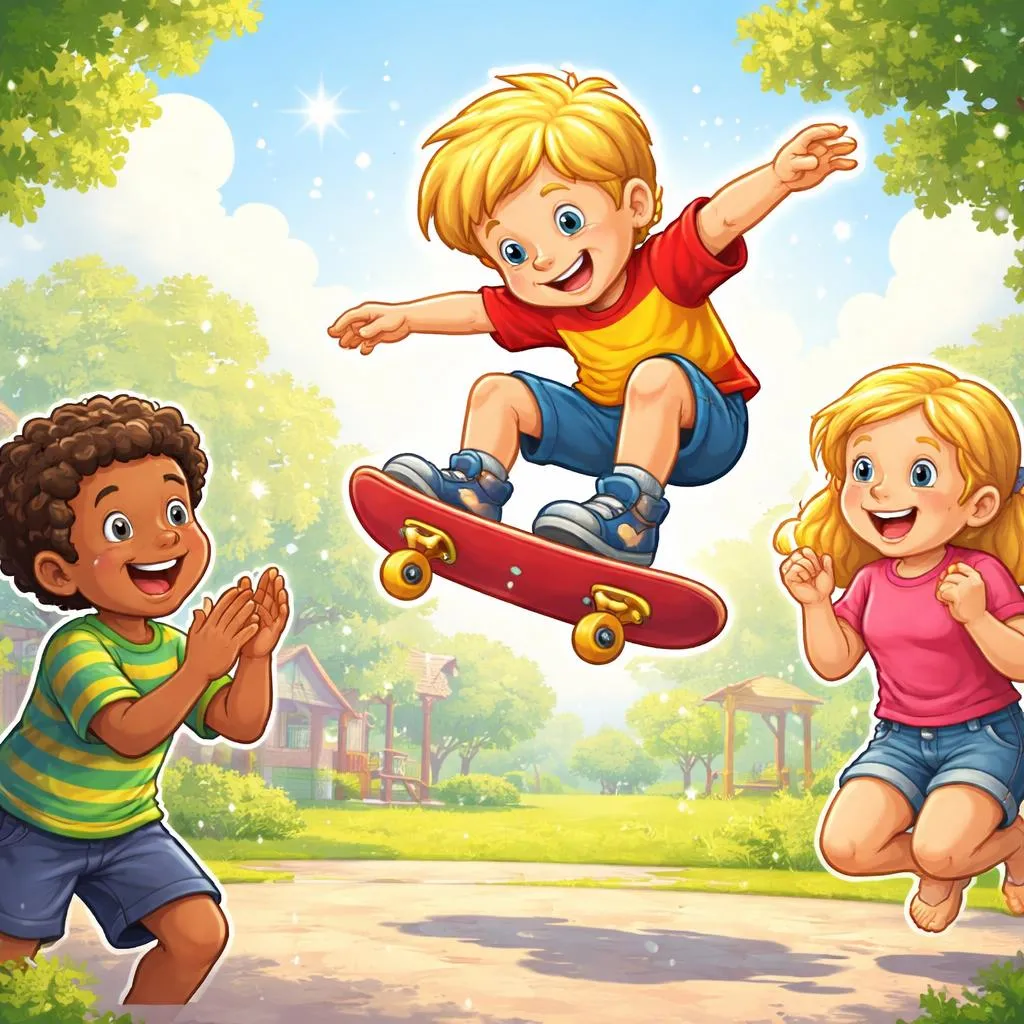

What Do These Expressions Mean? “It's cool” and “it's awesome” both express strong approval and excitement about something. They tell someone that you are impressed or that you really like what you see. Children say these words about tricks, toys, games, or surprises. Both spread positive energy.
“It's cool” means I approve, I like it, or I think it's neat. It is casual and friendly. A child says it when a friend shows a new skateboard trick. It is the everyday slang word.
“It's awesome” means I think it is amazing, impressive, or wonderful. It is stronger and more enthusiastic. A child says it when a friend wins a race or builds something huge. It feels like a joyful shout.
These expressions seem similar. Both say “I really like that.” Both are positive and encouraging. But one is casual while one is much stronger.
What's the Difference? One is for everyday excitement. One is for big wow moments. “It's cool” works for many things. A new pencil, a good move in a game, a nice drawing. It is friendly and easy.
“It's awesome” is for things that truly amaze you. A huge roller coaster, a perfect score, a fantastic gift. It is stronger and more intense. It should be saved for special moments.
Think of a child showing a new eraser. “It's cool” is right. “It's awesome” would be too much for an eraser. One matches the moment. One overshoots.
One is for daily positivity. The other is for peak excitement. “It's cool” is for a friend's good idea. “It's awesome” is for a friend's amazing achievement. Use the first for small things. Use the second for big things.
Also, “cool” can mean a little cold. Context tells you the meaning. “Awesome” always means amazing.
When Do We Use Each One? Use “it's cool” for everyday positive reactions. Use it for a good drawing, a new toy, a fun game. Use it to be friendly and supportive. It fits casual excitement.
Examples at home: “It's cool that you learned to tie your shoes.” “That new video game is cool.” “It's cool how your drawing looks like a real cat.”
Use “it's awesome” for big, exciting events. Use it for winning a competition, seeing a rocket launch, or getting a huge surprise. Use it to show strong enthusiasm. It fits peak excitement.
Examples for big wow moments: “It's awesome that you got the lead in the play!” “That roller coaster was awesome!” “It's awesome that we won the championship!”
Children can use both. “It's cool” for daily. “It's awesome” for special. Both make people feel good.
Example Sentences for Kids It's cool: “It's cool how you solved that puzzle.” “That new backpack is cool.” “It's cool that you can whistle now.”
It's awesome: “It's awesome that you scored three goals!” “The fireworks show was awesome!” “It's awesome that we are going to Disney World!”
Notice “it's cool” is for everyday good things. “It's awesome” is for amazing, rare things. Children learn both. One for daily. One for celebration.
Parents can use both. Good grade: “that's cool.” Winning an award: “that's awesome!” Children learn different excitement levels.
Common Mistakes to Avoid Some children say “awesome” for every little thing. That makes the word less special. Save “awesome” for when you are truly wowed. Use “cool” for daily good news.
Wrong: “Awesome” (you found a penny). Right: “Cool, a penny.”
Another mistake: saying “it's cool” when you don't mean it. If you are not impressed, just say “nice” or “okay.” Empty “cool” feels fake. Mean what you say.
Wrong: “It's cool” (looks away, doesn't care). Better: “Cool” (smiles and looks).
Some learners forget that “cool” can mean trendy. “Those shoes are cool” means stylish. “It's cool” as a feeling is about excitement. Context decides the meaning.
Also avoid using “awesome” for sad or wrong things. Do not say “awesome” when someone gets hurt. Match your word to the mood.
Easy Memory Tips Think of “it's cool” as a pair of sunglasses. Chill. Friendly. Everyday. For casual good news.
Think of “it's awesome” as a cheering crowd. Hands up. Big smiles. Loud. For wow moments.
Another trick: remember the size. “Cool” is for small good things. “Awesome” is for big amazing things. Small gets “cool.” Big gets “awesome.”
Parents can say: “Cool for the pool. Awesome for the applause.” That means daily positivity gets “cool.” Big celebrations get “awesome.”
Practice at home. A new pencil: “cool.” Winning a contest: “awesome!” Two different excitement levels.
Quick Practice Time Let us try a small exercise. Choose the better phrase for each situation.
A child makes a basket in the driveway. It was a nice shot, not a championship. a) “It's awesome!” b) “It's cool. Nice shot.”
A child wins first place in a national science fair. a) “It's cool you won.” b) “It's awesome! You won the whole thing!”
Answers: 1 – b. A nice everyday shot in the driveway fits the casual “cool.” 2 – b. A huge national win fits the enthusiastic “awesome.”
Fill in the blank: “When my friend shows me a new sticker, I say ______.” (“It's cool” is the natural, everyday, friendly choice.)
One more: “When my sister gets accepted to her dream college, I shout ______!” (“It's awesome” fits the huge, celebration-worthy achievement.)
Words have power. “It's cool” spreads daily cheer. “It's awesome” celebrates life's peaks. Teach your child both. A child who knows the right word for the right moment spreads the right kind of joy.
Wrap-up “It's cool” is a casual, everyday expression of approval for small or medium good things. “It's awesome” is a strong, enthusiastic exclamation for amazing, rare, or wow-worthy events. Use “it's cool” for a good drawing, a new toy, or a friend's small success. Use “it's awesome” for winning, huge surprises, or extraordinary achievements. Both phrases make people feel good. A child who learns the difference learns to match their excitement to the moment.