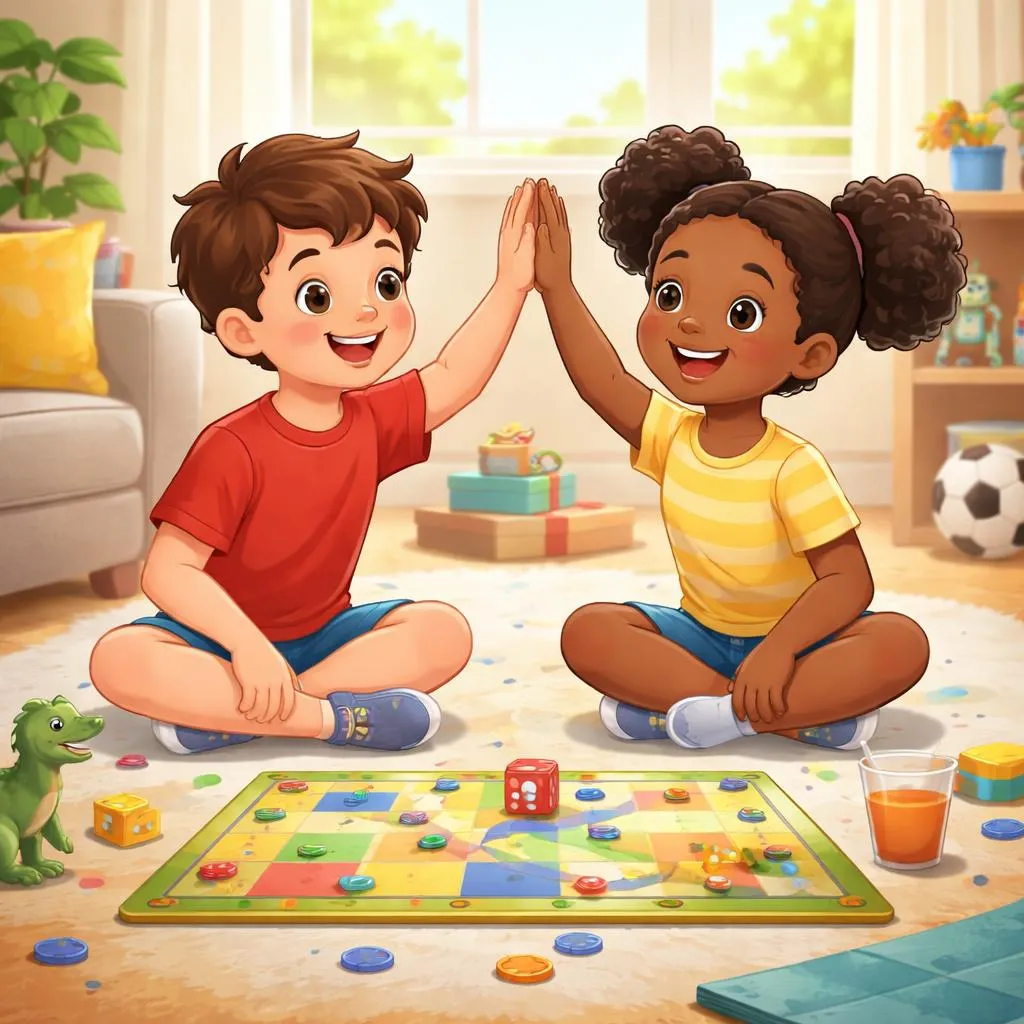

What Do These Expressions Mean? “We tied” and “it's a draw” both announce that a game ended with no single winner. They tell others that both players or teams had the same score. Children say these words after close races, board games, or sports. Both celebrate fairness.
“We tied” means the final scores were equal. It is clear and common. A child says it when the timer runs out with a tied score. It focuses on the equal result.
“It's a draw” also means the game ended with equal scores. It is more formal and often used in tournaments. A child might hear it in chess or official matches. It sounds more grown-up.
These expressions seem similar. Both end a competition without a loser. Both can be said with relief or happiness. But one is for everyday games while one is for formal play.
What's the Difference? One is for casual games. One is for formal competitions. “We tied” is what children say at the playground. It is natural and friendly. It focuses on the shared outcome.
“It's a draw” sounds more official. You hear it in chess, sports broadcasts, or tournament rules. A child saying “it's a draw” sounds very mature. It is correct but less common in daily play.
Think of a child finishing a board game at home. Add the scores. They are the same. “We tied” is perfect. “It's a draw” is also fine but feels like a news report.
One is for speaking. The other is for formal announcements. “We tied” is what kids say to each other. “It's a draw” is what a referee says. Use the first for everyday. Use the second for understanding.
Also, “tie” can be a verb. “We tied the game.” “Draw” is a noun. “The game was a draw.” Both describe the same thing. Children learn both naturally.
When Do We Use Each One? Use “we tied” for most everyday games. Use it for races, card games, board games, or video games. Use it to announce a fair result. It fits friendly competition.
Examples at home: “We tied! We both got 10 points.” “We tied at the finish line.” “We tied. Let's play one more to break the tie.”
Use “it's a draw” for formal games or written rules. Use it for chess, tournaments, or official matches. Use it when reading rules or announcing results in a league. It fits formal competition.
Examples for formality: “In chess, the game can end in a draw.” “The tournament results show a draw.” “The referee called it a draw.”
Children can use both. “We tied” for friendly games. “It's a draw” for understanding official rules. Both show you know how games work.
Example Sentences for Kids We tied: “We tied. No one wins, no one loses.” “We tied. Let's play again.” “We tied. That was a close game.”
It's a draw: “The chess game ended in a draw.” “The score was tied, so it's a draw.” “In a draw, both players are equal.”
Notice “we tied” is about what happened. “It's a draw” is about the result. Children learn both. One for action. One for outcome.
Parents can use both. Finished a game: “we tied.” Reading chess rules: “the game can be a draw.” Children learn different sports language.
Common Mistakes to Avoid Some children get upset about a tie. They want a winner. Teach them that ties are okay. Playing is more important than winning.
Wrong: “I hate ties. I want to win.” Better: “A tie means we were both good.”
Another mistake: saying “it's a draw” for a game that had no score. A draw means equal scores. If no one was keeping score, say “we didn't keep score.” Be accurate.
Wrong: “We played tag. It was a draw.” (tag has no scores) Right: “We tied in our game of checkers.”
Some learners forget that ties can be broken. If you want a winner, play again. Or have a tie-breaker round. Ties are not endings. They are chances to play more.
Also avoid arguing about a tie. If the scores are equal, it's a tie. Accept it. Move on. Good sports accept results.
Easy Memory Tips Think of “we tied” as two ropes. The ropes are knotted together. Equal and together. For friendly games.
Think of “it's a draw” as a drawing board. The board is blank. No one wins. Formal and neutral. For official rules.
Another trick: remember the formality. “We tied” is casual. “It's a draw” is formal. Casual gets “we tied.” Formal gets “draw.”
Parents can say: “Tie for you and I. Draw for the rule book's eye.” That means at home, say “we tied.” Reading official rules, understand “draw.”
Practice at home. Game ends even: “we tied.” Read chess rules: “the game is a draw.” Two different tie announcements.
Quick Practice Time Let us try a small exercise. Choose the better phrase for each situation.
Two siblings finish a board game. They count points. Both have 25. a) “It's a draw.” b) “We tied. That was fun.”
A child reads the official rules of a chess tournament. It explains when no one can win. a) “We tied in chess.” b) “The game ends in a draw.”
Answers: 1 – b. A sibling board game fits the friendly “we tied.” 2 – b. Official tournament rules fit the formal “draw.”
Fill in the blank: “When my friend and I finish a race at the exact same time, I say ______.” (“We tied” is the natural, friendly, everyday choice.)
One more: “When I read the rules for a soccer tournament, it says if the score is even at the end, it's ______.” (“A draw” fits the formal, official language.)
Ties are fair. “We tied” shares the result kindly. “It's a draw” states the rule formally. Teach your child both. A child who accepts ties is a child who values play over winning.
Wrap-up “We tied” is the everyday, friendly phrase children use when a game ends with equal scores. “It's a draw” is a more formal term used in official rules, tournaments, and chess. Use “we tied” for board games, races, and friendly play. Use “it's a draw” for reading rules, chess, or formal competitions. Both phrases end a game without a loser. A child who accepts ties learns that playing together is the real win.