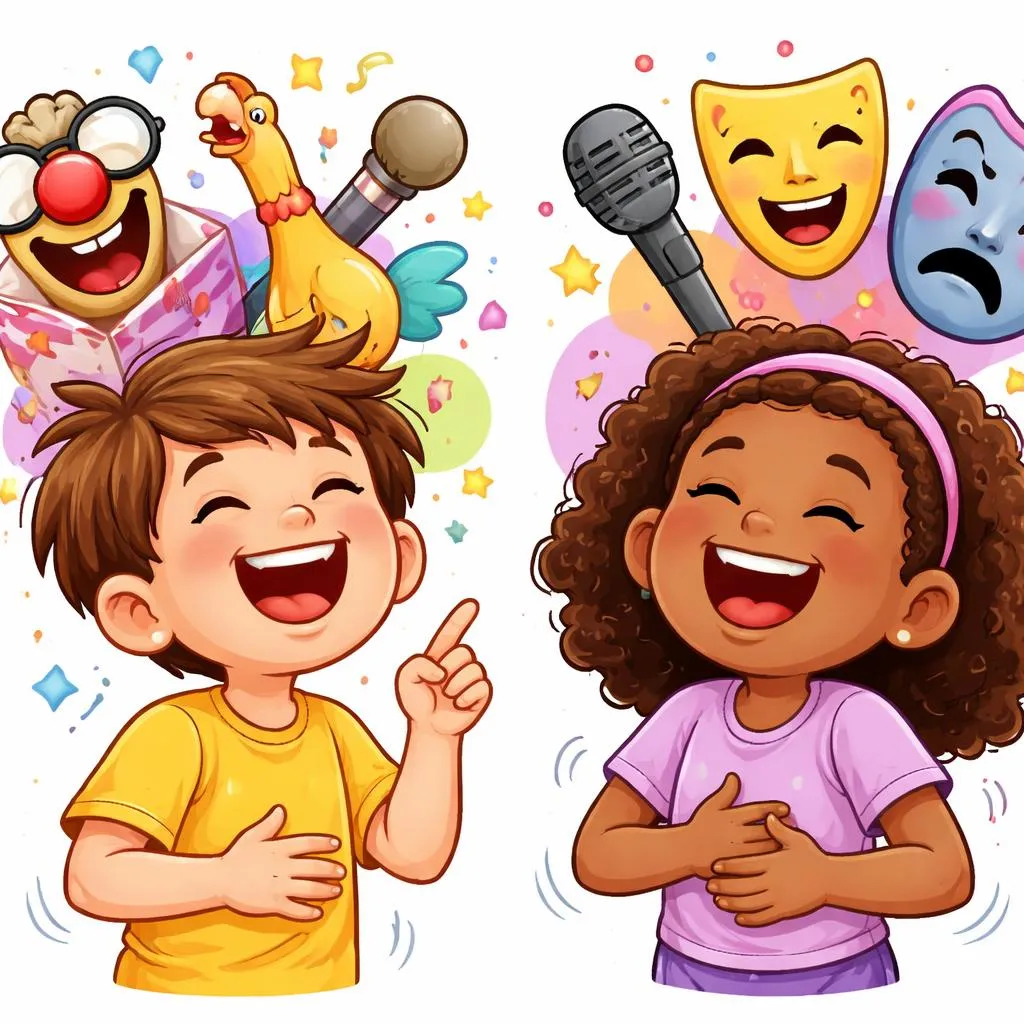

What Do These Expressions Mean? “It's funny” and “it's comical” both describe something that makes you laugh or smile. They tell someone that a situation, joke, or action is amusing. Children say these words about silly faces, funny stories, or cartoon characters. Both spread joy.
“It's funny” means I find this amusing and it makes me laugh. It is common and direct. A child says it when a friend tells a joke. It is the everyday word.
“It's comical” means this is like comedy or a cartoon. It is more formal and less common. An adult might say a situation is comical. It is rarely used by children.
These expressions seem similar. Both say “this makes me smile.” Both comment on humor. But one is for everyday talk while one is for formal or descriptive talk.
What's the Difference? One is for everyday laughter. One is for describing a situation as like a comedy. “It's funny” works for everything. A knock-knock joke, a silly dance, a falling hat. It is the natural word.
“It's comical” is more for situations, not jokes. You might say a mix-up is comical. A child saying “it's comical” sounds like a grown-up. It is correct but unusual for a child.
Think of a child watching a cartoon. A character slips on a banana peel. “It's funny” is right. “It's comical” would sound odd coming from a child. One is for kids. One is for literary descriptions.
One is for all ages. The other is for older people. “It's funny” is for children, parents, and grandparents. “It's comical” is for writing book reviews. Use the first for speaking. Understand the second for reading.
Also, “comical” often describes a situation, not a joke. The way the dog chased its tail was comical. The joke itself was funny. Slight difference.
When Do We Use Each One? Use “it's funny” for most humor. Use it for jokes, funny faces, silly animals, and laughing moments. Use it to share a laugh. It fits all ages.
Examples at home: “It's funny when the cat sneezes.” “That joke is funny. Tell it again.” “It's funny how you made that silly face.”
Use “it's comical” rarely. Use it to describe a funny situation in a story. Use it when you want to sound like a writer. Children almost never need this word.
Examples for description: “The way the penguins waddled was comical.” “The mix-up at the dinner table was comical.” “It's comical how the puppy chases its own tail.”
Most children should just say “it's funny.” It is natural and joyful. “Comical” is good to understand for reading. But for laughing with friends, “funny” is best.
Example Sentences for Kids It's funny: “It's funny when you make your ears wiggle.” “That movie is funny. I laughed the whole time.” “It's funny how the bird stole the chip.”
It's comical: “The clumsy waiter was comical.” (book description) “It's comical how the two dogs look alike.” (observation) “The cartoon's chase scene was comical.”
Notice “it's funny” sounds like a real child. “It's comical” sounds like a book report. Children learn both. One for laughing. One for describing.
Parents can use “it's funny” every day. Save “comical” for reading stories. “The author described the scene as comical. That means it was funny.” Learning happens in small moments.
Common Mistakes to Avoid Some children say “comical” to sound smart. It sounds strange to other kids. Stick with “it's funny.” Simple words work best.
Wrong: “That's comical!” (to a friend's joke). Right: “That's funny!”
Another mistake: using “funny” for something that is not fun. If someone falls and gets hurt, it is not funny. Teach children the difference between silly accidents and painful ones.
Wrong: “It's funny that he fell.” (hurt) Better: “Are you okay? That looked painful.”
Some learners forget that “funny” can mean “strange.” “It's funny that the light turned on by itself” means strange. “It's funny” can mean both humorous and odd. Context tells the meaning.
Also avoid saying “it's funny” to be mean. If someone makes a mistake, do not laugh at them. Laughing with someone is kind. Laughing at someone is not.
Easy Memory Tips Think of “it's funny” as a laughing emoji. ?? Happy. Quick. Everyday. For jokes and silly moments.
Think of “it's comical” as a cartoon caption. The words are written below a drawing. Descriptive and formal. For storytelling.
Another trick: remember the user. “It's funny” is for children and families. “It's comical” is for writers and adults. Kids get “funny.” Books get “comical.”
Parents can say: “Funny for a laugh. Comical for a paragraph.” That means everyday humor gets “funny.” Formal descriptions get “comical.”
Practice at home. A silly joke: “it's funny.” Reading a book: “the author wrote that the situation was comical.” Two different humor words.
Quick Practice Time Let us try a small exercise. Choose the better phrase for each situation.
A child's friend makes a silly face that makes everyone laugh. a) “It's comical.” b) “It's funny! Make that face again.”
A child is writing a book report about a funny scene in a novel. a) “The scene is funny.” b) “The scene is comical.”
Answers: 1 – b. A silly face and laughing friends fit the everyday “funny.” 2 – a or b. Both work. “Comical” is more formal and appropriate for a report.
Fill in the blank: “When my dad tells a knock-knock joke, I say ______.” (“It's funny” is the natural, joyful, everyday choice.)
One more: “When I read a descriptive passage in a book about a character's silly walk, it says the walk was ______.” (“Comical” fits the formal, literary, descriptive language.)
Laughter is the best sound. “It's funny” shares the joy. “It's comical” describes the joy. Teach your child both. A child who can talk about laughter spreads laughter.
Wrap-up “It's funny” is the everyday word for anything that makes you laugh or smile. “It's comical” is a more formal, descriptive word used in writing to describe a funny situation. Use “it's funny” for jokes, silly faces, and cartoons. Understand “it's comical” for book reports and formal descriptions. Both phrases celebrate humor. A child who learns to laugh and talk about laughter grows up with joy.