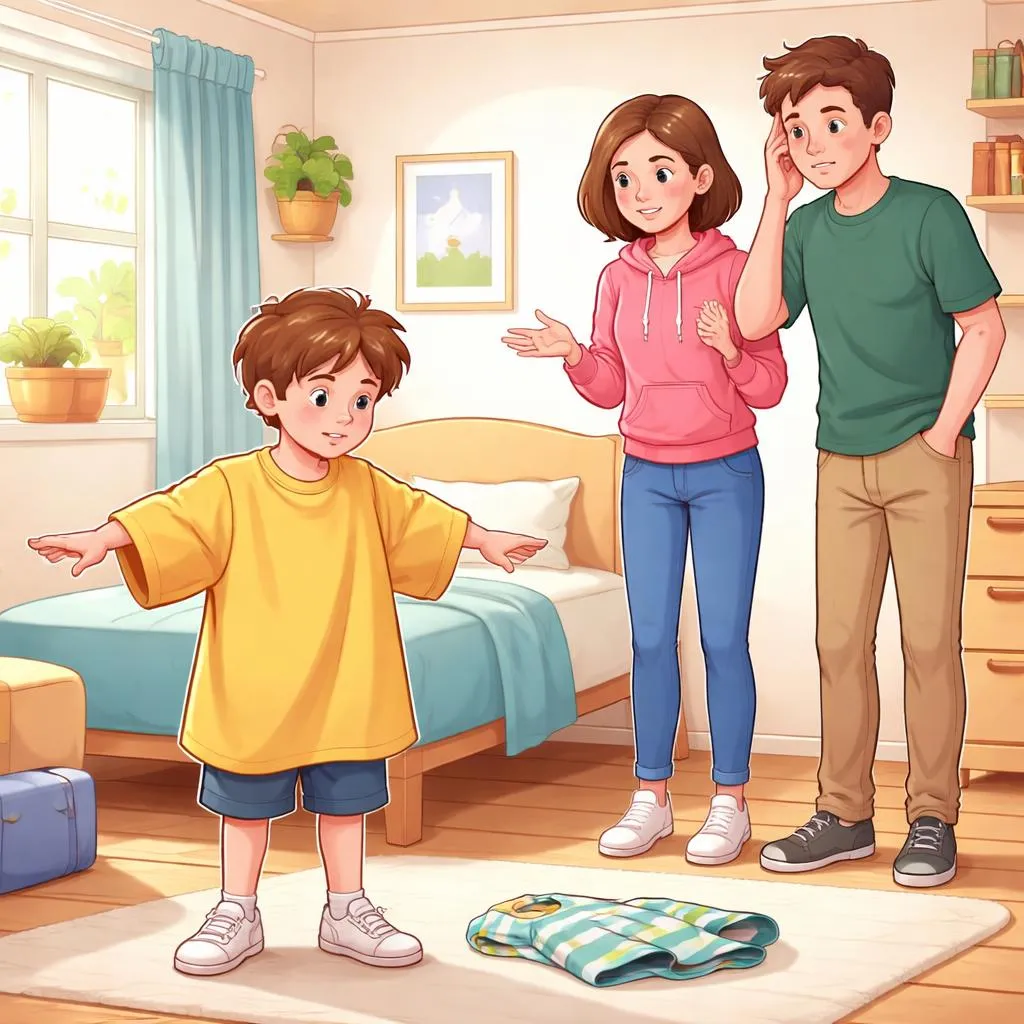

What Do These Expressions Mean? “Too big” and “oversized” both describe something larger than what is needed or comfortable. They tell someone that the size is excessive for the person or situation. Children say these words about clothing, backpacks, or portions of food. Both point out a size issue.
“Too big” means larger than what fits or is appropriate. It is simple and direct. A child says it when sleeves cover their hands. It is the everyday phrase.
“Oversized” means designed to be very large, often on purpose. It is a more neutral or even positive word. Fashion sometimes uses oversized for style. It does not necessarily mean “too big” in a bad way.
These expressions seem similar. Both talk about large size. Both describe something not small. But one is a complaint while one can be a style choice.
What's the Difference? One is a complaint. One is a description that can be positive. “Too big” means it is a problem. It does not fit. It is uncomfortable. It is negative.
“Oversized” can be a style or a fact. An oversized sweater is meant to be baggy. It is not necessarily a mistake. It can be comfortable and fashionable.
Think of a child trying on a jacket. The sleeves hang past their fingers. “This is too big” is a complaint. If the jacket is a fashion style, “it's oversized” is a description. One says “wrong size.” One says “this is the style.”
One is for discomfort. The other is for description. “Too big” means “I need a smaller one.” “Oversized” means “it is large on purpose.” Use the first when it is a problem. Use the second when it is a choice.
Also, “oversized” is rarely used for food or toys. You say “too big” for a giant cookie. You do not say “oversized cookie” as a complaint. Match the word to the situation.
When Do We Use Each One? Use “too big” for when size causes a problem. Use it for clothes that don't fit, portions you can't finish, or a bed that is too large for the room. Use it as a complaint or observation. It fits negative size issues.
Examples at home: “These shoes are too big. My feet slip.” “The backpack is too big for my back.” “The pizza slice is too big for my plate.”
Use “oversized” for description, often in fashion or packaging. Use it when large size is intentional or not a problem. Use it for style or for comparison. It fits neutral or positive large size.
Examples for description: “This is an oversized sweatshirt. It's supposed to be baggy.” “The store sells oversized mugs.” “I like oversized blankets because they cover my whole body.”
Children can use both. “Too big” for problems. “Oversized” for describing large things that are okay. Both are useful.
Example Sentences for Kids Too big: “The hat is too big. It falls over my eyes.” “This sandwich is too big. I can't finish it.” “The chair is too big for my little desk.”
Oversized: “This is an oversized shirt. It's very roomy.” “I like oversized pillows. They are so comfy.” “The suitcase is oversized. It won't fit in the car.”
Notice “too big” is a complaint. “Oversized” is a description, sometimes with a smile. Children learn both. One for problems. One for facts.
Parents can use both. Clothes that don't fit: “too big.” Fashion choice: “oversized.” Children learn different size words.
Common Mistakes to Avoid Some children say “oversized” as a complaint. That is unusual. If a shirt does not fit, say “too big.” Save “oversized” for when large is okay or stylish.
Wrong: “This shirt is oversized. It doesn't fit me.” (confusing) Right: “This shirt is too big for me.”
Another mistake: saying “too big” for something meant to be large. If the style is oversized, say “oversized.” “Too big” sounds like you think it is wrong.
Wrong: “This cozy blanket is too big.” (it is meant to be large) Better: “This blanket is oversized. I love how big it is.”
Some learners forget that “too big” can hurt feelings. If a child says “too big” about a gift, the giver might feel bad. Say “it's a little large for me” or “can we exchange it?” Be kind.
Also avoid using “too big” to describe people. Never say a person is “too big.” That is rude. Size words are for objects, not bodies.
Easy Memory Tips Think of “too big” as a falling sleeve. The hand is covered. You can't see fingers. Problem. For complaints.
Think of “oversized” as a cozy blanket. Big and soft. Just right. Description, not complaint. For style or neutral facts.
Another trick: remember the problem. “Too big” = problem. “Oversized” = fact or style. Problem gets “too big.” Fact gets “oversized.”
Parents can say: “Too big for a bad fit. Oversized for comfort or a bit.” That means uncomfortable get “too big.” Large but okay get “oversized.”
Practice at home. Clothes that don't fit: “too big.” Large sweatshirt you like: “oversized.” Two different large sizes.
Quick Practice Time Let us try a small exercise. Choose the better phrase for each situation.
A child tries on a jacket. The sleeves hang past their hands. They cannot move easily. a) “This jacket is oversized.” b) “This jacket is too big for me.”
A child sees an extra large couch at a furniture store. It looks very comfortable. a) “This couch is too big.” b) “This couch is oversized. I love big couches.”
Answers: 1 – b. A jacket that doesn't fit and causes a problem fits “too big.” 2 – b. A large couch that is comfortable fits the descriptive “oversized.”
Fill in the blank: “When my new shoes slip off because they are too loose, I say they are ______.” (“Too big” is the complaint for ill-fitting items.)
One more: “When I see a huge beach towel that is meant to be large, I say it is ______.” (“Oversized” fits the description of something intentionally large.)
Size matters. “Too big” is for when large is bad. “Oversized” is for when large is okay or stylish. Teach your child both. A child who can describe size accurately can ask for what fits.
Wrap-up “Too big” describes a size that causes a problem, like clothing that doesn't fit or food you cannot finish. “Oversized” describes something that is intentionally large, often as a style or feature. Use “too big” when something is uncomfortable or wrong. Use “oversized” when large is okay, desirable, or a design choice. Both words help children talk about size. A child who knows the difference can ask for help and also enjoy big, cozy things.