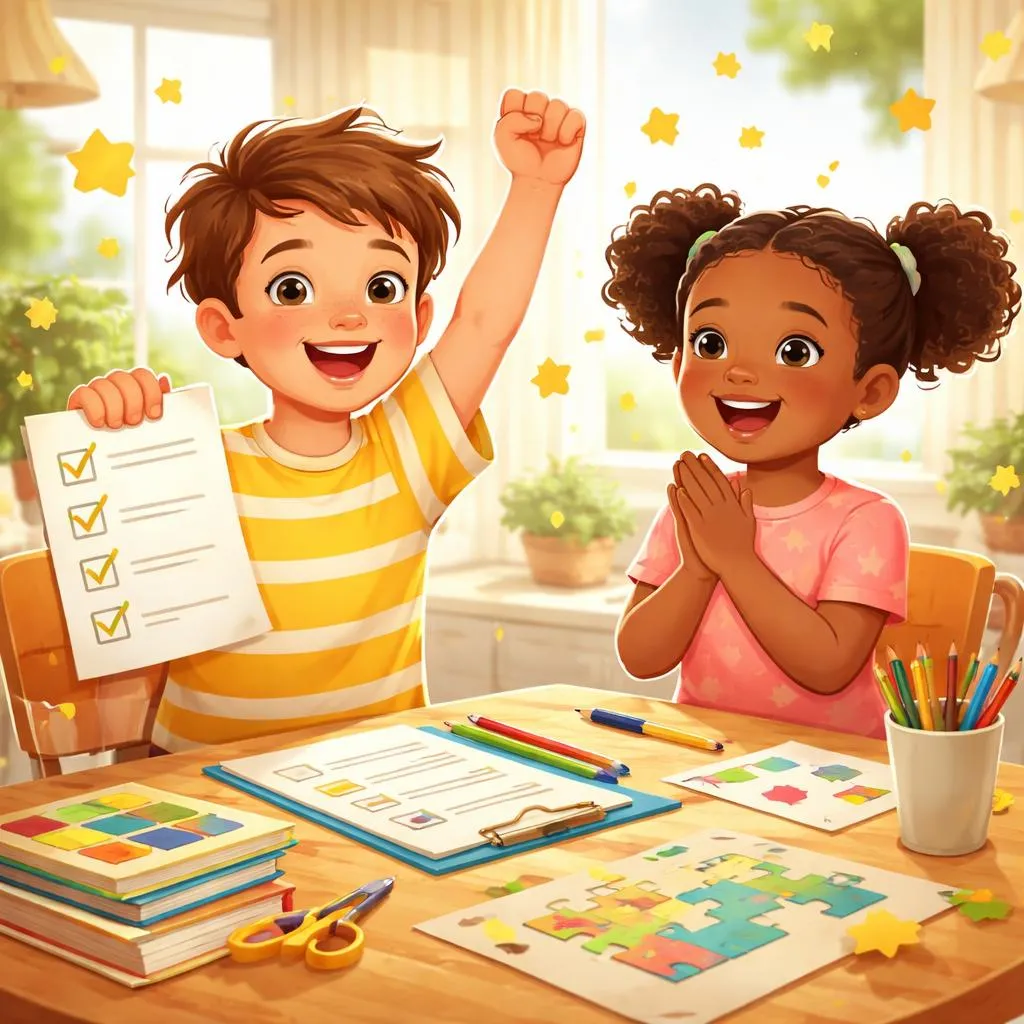

What Do These Expressions Mean? “I finished it” and “I completed it” both announce that a task is done. They tell someone that you reached the end of an activity. Children say these words after homework, chores, or games. Both celebrate accomplishment.
“I finished it” means I reached the end of this task. It is common and natural. A child says it after putting away toys. It feels like a happy sigh.
“I completed it” means I worked through all the steps to It sounds more formal and thorough. An adult says it about a project or a form. It feels like checking a box.
These expressions seem similar. Both say “it is done.” Both show persistence. But one is for daily life while one is for formal moments.
What's the Difference? One is everyday. One is formal. “I finished it” works for almost everything. Homework. Dinner. A race. It fits a child's daily life.
“I completed it” sounds like a report. You complete a course or a long project. A child saying “I completed my snack” is strange. It is correct but too big.
Think of a child eating an apple. “I finished my apple” is perfect. “I completed my apple” sounds like a robot. One matches the moment. One does not.
One is for small tasks. The other is for big projects. “I finished my puzzle” works. “I completed a marathon” works. Match the phrase to the task size.
Also, “finished” can mean “destroyed.” “I finished the last cookie” means ate it all. “Completed” never means eating or destroying. Use “finished” for eating.
When Do We Use Each One? Use “I finished it” for most daily tasks. Use it for meals, homework, chores, and games. Use it when you want to share that you are done. It fits everyday pride.
Examples at home: “I finished my homework. Can I play now?” “I finished the puzzle in ten minutes.” “I finished all my vegetables.”
Use “I completed it” for big or formal tasks. Use it for projects, courses, or long-term goals. Use it when you want to sound very serious. It fits grown-up accomplishments.
Examples for formal: “I completed the science fair project.” “I completed all the levels in the game.” “I completed my reading challenge for the month.”
Children can use both. “I finished it” for most things. “I completed it” for something truly big. Both are good. Both deserve a high five.
Example Sentences for Kids I finished it: “I finished it. The last piece went right there.” “I finished my book. It had 100 pages.” “I finished my chores. Can I have a snack?”
I completed it: “I completed all twelve levels of the game.” “I completed my art portfolio for the show.” “I completed the obstacle course without falling.”
Notice “I finished it” sounds like a real child. “I completed it” sounds like a trophy ceremony. Children learn both. But they should say “I finished it” for daily tasks.
Parents can use both. “You finished your breakfast. Great.” “You completed the whole reading list. Amazing.” Children learn the scale of accomplishment.
Common Mistakes to Avoid Some children say “I completed it” for small things. That sounds too big. A glass of milk is finished, not completed. Save “completed” for bigger tasks.
Wrong: “I completed my milk.” Right: “I finished my milk.”
Another mistake: using “finished” for tasks that are ongoing. If a task has no real end, say “I stopped” or “I did some.” Homework can be finished. Practicing piano is never finished. It is practiced.
Wrong: “I finished practicing piano.” (done forever) Right: “I finished my practice for today.”
Some learners forget to show the result. After saying you finished, show the work. “Look, my room is clean.” Evidence makes pride real.
Also avoid saying “I finished it” when you gave up. Finishing means reaching Giving up means stopping early. Be honest about your effort.
Easy Memory Tips Think of “I finished it” as a cleared plate. The plate has no food left. Simple and done. Everyday completion.
Think of “I completed it” as a diploma. The diploma has a gold seal. Years of work. Big accomplishment.
Another trick: remember the size. “Finished” fits in a lunchbox. “Completed” needs a trophy shelf. Lunchbox gets “finished.” Trophy shelf gets “completed.”
Parents can say: “Finished for daily. Completed for a big finale.” That means small tasks get “finished.” Big projects get “completed.”
Practice at home. Eat an apple: “I finished it.” Finish a 500-piece puzzle: “I completed it.” Two sizes of done. Both feel good.
Quick Practice Time Let us try a small exercise. Choose the better phrase for each situation.
Your child eats the last bite of their sandwich. a) “I completed my sandwich.” b) “I finished my sandwich.”
Your child finishes a 50-piece puzzle they worked on for three days. a) “I finished the puzzle.” b) “I completed the puzzle after three days.”
Answers: 1 – b. Eating food fits “finished.” 2 – a or b. Both work. “Completed” fits the longer effort.
Fill in the blank: “When I put away all my toys, I tell Mom ______.” (“I finished cleaning” or “I finished it” is natural.)
One more: “When I turn in my big history project, I say ______.” (“I completed it” fits a formal, effortful school project.)
Finishing things feels powerful. “I finished it” shares daily wins. “I completed it” shares big journeys. Teach your child both. Celebrate every finish line, small or large.
Wrap-up “I finished it” announces the end of a daily task. “I completed it” announces the end of a big, formal project. Use “finished” for meals, chores, and small tasks. Use “completed” for projects, courses, and long-term goals. Both phrases celebrate persistence. Every finish line deserves a cheer.