
What Do These Expressions Mean? “Almost done” and “nearly finished” both tell someone that a task is close to ending. They announce that only a little work remains before completion. Children say these words when finishing homework, chores, or a game. Both give reassurance.
“Almost done” means only a small amount of work is left. It is common and natural. A child says it when a parent asks for help. It is the everyday phrase.
“Nearly finished” also means close to It sounds slightly more formal. A child might use it in writing or when being careful. It is correct but less common in daily child speech.
These expressions seem similar. Both say “I am almost ready.” Both ask for a little more patience. But one is for everyday talk while one is a bit more formal.
What's the Difference? One is for casual talk. One is for more formal or careful speech. “Almost done” is what children say at home. It is quick and friendly. It fits all ages.
“Nearly finished” sounds a little more grown-up. You might use it in a school report or when speaking to a teacher. A child saying it is fine, but “almost done” is more natural. Use the first for family. Use the second for formal moments.
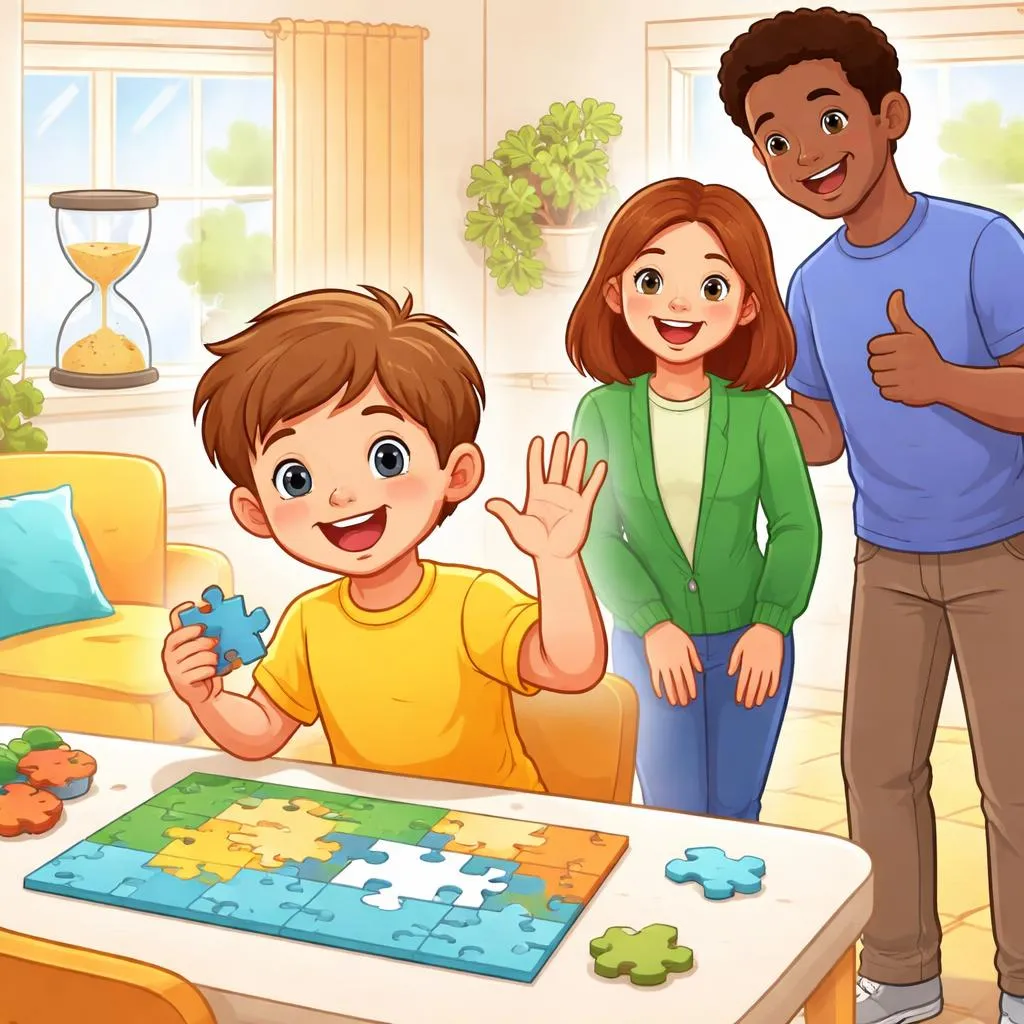
Think of a child doing a puzzle. Parent asks “are you ready for dinner?” “Almost done” is perfect. “Nearly finished” is also fine but feels more careful.
One is shorter. The other is slightly longer. “Almost done” has two words. “Nearly finished” has two words as well. But “done” feels more final than “finished.” Both mean the same. Choose what feels right.
Also, “nearly” is less common in child speech than “almost.” Most children say “almost.” Teach “nearly” for vocabulary. Use “almost” for daily life.
When Do We Use Each One? Use “almost done” for most everyday tasks. Use it for chores, games, homework, or getting ready. Use it to answer a parent or friend. It fits daily life.
Examples at home: “Almost done with my homework.” “I’m almost done. Just one more page.” “Almost done. Then I will help you.”
Use “nearly finished” for more formal or careful moments. Use it in a school presentation or when writing. Use it when you want to be precise. It fits formal settings.
Examples for formality: “I am nearly finished with my science project.” “The construction is nearly finished.” “Nearly finished. Please wait one more minute.”
Children can use both. “Almost done” for family. “Nearly finished” for school or writing. Both show progress.
Example Sentences for Kids Almost done: “Almost done. Give me one minute.” “I’m almost done with my drawing.” “Almost done. Thanks for waiting.”
Nearly finished: “I’m nearly finished with my book report.” “Nearly finished. Just the conclusion left.” “The tower is nearly finished. Don’t bump it.”
Notice “almost done” sounds like a friend. “Nearly finished” sounds like a report. Children learn both. One for home. One for school.
Parents can use both. “Almost done, I’ll be there soon.” “Nearly finished with this chapter.” Children learn different word choices.
Common Mistakes to Avoid Some children say “almost done” but then take much longer. That breaks trust. If you need more time, say “a few more minutes.” Be honest about how long.
Wrong: “Almost done” (then takes 20 minutes). Better: “Almost done. Maybe five more minutes.”
Another mistake: using “nearly finished” in casual talk too often. It sounds stiff. Save it for when you want to be careful or formal. Use “almost done” for everyday.
Wrong: “I am nearly finished with my snack.” Better: “Almost done with my snack.”
Some learners forget to give a specific time. If someone is waiting, say “one minute” or “almost done.” Specific words help patience.
Also avoid saying “almost done” when you haven’t even started. That is a lie. Only say it when you really are close to Honesty builds trust.
Easy Memory Tips Think of “almost done” as a Sand timer with a little sand left. A few grains still falling. Close to For everyday talk.
Think of “nearly finished” as a progress bar at 95%. Almost full. One more click. For careful or formal updates.
Another trick: remember the audience. “Almost done” for family and friends. “Nearly finished” for teachers and writing. Family gets “almost done.” School gets “nearly finished.”
Parents can say: “Almost for a casual phrase. Nearly for formal days.” That means at home, say “almost done.” In school reports or formal talk, try “nearly finished.”
Practice at home. Parent asks: “almost done.” Writing a report: “nearly finished.” Two different ways to say the same thing.
Quick Practice Time Let us try a small exercise. Choose the better phrase for each situation.
A child is finishing a video game. A parent calls for dinner. a) “I am nearly finished with this game.” b) “Almost done. Just one more minute.”
A child is writing the last sentence of a school report. They want to sound careful. a) “Almost done with my report.” b) “I am nearly finished with my report.”
Answers: 1 – b. A family dinner call at home fits the casual “almost done.” 2 – b. A school report fits the more formal “nearly finished.”
Fill in the blank: “When my mom asks me to set the table and I am finishing my puzzle, I say ______.” (“Almost done” is the natural, family-friendly choice.)
One more: “When I tell my teacher about my project, I say ______.” (“Nearly finished” fits the more careful, formal school setting.)
Knowing where you are in a task helps others. “Almost done” is kind and casual. “Nearly finished” is careful and polite. Teach your child both. A child who updates kindly is a child who is trusted.
Wrap-up “Almost done” is the warm, everyday phrase for family and friends. “Nearly finished” is a more careful, formal phrase for school or professional settings. Use “almost done” at home and with friends. Use “nearly finished” in school reports or when being precise. Both phrases give hope that the wait is short. A child who says “almost done” kindly keeps everyone patient.