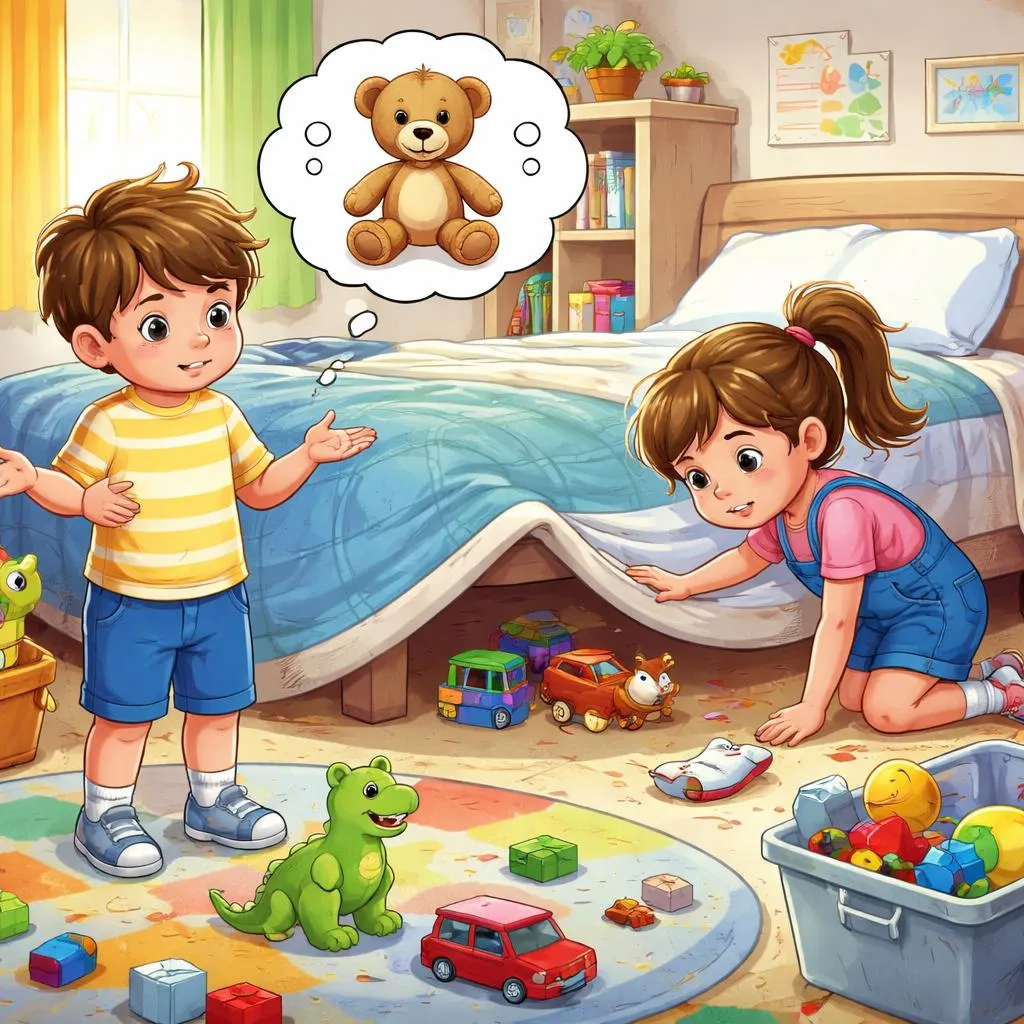

What Do These Expressions Mean? “It's lost” and “it's missing” both mean that something cannot be found where it should be. They tell someone that an object is not in its expected location. Children say these words about toys, socks, homework, or library books. Both ask for help searching.
“It's lost” means the object cannot be found and I do not know where it is. It is common and emotional. A child says it when a favorite toy disappears. It feels sad and urgent.
“It's missing” means the object is not in its place, but someone might know where it is. It is softer and less emotional. A parent says it when a sock is not in the drawer. It is more neutral.
These expressions seem similar. Both say “I can't find it.” Both ask for help looking. But one is more emotional while one is more factual.
What's the Difference? One is emotional. One is factual. “It's lost” carries a feeling of worry or sadness. You might panic. You might cry. It means “I need help finding it.”
“It's missing” is a calm observation. It does not have the same emotional weight. It means “it's not here. Let's look for it.” It is for everyday missing items.
Think of a child looking for a toy. “My teddy bear is lost!” means they are scared. “My pencil is missing” means they are calm. One is for precious things. One is for ordinary things.
One is for important items. The other is for small or replaceable things. “It's lost” for a gift from Grandma. “It's missing” for a hair tie. Use the first for worry. Use the second for calm.
Also, “missing” can describe a person. A missing person is very serious. “Lost” also works. But be careful. For objects, both are fine.
When Do We Use Each One? Use “it's lost” for important or beloved items. Use it for favorite toys, gifts, or valuable things. Use it when you feel sad or worried. It fits emotional searching.
Examples at home: “My library book is lost. I can't find it anywhere.” “I think my ring is lost. I looked everywhere.” “My favorite hat is lost. I need help.”
Use “it's missing” for everyday, less emotional items. Use it for socks, pencils, hair clips, or homework. Use it to state a fact. It fits calm, practical searching.
Examples for calm: “One sock is missing from the laundry.” “My pencil is missing. Can I borrow one?” “A puzzle piece is missing. We can't finish.”
Children can use both. “It's lost” for precious things. “It's missing” for ordinary things. Both help find things.
Example Sentences for Kids It's lost: “My lucky penny is lost. I'm so sad.” “The toy from my birthday is lost.” “I think my library card is lost. Can you help?”
It's missing: “One shoe is missing. Have you seen it?” “The blue crayon is missing from the box.” “A piece of my puzzle is missing.”
Notice “it's lost” feels emotional. “It's missing” feels calm. Children learn both. One for heart. One for facts.
Parents can use both. Favorite toy: “it's lost.” Sock: “it's missing.” Children learn different worry levels.
Common Mistakes to Avoid Some children say “it's lost” for every small thing. That makes the word less serious. Save “lost” for things you truly cannot find and care about. Use “missing” for small things.
Wrong: “My pencil is lost!” (can borrow another). Right: “My pencil is missing. Can I have another?”
Another mistake: saying “it's missing” for a precious item. “My necklace is missing” is fine, but “lost” shows how you feel. Match the word to your emotion.
Wrong: “My heirloom ring is missing.” (too calm) Right: “My heirloom ring is lost. I'm so worried.”
Some learners forget that both words mean “I can't find it.” Do not panic for small things. Do not be too calm for big things. Match your voice to the value of the item.
Also avoid blaming others for lost things. Say “I think I lost it,” not “you lost it.” Take responsibility for your own things. Blaming hurts friendships.
Easy Memory Tips Think of “it's lost” as a crying face. ?? Sad. Scared. Need help. For precious items.
Think of “it's missing” as a raised eyebrow. ?? Hmm. Where did it go? For ordinary items.
Another trick: remember the feeling. “Lost” = sadness. “Missing” = curiosity. Sadness gets “lost.” Curiosity gets “missing.”
Parents can say: “Lost for a little tear. Missing for a thought of ‘where?’” That means important items get “lost.” Everyday items get “missing.”
Practice at home. Favorite toy: “it's lost.” Sock from laundry: “it's missing.” Two different search levels.
Quick Practice Time Let us try a small exercise. Choose the better phrase for each situation.
A child cannot find the necklace their grandmother gave them for their birthday. They are worried. a) “My necklace is missing.” b) “My necklace is lost. I'm really sad.”
A child notices one of their markers is not in the box. They can use another color. a) “My marker is lost!” b) “My marker is missing. I'll use a different color.”
Answers: 1 – b. A precious, sentimental item with worry fits the emotional “lost.” 2 – b. A small, replaceable item with no worry fits the calm “missing.”
Fill in the blank: “When I can't find my favorite stuffed animal, I say it's ______.” (“Lost” fits the emotional, worried search for a beloved toy.)
One more: “When I notice my eraser is not in my pencil case, I say it's ______.” (“Missing” fits the calm, practical observation for a small item.)
Losing things happens. “It's lost” calls for a worried search. “It's missing” calls for a calm look. Teach your child both. A child who can describe loss can find again.
Wrap-up “It's lost” is for important, beloved items and carries an emotional feeling of worry or sadness. “It's missing” is a calmer, more factual statement for everyday items that are not in their place. Use “it's lost” for favorite toys, gifts, and valuables. Use “it's missing” for socks, pencils, and common objects. Both words ask for help finding something. A child who learns to say “lost” or “missing” honestly will get the right kind of help.