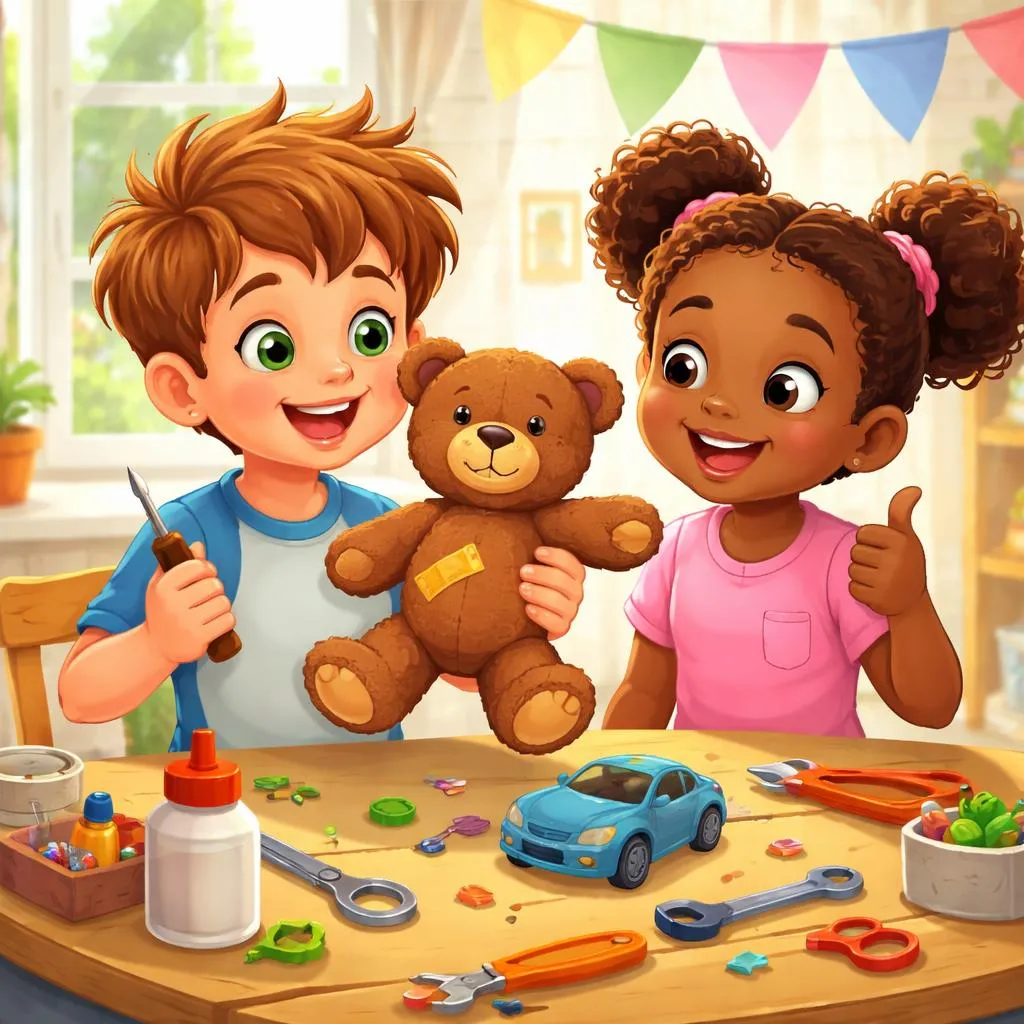

What Do These Expressions Mean? “I fixed it” and “I repaired it” both announce that something is working again. They tell someone that a broken item is now back to good condition. Children say these words after gluing a toy or taping a page. Both celebrate problem-solving.
“I fixed it” means I made it work again. It is common and cheerful. A child says it after putting batteries in a remote. It feels like a victory.
“I repaired it” means I mended the damage carefully. It sounds more formal and technical. An adult says it about a car or a watch. It feels like a professional job.
These expressions seem similar. Both say “it works now.” Both show capability and care. But one is for everyday success while one is for formal fixes.
What's the Difference? One is for daily life. One is for formal talk. “I fixed it” works for most repairs. A broken toy. A torn book. A loose wheel. It is perfect for children.
“I repaired it” sounds like a mechanic. You repair a transmission or a roof. A child saying “I repaired my pencil” is strange. It is correct but too big.
Think of a child taping a torn page. “I fixed it” is right. “I repaired it” sounds like a museum curator. One matches the moment. One overshoots.
One is for quick fixes. The other is for major repairs. “I fixed it” can be simple. “I repaired it” implies more work. A bandage fixes a cut. A doctor repairs a bone.
Also, “fixed” can mean “I made it not move.” “I fixed the shelf to the wall” works. “I repaired the shelf to the wall” is wrong. Use “fixed” for attaching.
When Do We Use Each One? Use “I fixed it” for most childhood repairs. Use it for gluing, taping, or snapping things back. Use it when you feel proud of solving a problem. It fits everyday successes.
Examples at home: “I fixed it. The wheel goes on again.” “Look, I fixed it with tape.” “The doll's arm was off. I fixed it.”
Use “I repaired it” for more serious or formal repairs. Use it for broken appliances, furniture, or bikes. Use it when an adult is talking. Children rarely need this phrase.
Examples for formal: “Dad repaired the broken chair leg.” “The mechanic repaired the car engine.” “I repaired my bicycle chain with help.”
Most children should just say “I fixed it.” It is joyful, clear, and natural. “Repaired” is good to understand. But for daily fixes, “fixed” wins.
Example Sentences for Kids I fixed it: “I fixed it. The button clicks now.” “My book had a tear. I fixed it with tape.” “I fixed the tower after it fell down.”
I repaired it: “The clock wasn't working. Dad repaired it.” “I repaired the hole in my backpack with a patch.” “The bike shop repaired my flat tire.”
Notice “I fixed it” sounds like a proud child. “I repaired it” sounds like a grown-up helper. Children learn both. But they should say “I fixed it” for their own wins.
Parents can use “fixed” every day. Use “repaired” for bigger jobs. “You fixed your toy. That is wonderful.” “The man repaired our washing machine.” Two words. One meaning. Different sizes.
Common Mistakes to Avoid Some children say “I repaired it” to sound grown-up. It sounds strange. Friends might not understand. Stick with “I fixed it” for your own fixes. Simple is better.
Wrong: “I repaired my pencil sharpener.” Right: “I fixed my pencil sharpener.”
Another mistake: using “repaired” for things that are not broken. You can fix a picture to the wall. You cannot repair it to the wall. “Repair” means fix broken. “Fix” means both.
Wrong: “I repaired the poster to the wall.” Right: “I fixed the poster to the wall.”
Some learners forget to show their work after saying “I fixed it.” Point to the fixed item. Explain how you did it. Pride is good to share.
Also avoid saying “I fixed it” when you made it worse. Be honest. “I tried to fix it, but it needs more help.” Trying counts. Lying does not.
Easy Memory Tips Think of “I fixed it” as a happy dance. The toy works. The child spins. Quick and joyful. Everyday victory.
Think of “I repaired it” as a toolbox. The toolbox has many tools. The job took time. Professional and serious.
Another trick: remember the length. “Fixed” has one sound. “Repaired” has two sounds. Short for daily. Long for formal. Match the word to the job size.
Parents can say: “Fixed for fun. Repaired for a ton of work.” That means quick fixes get “fixed.” Big jobs get “repaired.”
Practice at home. Tape a page: “I fixed it.” Fix a broken drawer: “Dad repaired it.” Two levels of work. Two levels of words.
Quick Practice Time Let us try a small exercise. Choose the better phrase for each situation.
Your child tapes a torn piece of paper back together. a) “I repaired the paper.” b) “I fixed it. Look, it's whole again.”
Your family hires someone to fix a broken dishwasher. a) “The man fixed the dishwasher.” b) “The repairman repaired the dishwasher.”
Answers: 1 – b. A simple tape job fits “I fixed it.” 2 – a or b. Both work. “Repaired” fits the professional context.
Fill in the blank: “When I glue the leg back on my toy horse, I shout ______.” (“I fixed it” is the natural, proud choice.)
One more: “When a watchmaker fixes a broken pocket watch, he ______ it.” (“Repaired” fits precise, skilled, formal work.)
Fixing things feels powerful. “I fixed it” shares the joy. “I repaired it” shares the skill. Teach your child both. Use the joyful one most. That pride builds confidence.
Wrap-up “I fixed it” announces a successful everyday repair. “I repaired it” announces a formal or professional fix. Use “I fixed it” for toys, books, and small problems. Use “repaired” for appliances, cars, and big jobs. Both phrases celebrate solving problems. A child who fixes things learns they can make the world better.