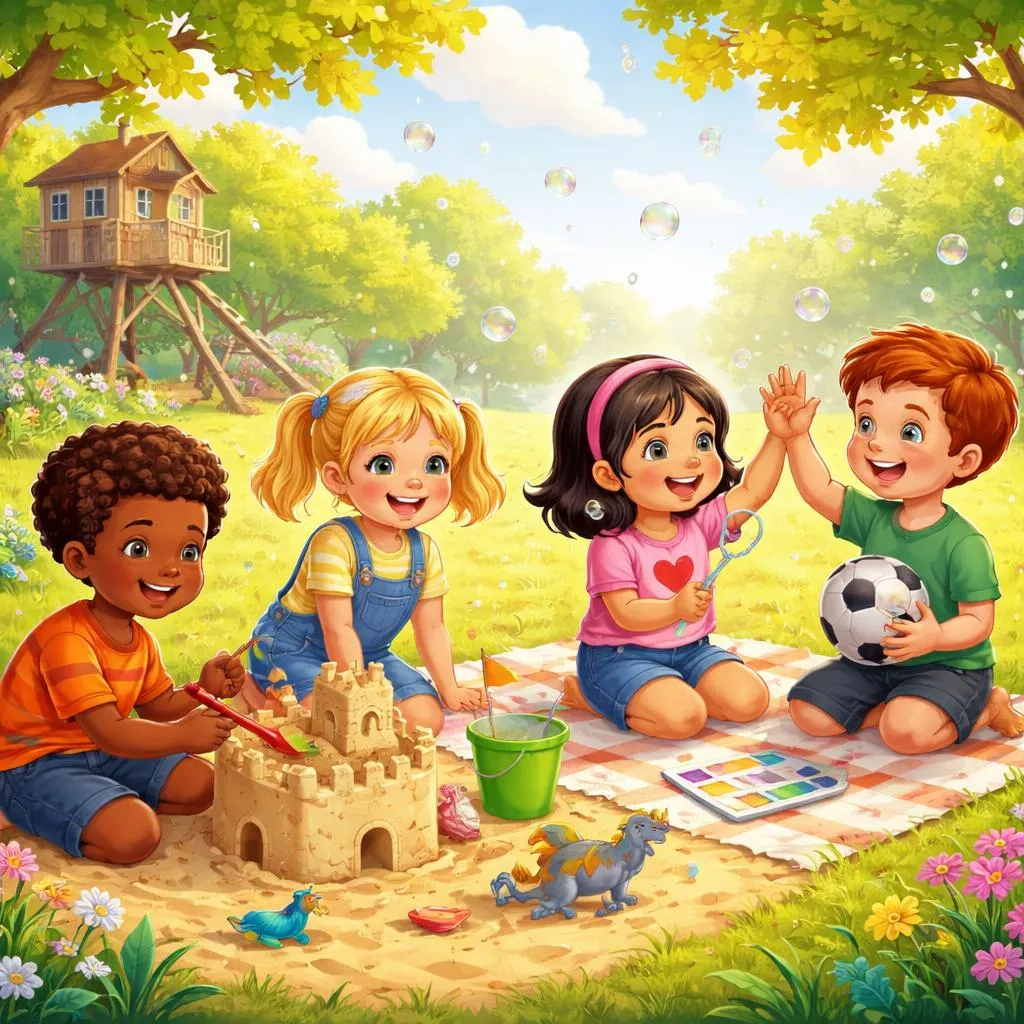

What Do These Expressions Mean? “Play together” and “have fun together” both describe shared enjoyable activities between children. They encourage kids to interact, share joy, and build memories. Children hear these words from parents, teachers, and friends. Both build connection.
“Play together” means do a shared game or activity like tag, blocks, or pretend. It is specific and active. A parent says it when two children need to cooperate. It focuses on the activity.
“Have fun together” means enjoy each other's company and share joyful moments. It is broader and more about the feeling. A parent says it before a playdate. It focuses on the emotional outcome.
These expressions seem similar. Both ask children to share time and joy. Both build friendships. But one is about the specific activity while one is about the feeling.
What's the Difference? One is about the activity. One is about the feeling. “Play together” names what to do. It gives a clear instruction. It works well for young children who need direction.
“Have fun together” names the goal. It tells children what the feeling should be. It works well as a general wish. It is less specific but warmer.
Think of two children before a playdate. “Play together nicely” is a direction. “Have fun together” is a wish. One tells them what to do. One hopes for the result.
One is for instruction. The other is for encouragement. “Play together” is for when children need guidance. “Have fun together” is for when you trust them to figure it out. Use the first for younger kids. Use the second for older kids.
Also, “play together” implies a game or structured activity. “Have fun together” can be anything: laughing, talking, or even cleaning up if they make it fun. Play is a type of fun. Fun is broader.
When Do We Use Each One? Use “play together” when children need direction. Use it for toddlers or when kids are fighting. Use it to suggest a specific activity. It fits instructive moments.
Examples at home: “Play together with the blocks. Build a tower.” “Can you two play together without arguing?” “Play together nicely while I make lunch.”
Use “have fun together” for general encouragement. Use it before a playdate or an outing. Use it as a warm wish. It fits loving moments.
Examples for encouragement: “Go have fun together at the park.” “I hope you have fun together today.” “Have fun together and make good memories.”
Children need both phrases. “Play together” for specific direction. “Have fun together” for warm wishes. Both build happy childhoods.
Example Sentences for Kids Play together: “Play together on the swings. Take turns.” “Why don't you play together with the train set?” “Play together and share your toys.”
Have fun together: “Have fun together at the birthday party.” “Go have fun together. I will pick you up later.” “Have fun together and be kind to each other.”
Notice “play together” is about the action. “Have fun together” is about the feeling. Children learn both. One for doing. One for being.
Parents can use both. At home: “play together.” At drop-off: “have fun together.” Children learn different love languages.
Common Mistakes to Avoid Some parents say “play together” when children are tired. If children are tired, they need rest, not play. Read the room. Play is for energy.
Wrong: “Play together” (children are exhausted after a long day). Better: “Let's rest together and then you can play.”
Another mistake: forcing “have fun together” when children are fighting. You cannot force fun. Solve the conflict first. Then fun will come naturally.
Wrong: “Have fun together!” (children are angry at each other). Better: “Let's solve the problem first. Then you can have fun.”
Some learners think “play together” requires toys. Playing together can be running, laughing, or making up games. Play is imagination. Imagination needs no toys.
Also avoid saying “have fun together” as a command. It is a wish, not an order. Say it with a smile. Fun cannot be demanded.
Easy Memory Tips Think of “play together” as a game board. The board shows the rules. Clear instructions. For doing.
Think of “have fun together” as a rainbow after rain. The rainbow feels happy. No instructions. For feeling.
Another trick: remember the focus. “Play” is the action. “Fun” is the feeling. Action gets “play together.” Feeling gets “have fun together.”
Parents can say: “Play for the day. Fun for the hooray.” That means specific direction gets “play together.” Warm wishes get “have fun together.”
Practice at home. Before playtime: “play together.” Before leaving for a party: “have fun together.” Two different phrases. One happy child.
Quick Practice Time Let us try a small exercise. Choose the better phrase for each situation.
Two toddlers are fighting over a toy. The parent wants them to cooperate. a) “Have fun together.” b) “Play together with this other toy while I put that one away.”
A parent is dropping a child off at a friend's house for an afternoon. a) “Play together and no fighting.” b) “Have fun together, sweetie. I'll be back at 4.”
Answers: 1 – b. Fighting children need the clear direction “play together.” 2 – b. A happy drop-off fits the warm wish “have fun together.”
Fill in the blank: “When my children need to learn to share a game, I say ______.” (“Play together” gives the specific direction they need.)
One more: “When my child goes to a birthday party, I say ______.” (“Have fun together” is the warm, encouraging wish.)
Playing together is childhood. “Play together” teaches cooperation. “Have fun together” teaches joy. Teach your child both. A child who plays and has fun makes friends for life.
Wrap-up “Play together” instructs children to share a specific activity or game. “Have fun together” wishes children a joyful emotional experience in each other's company. Use “play together” when children need direction. Use “have fun together” as a warm wish before play. Both phrases build happy, connected children. A child who plays and has fun grows up loving people.