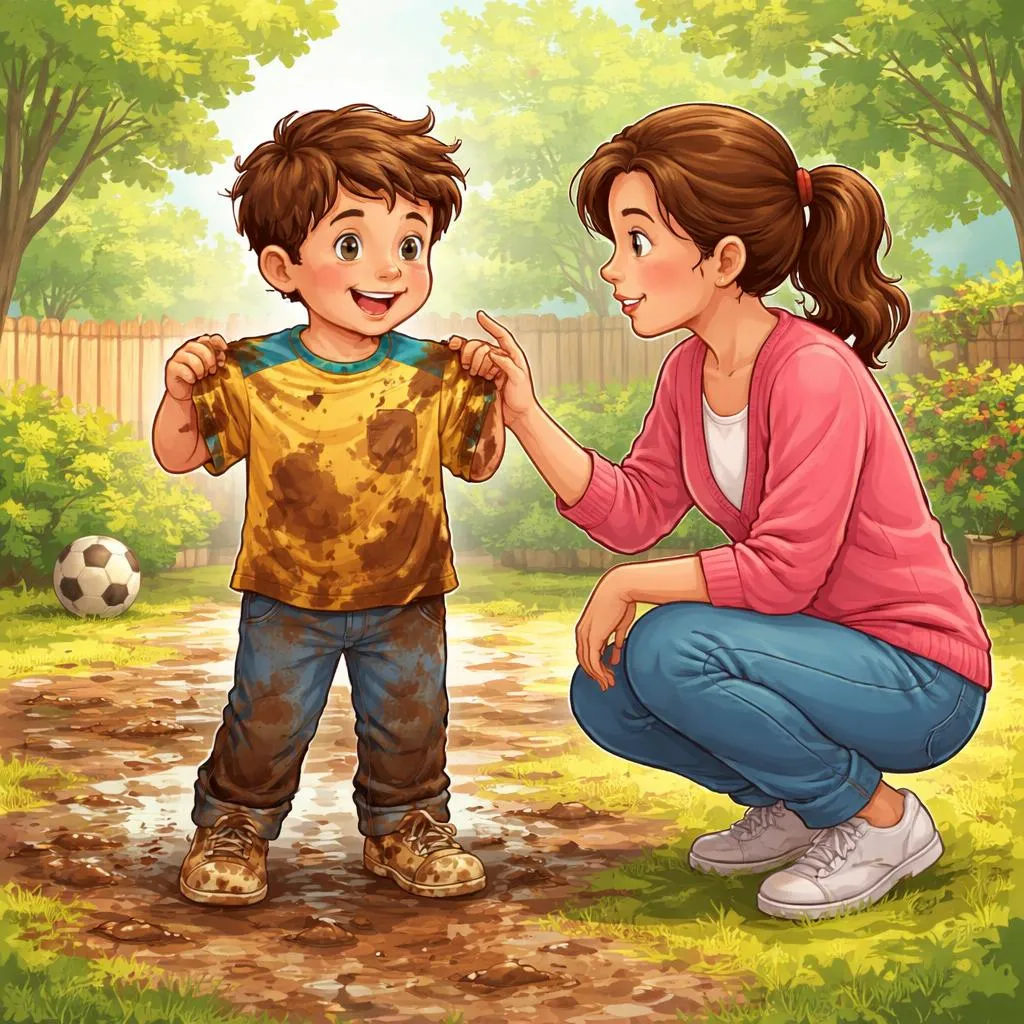

What Do These Expressions Mean? “It's dirty” and “it's soiled” both mean that something is not clean. They tell a parent that an object has marks, dust, or stains on it. Children say these words about muddy shoes, spilled milk, or messy hands. Both ask for cleaning.
“It's dirty” means there is dirt, dust, or a mess on the surface. It is common and direct. A child says it when their shirt has paint on it. It is the everyday word.
“It's soiled” means the item is stained or marked, often with something wet or unpleasant. It is more formal and less common. An adult might say it about a tablecloth after a meal. It is rarely used by children.
These expressions seem similar. Both say “this needs to be cleaned.” Both describe a mess. But one is for everyday talk while one is for formal or specific messes.
What's the Difference? One is for everyday messes. One is for formal or unpleasant stains. “It's dirty” works for almost any mess. Mud, dust, food, paint, grass stains. It is the natural word.
“It's soiled” is often used for stains from food, mud, or bodily fluids. It sounds more serious. A child saying “my pants are soiled” sounds very formal. It is correct but unusual.
Think of a child with peanut butter on their shirt. “It's dirty” is right. “It's soiled” is also correct but too formal. One is for daily talk. One is for fancy talk.
One is for kids. The other is for dry cleaning. “It's dirty” is what families say. “It's soiled” is what a sign on a laundry machine might say. Use the first for speaking. Understand the second for reading.
Also, “soiled” can sound like a euphemism for bathroom accidents. Be careful using it. “Dirty” is clearer and kinder.
When Do We Use Each One? Use “it's dirty” for most messes. Use it for mud, food, paint, dust, or grass. Use it to tell a parent you need to clean up. It fits daily life.
Examples at home: “My hands are dirty from playing outside.” “The floor is dirty. I spilled juice.” “Your shirt is dirty. Let's wash it.”
Use “it's soiled” very rarely. Use it in formal writing or when you need to be very precise. Use it to understand signs or books. Children almost never need to say this word.
Examples for formality: “The tablecloth is soiled. Please wash it.” (formal) “The baby's bib is soiled with food.” (description) “The dress was soiled after the picnic.” (book language)
Most children should just say “it's dirty.” It is clear, natural, and kind. “Soiled” is good to understand for reading. But for telling a parent, “dirty” is best.
Example Sentences for Kids It's dirty: “It's dirty. I need to wash my hands.” “The dog's paws are dirty from the mud.” “It's dirty under the couch. Let's vacuum.”
It's soiled: “The napkin is soiled with spaghetti sauce.” (formal) “The baby's onesie is soiled.” (bathroom talk) “The white shirt was soiled after the meal.” (book language)
Notice “it's dirty” sounds like a real child. “It's soiled” sounds like a grown-up in a fancy restaurant. Children learn both. One for talking. One for reading.
Parents can use “it's dirty” every day. Save “soiled” for vocabulary lessons. “The sign says ‘soiled linens.’ That means dirty cloths.” Learning happens in small moments.
Common Mistakes to Avoid Some children say “soiled” to sound grown-up. It sounds strange to friends. Stick with “it's dirty.” Simple words work best.
Wrong: “My hands are soiled.” Right: “My hands are dirty.”
Another mistake: using “soiled” for dry dust. Dust is dirty, not usually soiled. Soiled implies wet or sticky stains. Use “dusty” for dust.
Wrong: “The bookshelf is soiled with dust.” Right: “The bookshelf is dusty.”
Some learners forget that “dirty” is not a bad word. Dirty just means needs cleaning. It is not shameful. Clean it up and move on.
Also avoid saying “it's dirty” in a mean way about a person. “You're dirty” can hurt feelings. Say “your shirt is dirty” instead. Talk about the clothes, not the person.
Easy Memory Tips Think of “it's dirty” as brown muddy footprints. Dirty. Needs a wipe. For everyday messes.
Think of “it's soiled” as a fancy dry cleaning tag. The tag says “soiled.” Formal and specific. For reading, not speaking.
Another trick: remember the formality. “Dirty” is for home. “Soiled” is for formal signs. Home gets “dirty.” Signs get “soiled.”
Parents can say: “Dirty for the day. Soiled for a formal way.” That means at home, say “it's dirty.” Reading signs, understand “soiled.”
Practice at home. Muddy shoes: “it's dirty.” A sign on a laundry bin: “soiled linens.” Two different clean worlds.
Quick Practice Time Let us try a small exercise. Choose the better phrase for each situation.
A child spills grape juice on the carpet. They need to tell a parent. a) “The rug is soiled.” b) “The rug is dirty. I spilled juice.”
A parent reads a sign at the laundromat that says “soiled clothes only.” a) “That means dirty clothes, right?” b) “That sign means something else.”
Answers: 1 – b. A grape juice spill at home fits the everyday “dirty.” 2 – a. Understanding a formal sign: “soiled” means “dirty.”
Fill in the blank: “When I get mud on my pants, I say they are ______.” (“Dirty” is the natural, everyday, child-friendly choice.)
One more: “When a hotel puts a sign on a laundry bag, it says ______ linens.” (“Soiled” fits the formal, professional, written language.)
Mess happens. “It's dirty” is honest and easy. “It's soiled” is formal and specific. Teach your child both. A child who can describe a mess can clean it up.
Wrap-up “It's dirty” is the everyday word for any mess that needs cleaning. “It's soiled” is a more formal word often used for stained linens or in professional settings. Use “it's dirty” for muddy shoes, messy hands, and spilled food. Understand “it's soiled” for signs, laundry instructions, and formal writing. Both words describe a need for soap and water. A child who says “it's dirty” honestly will learn to clean up after themselves.