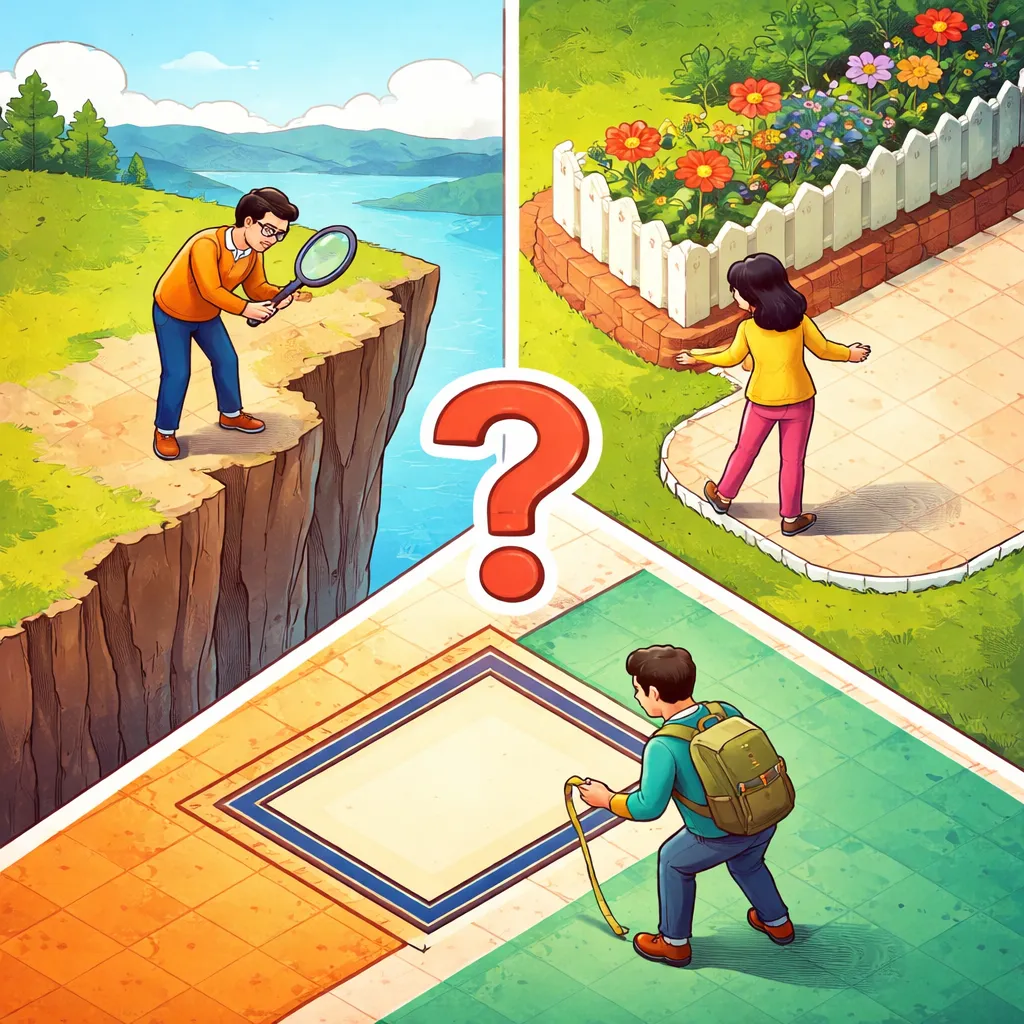

Children learn “edge” early. They use it for tables, knives, and cliffs. Then they meet “border”. This word sounds like countries and drawings. Many parents ask if “edge and border” mean the same thing. They are similar but not identical. The edge of a knife is different from the border of a country. The border of a picture is different from the edge of a cliff. Kids need clear examples. Parents can help by exploring maps, furniture, and crafts together. This article gives you simple rules. You will find friendly explanations. Let’s explore “edge and border” step by step.
Are Similar Words Really Interchangeable? Similar words often cause confusion. “Edge and border” seem like close cousins. Both mean the outermost part. But you cannot always swap them. The edge of a table works. The border of a table sounds strange. The border of a country works. The edge of a country also works but feels less official. Language gives each word a different job. Children benefit from knowing these jobs. Parents can point out both words in books, maps, and kitchens. This article focuses only on “edge and border”. We will compare them clearly.
Set 1: Edge vs Border — Which One Is More Common? “Edge” appears more often in daily conversation. We say edge of the table. We say edge of the cliff. We say cutting edge. “Border” appears often too but in different contexts. We say border of a country. We say border of a picture. We say border crossing. For everyday talk, “edge” wins for physical objects. Children hear “edge” for furniture, knives, and dangerous places. “Border” sounds more geographical or decorative. The edge of a book is normal. The border of a book means the margin. Parents can teach this by using “edge” for sharp or physical boundaries. Use “border” for countries, pictures, and decorative lines.
Set 2: Edge vs Border — Same Meaning, Different Contexts Sometimes “edge and border” describe the same outer line. The edge of a rug. The border of a rug. Both mean the outer limit. But “border” often suggests a decorative or official line. “Edge” suggests a physical end. Consider a piece of paper. The edge of the paper is where it ends. The border of the paper is the margin area. Consider a garden. The edge of the garden is where the grass ends. The border of the garden is a planted strip around it. For children, explain it this way. “Edge” is the very end of something. “Border” is a strip or line near the edge, often decorative or official. Use “edge” for physical ends. Use “border” for decorative bands and country lines.
Set 3: Edge vs Border — Which Word Is “Bigger” or More Emphatic? “Border” often feels more official and larger in scale. A national border is a serious line. An edge of a country sounds less formal. “Edge” feels sharp or dangerous. The edge of a cliff is scary. The border of a cliff is not used. “Border” adds a sense of authority and decoration. “Edge” adds a sense of sharpness or risk. For children, this difference appears in stories. “The knight stood at the edge of the forest” sounds mysterious. “The knight stood at the border of the forest” sounds like a map line. Parents can practice by describing a swimming pool. “The edge of the pool is slippery” warns of danger. “The border of the pool is tiled” describes decoration. Use “edge” for danger and ends. Use “border” for official and decorative lines.
Set 4: Edge vs Border — Concrete vs Abstract Both “edge and border” work for concrete things. The edge of a knife (concrete). The border of a country (concrete on a map). “Edge” also works for abstract things. The edge of technology (abstract). On edge meaning nervous (abstract). “Border” works for abstract things too. Borderline (abstract). On the border of acceptance (abstract). For children, this is a helpful guide. Use “edge” for physical ends and sharpness, also for nervous feelings. Use “border” for geographical and decorative boundaries, also for limits. The edge of a chair. The border of a state. Parents can make two columns. One column for edge things (table, cliff, knife, technology). One column for border things (country, picture, garden, crossing).
Set 5: Edge vs Border — Verb or Noun? First Understand the Role Both “edge and border” are nouns. “Edge” also works as a verb. “Edge the lawn” uses “edge” as a verb meaning to trim. “Border” works as a verb too. “The river borders the town” uses “border” as a verb. Children know both as nouns first. Focus on the noun meanings for comparison. The edge of the paper. The border of the map. A useful tip: use “edge” for the sharp or physical outer line. Use “border” for the decorative or official boundary line. The edge of a blade. The border of a certificate. Teach your child to ask: Is this a sharp end or a decorative line? If sharp end, use “edge”. If official or decorative line, use “border”.
Set 6: Edge vs Border — American English vs British English American and British English treat “edge and border” almost the same. One small difference: British English uses “border” more often for garden edges. “The flower border” is common in the UK. American English says “flower bed edge” more often. Another difference: computing. Both say “border” for the edge of a window or picture. No difference. For children, these differences do not matter. Teach international English. Say “edge of the table” and “border of the map”. Both dialects accept these. Parents only need to know that “border” is more decorative and official. Use it for art and geography.
Set 7: Edge vs Border — Which Fits Formal Situations? Formal English prefers “border” for political and decorative contexts. A geography report says “the border between two countries”. An art guide says “a decorative border”. “Edge” works in formal writing too for physical ends. “The edge of the cliff” is fine. For children, school writing benefits from “border” for maps and pictures. “The border of the state is a river” sounds clear. Use “edge” for science and descriptions of objects. “The edge of the leaf is serrated” is perfect. This builds register awareness.
Set 8: Edge vs Border — Which One Is Easier for Kids to Remember? Both words are fairly easy. “Edge” has four letters. It sounds like “hedge” without the H. Children see edges daily. Edge of a book. Edge of a step. “Border” has six letters. It sounds like “order” with a B. Connect “border” to “borderline” and “boarder”. A border is like a boundary board. That image helps memory. Also use hand gestures. Run your finger along the edge of a table (the very end). Then draw a decorative border around a paper (a strip inside the edge). Edge is the end. Border is a decorative or official strip near the edge. Parents can play a drawing game. Draw a square. Color the outer line as the “edge”. Draw a decorative line inside it as the “border”. This builds clear distinction.
Mini Exercise: Can You Spot the Differences Between These Similar Words? Let’s practice with ten sentences. Choose “edge” or “border”. Answers are below.
Be careful near the __________ of the cliff.
The __________ between Canada and the US is very long.
She drew a decorative __________ around the picture.
The __________ of the knife is very sharp.
He lives on the __________ of town.
The __________ of the rug is frayed.
The __________ of the paper has a red line.
They crossed the __________ into the next country.
The __________ of the table is chipped.
The garden __________ was full of flowers.
Answers: 1 edge, 2 border, 3 border, 4 edge, 5 edge, 6 edge, 7 edge or border (edge is the end, border is the decorative margin), 8 border, 9 edge, 10 border.
Count the correct answers. For sentence 7, accept either depending on meaning. 8-10 correct means your child understands “edge and border” well. 5-7 correct means review the sharp end vs decorative line section. Below 5 correct means focus only on “edge” for two weeks. Then add “border” for maps and decoration.
Parent Tips: How to Help Kids Learn and Remember Similar Words You do not need teaching tools. You just need daily noticing. Every day has chances to use “edge”. Save “border” for maps and art. At breakfast: “The edge of the plate is hot. The border of the napkin has a pattern.” At the park: “Stay away from the edge of the pond. The border of the flower bed has stones.” At bedtime: “The edge of the book is sharp. The border of the storybook page has stars.” Use a warm voice. Do not correct harshly. If your child says “The border of the knife”, you say “That is the edge of the knife. Border is for countries and picture frames.” Keep it kind. Another tip: create a map and art chart. Draw a country. Label the “border”. Draw a picture frame. Label the “border”. Draw a table. Label the “edge”. Draw a cliff. Label the “edge”. Hang the chart in the playroom. Children learn from seeing different kinds of outer lines. Finally, play the “edge vs border” detective game. Walk around the house. Point to the edge of a table. Point to the border of a rug. Point to the edge of a step. Point to the border of a map on the wall. This builds real-world understanding. You and your child will master “edge and border” through playful observation. Keep looking at lines and limits. Every word helps you describe the world more precisely.