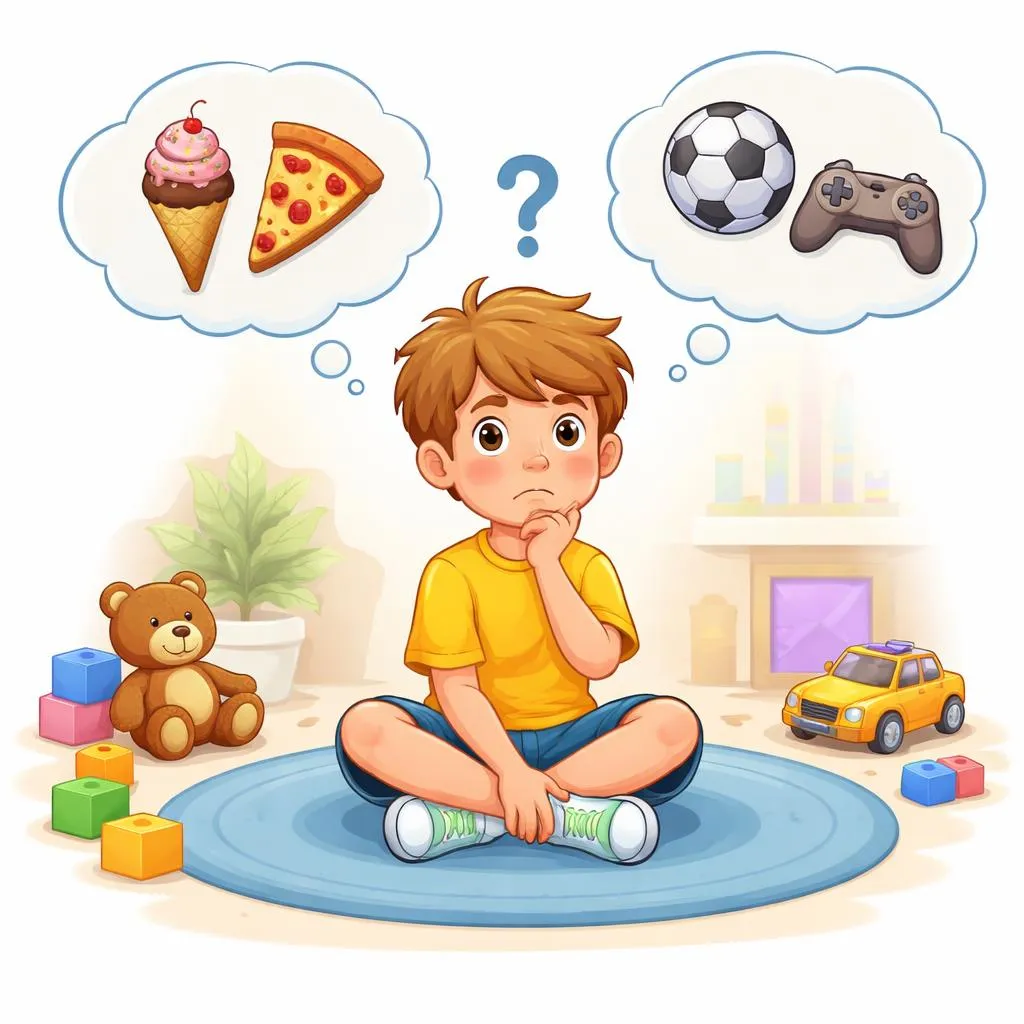

What Do These Expressions Mean? “I can't decide” and “I'm not sure” both express difficulty making a choice. They tell someone that you are unsure which option to pick. Children say these words when choosing a toy, a snack, or an activity. Both ask for patience or help.
“I can't decide” means I am unable to pick between the options. It is direct and honest. A child says it when two ice cream flavors both look good. It focuses on the action of choosing.
“I'm not sure” means I do not have confidence in one answer or choice yet. It is softer and more about the feeling. A child says it when asked a question they do not know. It focuses on the mental state.
These expressions seem similar. Both say “I need more time or help.” Both show you are not ready to answer. But one is about the act of deciding while one is about the feeling of uncertainty.
What's the Difference? One is about the action. One is about the feeling. “I can't decide” talks about the process of choosing. It means “I am stuck between options.” It asks for help or more time.
“I'm not sure” talks about your level of confidence. It means “I do not know the answer yet.” It asks for more information or patience. It is softer and less urgent.
Think of a child choosing a sticker. “I can't decide between the star and the heart” is clear. “I'm not sure which one I want” is also clear. One names the problem. One names the feeling.
One is for equal options. The other is for lack of knowledge. “I can't decide” is for two good choices. “I'm not sure” is for when you do not know the answer. Use “decide” for choices. Use “sure” for facts.
Also, “I can't decide” asks for help choosing. “I'm not sure” might ask for facts or more time. Choose based on what you need: help picking or more information.
When Do We Use Each One? Use “I can't decide” when you have options but cannot pick one. Use it for choosing toys, snacks, games, or colors. Use it when you need someone to help you choose. It fits preference decisions.
Examples at home: “I can't decide between the red shirt and the blue one.” “I can't decide which game to play first.” “I can't decide. They both look so good.”
Use “I'm not sure” when you lack information or confidence. Use it for test answers, facts, or remembering things. Use it when you need more time to think. It fits knowledge-based questions.
Examples for uncertainty: “I'm not sure what the capital of France is.” “I'm not sure if I finished my homework.” “I'm not sure what time we need to leave.”
Children need both phrases. “I can't decide” for choosing between good options. “I'm not sure” for not knowing facts or answers. Both are honest. Both ask for patience.
Example Sentences for Kids I can't decide: “I can't decide which cupcake to take.” “I can't decide between soccer or basketball.” “I can't decide. Can you help me pick?”
I'm not sure: “I'm not sure if I like this flavor.” “I'm not sure where I put my library book.” “I'm not sure. Let me think for a minute.”
Notice “I can't decide” is for picking. “I'm not sure” is for knowing. One asks for help choosing. One asks for time to think. Both are okay. Both are honest.
Parents can respond differently. “I can't decide” gets “let's look at the options together.” “I'm not sure” gets “take your time or let's find the answer.” Children learn different kinds of help.
Common Mistakes to Avoid Some children say “I'm not sure” when they mean “I can't decide.” That can confuse a parent. If you have two good options, say “I can't decide.” Save “I'm not sure” for facts or knowledge.
Wrong: “I'm not sure which cookie to pick.” (two good cookies) Right: “I can't decide which cookie to pick. Help me?”
Another mistake: saying “I can't decide” when you do not know a fact. If you do not know a test answer, say “I'm not sure.” “Decide” is for choices. “Sure” is for knowledge.
Wrong: “I can't decide what 5 plus 5 equals.” Right: “I'm not sure what 5 plus 5 equals. Is it 10?”
Some learners forget that both phrases are okay. It is fine to need help. It is fine to not know. Honesty is always better than guessing.
Also avoid saying “I can't decide” in a frustrated voice. If you are frustrated, say “I'm having trouble deciding.” A calm voice gets better help. Frustration is also honest, but kindness helps.
Easy Memory Tips Think of “I can't decide” as two paths in a forest. Both paths look good. You cannot choose. You need a guide.
Think of “I'm not sure” as a foggy window. You cannot see clearly. You need to wait or wipe the glass. You need more information.
Another trick: remember the problem. “Decide” is for too many good choices. “Sure” is for not enough facts. Good choices get “can't decide.” Missing facts get “not sure.”
Parents can say: “Decide for pick. Sure for a mental trick.” That means choosing gets “can't decide.” Not knowing gets “not sure.”
Practice at home. Two good snacks: “I can't decide.” A hard math fact: “I'm not sure.” Two different problems. One honest child.
Quick Practice Time Let us try a small exercise. Choose the better phrase for each situation.
Your child has two treats in front of them. Both look delicious. They cannot pick. a) “I'm not sure about these treats.” b) “I can't decide which treat to eat first.”
Your child is asked, “What time is your appointment?” They cannot remember. a) “I can't decide the time.” b) “I'm not sure what time it is. Let me check.”
Answers: 1 – b. Two good options fit “I can't decide.” 2 – b. A forgotten fact fits “I'm not sure.”
Fill in the blank: “When I have two good book choices at the library, I say ______.” (“I can't decide” fits the difficulty of picking between equals.)
One more: “When my teacher asks a question I did not study, I say ______.” (“I'm not sure” fits the honest lack of knowledge.)
Not knowing and not choosing are both okay. “I can't decide” asks for help picking. “I'm not sure” asks for help knowing. Teach your child both. Honesty about confusion is the first step to clarity.
Wrap-up “I can't decide” expresses difficulty choosing between options. “I'm not sure” expresses uncertainty about facts or answers. Use “I can't decide” for picking between good choices. Use “I'm not sure” for not knowing information or being uncertain. Both phrases ask for patience and help. A child who admits confusion is a child ready to learn.