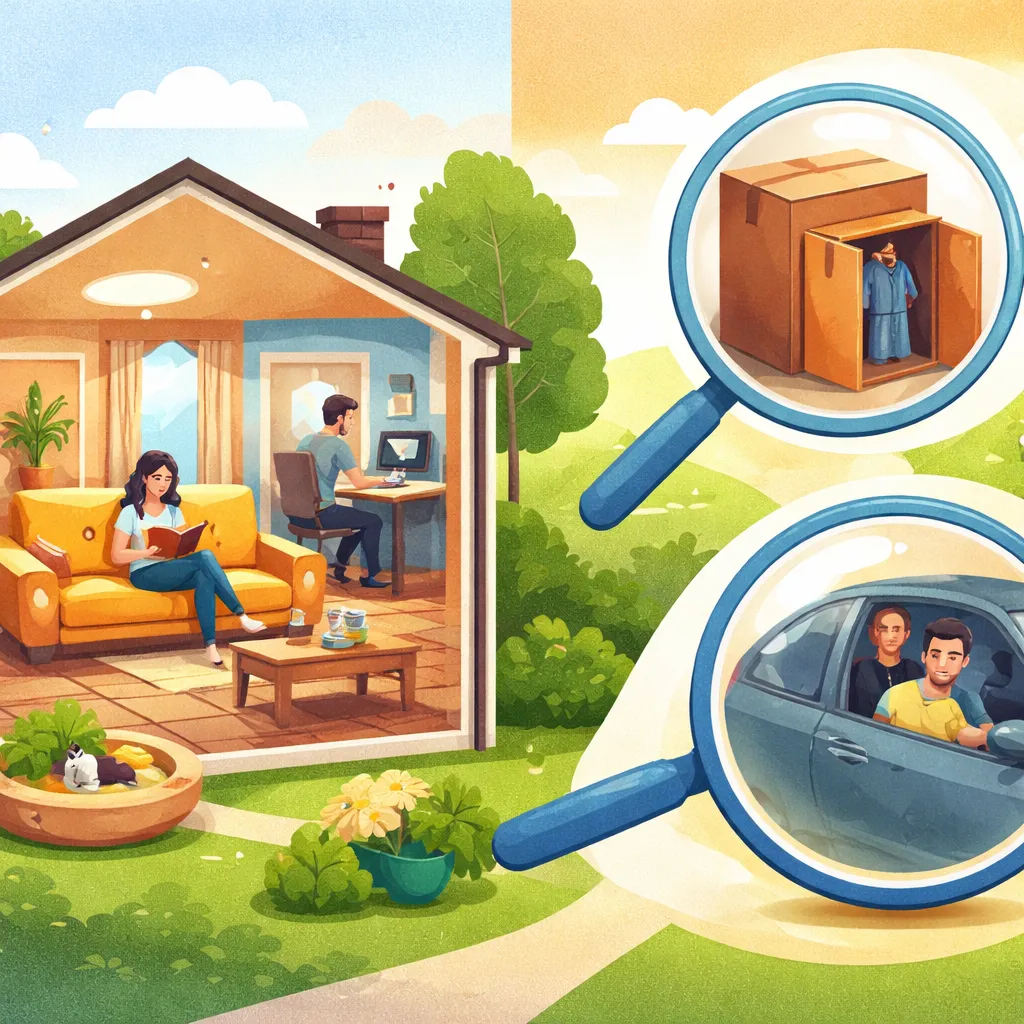

Children learn “in” early. Then they meet “inside” and “interior”. These words seem similar but not the same. Many parents ask if “inside and interior” are interchangeable. A toy inside a box is different from the interior of a building. The interior of a car is different from inside a drawer. Kids need clear examples. Parents can help by exploring rooms, containers, and vehicles together. This article gives you simple rules. You will find friendly explanations. Let’s explore “inside and interior” step by step.
Are Similar Words Really Interchangeable? Similar words often cause confusion. “Inside and interior” seem like close cousins. Both mean the inner part. But you cannot always swap them. Inside the box works. The interior of the box works but sounds formal. The interior of a building works. Inside a building also works but feels less specific. Language gives each word a different tone. Children benefit from knowing these tones. Parents can point out both words in houses, cars, and toys. This article focuses only on “inside and interior”. We will compare them clearly.
Set 1: Inside vs Interior — Which One Is More Common? “Inside” appears much more often. We say inside the house. We say inside the car. We say inside the bag. “Interior” appears less often. We say interior design. We say car interior. We say interior walls. For everyday talk, “inside” wins easily. Children hear “inside” for toys, rooms, and containers. “Interior” sounds more formal or technical. Inside a box is normal. The interior of a box sounds like a museum description. Parents can teach this by using “inside” for most situations. Save “interior” for design, cars, and formal descriptions.
Set 2: Inside vs Interior — Same Meaning, Different Contexts Sometimes “inside and interior” describe the same space. The inside of a house. The interior of a house. Both mean the inner area. But “interior” suggests the whole inner space, including walls and design. “Inside” can mean just being within the walls. Consider a car. The inside of a car is where you sit. The interior of a car includes the seats, dashboard, and roof liner. Consider a box. The inside of a box is the empty space. The interior of a box sounds too grand. For children, explain it this way. “Inside” is for being within something. “Interior” is for the whole inner area, often with design or structure. Use “inside” for containers and simple spaces. Use “interior” for buildings, vehicles, and decorated spaces.
Set 3: Inside vs Interior — Which Word Is “Bigger” or More Emphatic? “Interior” often feels more formal and complete. It suggests the entire inner space with attention to design. The interior of the cathedral is beautiful. The inside of the cathedral is also beautiful but sounds simpler. “Inside” feels casual and direct. Put the toy inside the box. “Interior” adds a sense of architecture and decoration. For children, this difference appears in descriptions. “The interior of the spaceship was full of buttons” sounds exciting and detailed. “The inside of the spaceship was full of buttons” sounds fine but less dramatic. Use “interior” for special descriptions. Use “inside” for everyday instructions.
Set 4: Inside vs Interior — Concrete vs Abstract Both “inside and interior” work for concrete things. Inside a closet (concrete). The interior of a car (concrete). “Inside” also works for abstract things. Inside your mind (abstract). Inside the situation (abstract). “Interior” is almost always concrete. Interior walls. Interior design. Interior of a building. You rarely say “interior of your mind” unless in a poem. For children, this is a helpful rule. Use “inside” for both concrete and abstract. Use “interior” only for concrete physical spaces, especially buildings and vehicles. Inside a dream. The interior of a church. Parents can make two columns. One column for inside things (box, house, mind, game). One column for interior things (car, building, room, cathedral).
Set 5: Inside vs Interior — Verb or Noun? First Understand the Role “Inside” is a preposition, noun, adjective, and adverb. “Interior” is a noun and adjective. Children know “inside” as a preposition and noun. Focus on the noun meanings for comparison. The inside of the box. The interior of the building. A useful tip: use “inside” for general inner spaces. Use “interior” for the inner part of structures, often with design or architecture. The inside of a drawer. The interior of a mansion. Teach your child to ask: Is this a simple container or a designed space? If simple container, use “inside”. If building or vehicle with design, “interior” is good.
Set 6: Inside vs Interior — American English vs British English American and British English treat “inside and interior” almost the same. One small difference: British English uses “interior” more often for home design. “Interior decorator” is common in both. Another difference: cars. British English says “car interior”. American English says “car interior” too. No real difference. For children, these differences do not matter. Teach international English. Say “inside the box” and “interior of the house”. Both dialects accept these. Parents only need to know that “interior” sounds more formal and professional. Use it to sound like a designer.
Set 7: Inside vs Interior — Which Fits Formal Situations? Formal English prefers “interior” for architecture, design, and vehicles. An architecture report says “the interior of the building”. A car manual says “interior features”. “Inside” works in formal writing too but sounds less precise. “The inside of the structure” is fine but less technical. For children, school writing benefits from “interior” for design and building reports. “The interior of the ancient temple was dark” sounds vivid. Use “inside” for simple descriptions. “The inside of the box was empty” is perfect. This builds register awareness.
Set 8: Inside vs Interior — Which One Is Easier for Kids to Remember? “Inside” is easier for young children. It has six letters. It sounds like “in” plus “side”. Children use “inside” every day. Inside the cup. Inside the closet. “Interior” has eight letters. It sounds like “in-tear-ee-or”. That is a longer word. Connect “interior” to “inter” (between) and “interior design”. The interior is the inside that you can decorate. That image helps memory. Also use hand gestures. Point inside a box. Then wave your hand around to show the whole interior of a room. Inside is simple. Interior is the whole decorated inner space. Parents can play a building game. Take a toy house. Point to the inside (any inner spot). Then talk about the interior (the walls, floors, and design). This builds clear distinction.
Mini Exercise: Can You Spot the Differences Between These Similar Words? Let’s practice with ten sentences. Choose “inside” or “interior”. Answers are below.
The __________ of the cathedral was breathtaking.
Please put the toys __________ the box.
The car’s __________ was made of leather.
She felt a warmth __________ her heart.
The __________ of the cave was very dark.
He looked __________ the refrigerator for food.
The __________ designer chose blue curtains.
The __________ of the earth is very hot.
Come __________ the house, it’s raining.
The __________ of the spaceship had many controls.
Answers: 1 interior, 2 inside, 3 interior, 4 inside, 5 interior or inside (interior sounds more dramatic), 6 inside, 7 interior, 8 interior (scientific term) or inside, 9 inside, 10 interior or inside (interior sounds more technical).
Count the correct answers. For sentences 5 and 8 and 10, accept either. 8-10 correct means your child understands “inside and interior” well. 5-7 correct means review the simple vs designed space section. Below 5 correct means focus only on “inside” for two weeks. Then add “interior” for buildings and vehicles.
Parent Tips: How to Help Kids Learn and Remember Similar Words You do not need teaching tools. You just need daily noticing. Every day has chances to use “inside”. Save “interior” for special building and car talks. At breakfast: “The milk is inside the refrigerator. The interior of the fridge has shelves.” At the park: “The ball is inside the net. The interior of the playhouse is painted blue.” At bedtime: “Your pajamas are inside the drawer. The interior of the tent is cozy.” Use a warm voice. Do not correct harshly. If your child says “The interior of the box”, you say “That is the inside of the box. Interior is for buildings and cars.” Keep it kind. Another tip: create a design chart. Draw a house. Label the “interior” with arrows pointing to walls and floors. Draw a box. Label the “inside” as the empty space. Hang the chart in the playroom. Children learn from seeing simple vs designed spaces. Finally, play the “inside vs interior” detective game. Walk around the house. Point to the inside of a drawer. Point to the interior of a closet (with clothes and design). Point to the inside of a cup. Point to the interior of the car. This builds real-world understanding. You and your child will master “inside and interior” through playful observation. Keep looking within. Every word helps you describe spaces from simple to grand.