
Are Similar Words Really Interchangeable?
Children often meet words that look close in meaning. They may think these words always mean the same thing. This is a natural stage in language learning.
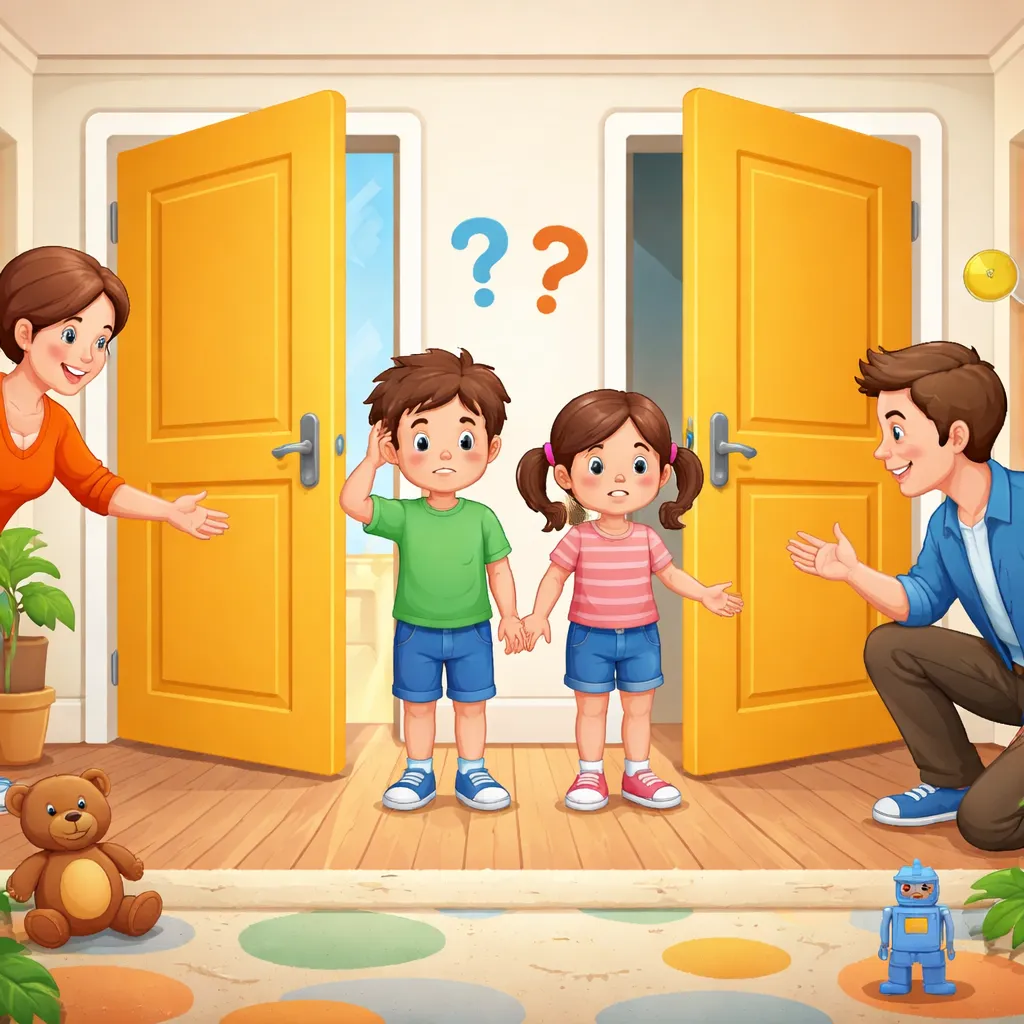
Words like open and ajar seem simple at first. Both describe a door or window that is not fully closed. But are they truly interchangeable in every situation?
Not always. Language carries small shades of meaning. These shades help speakers describe the world more precisely. Learning these differences helps children move from basic communication to expressive language use.
When children understand subtle word differences, they begin to notice context. They also begin to choose words more carefully. This builds stronger reading and speaking skills over time.
Understanding open and ajar is a great starting point. It teaches clarity, detail, and emotional tone in English vocabulary.
Set 1: open vs ajar — Which One Is More Common?
The word open is very common in everyday English. Children hear it from early learning stages. It appears in instructions, stories, and conversations.
Open is used for doors, books, windows, hands, and even ideas. It is flexible and widely understood.
Ajar is less common. It appears mostly in written English or storytelling. It is more specific and descriptive.
In daily speech, people prefer open. It is simple and universal. For example, “The door is open” is more natural than “The door is ajar” in casual talk.
However, ajar adds detail. It suggests the door is slightly open, not fully. This small detail is what makes it special.
Children benefit from learning both. One builds communication speed. The other builds descriptive accuracy.
Set 2: open vs ajar — Same Meaning, Different Contexts
At first glance, both words describe access or space. But context changes everything.
Open works in almost any situation. A store can be open. A window can be open. A person can be open-minded.
Ajar only works in physical situations. It usually describes doors or windows that are slightly open.
This difference is important for learners. It teaches that English words are not just definitions. They are also usage patterns.
A sentence like “The door was open all night” gives a general idea. But “The door was ajar all night” creates a picture of something slightly left open.
This difference helps children improve reading comprehension. They begin to visualize language, not just translate it.
Context teaches meaning better than memorization. That is why exposure to stories is so powerful in vocabulary building.
Set 3: open vs ajar — Which Word Is “Bigger” or More Emphatic?
The word open is broader in meaning. It covers many situations and ideas. Because of this, it feels larger and more general.
Ajar is smaller in meaning. It focuses on a narrow idea. It describes a small gap or partial opening.
When children compare these words, they learn about intensity. Open is complete. Ajar is partial.
This helps learners understand degrees of meaning in English. Many English words work like this. One word is broad. The other is precise.
For example:
Open: The door is fully accessible. Ajar: The door is slightly open.
This difference builds stronger descriptive skills. Children begin to notice how much detail a word carries.
Understanding intensity also improves storytelling. It allows children to describe scenes more clearly and vividly.
Set 4: open vs ajar — Concrete vs Abstract
Both open and ajar can describe physical things. But open also moves into abstract meaning.
Open can describe feelings and ideas. A person can be open to suggestions. A mind can be open. A conversation can be open.
Ajar stays concrete. It refers only to physical objects like doors or windows.
This difference is important for language development. Children learn that some words can “travel” into ideas, while others cannot.
Abstract usage helps learners think beyond objects. It expands cognitive language skills.
For example:
Open mind (abstract) Open door (physical) Ajar door (physical only)
By comparing these, children begin to see how English connects physical and emotional worlds.
Set 5: open vs ajar — Verb or Noun? First Understand the Role
The word open can act as different parts of speech. It can be a verb, adjective, or even noun in some contexts.
Verb: Open the door. Adjective: The door is open. Noun: In sports, an “Open” tournament.
Ajar is mainly an adjective. It describes the state of something. It does not usually function as a verb or noun.
This difference helps children avoid confusion. Many learners think all vocabulary behaves the same way. But English is flexible.
Understanding word roles improves sentence building. It helps children structure their thoughts more clearly.
For example:
Correct: The window is open. Correct: The window is ajar. Incorrect usage patterns become easier to avoid when roles are understood.
This builds grammar confidence step by step.
Set 6: open vs ajar — American English vs British English
Both open and ajar are used in American and British English. There is no major spelling difference.
However, frequency of use can differ slightly.
In American English, open dominates daily speech. It is more commonly used in conversation and instruction.
In British English, ajar appears more often in literature and descriptive writing. It adds a slightly formal or narrative tone.
Children learning English globally benefit from exposure to both styles. It helps them understand stories from different regions.
This also builds reading flexibility. They do not feel confused when encountering less common words in books.
The key takeaway is simple: meaning stays the same, but style may shift.
Set 7: open vs ajar — Which Fits Formal Situations?
In formal communication, open is usually preferred. It is clear and direct.
Ajar is more stylistic. It is often used in storytelling, literature, or descriptive writing.
In instructions or official messages, clarity is important. So open is safer.
For example:
Formal instruction: Leave the door open. Literary description: The door stood ajar in the quiet hallway.
Children can learn that formality is about clarity and purpose. Not just about “big words.”
Using the right word in the right situation builds communication skill. It also improves writing tone awareness.
This understanding helps children grow into confident writers.
Set 8: open vs ajar — Which One Is Easier for Kids to Remember?
For most children, open is easier to remember. It is short, common, and used in daily life.
Ajar is slightly harder. It is less frequent and more specific.
However, ajar is also visually memorable. The idea of a “slightly open door” creates a strong mental image.
Parents can support learning by connecting words to visuals. Children remember images better than definitions.
A simple comparison helps:
Open = fully open door Ajar = small gap door
This contrast builds strong memory links. It also helps children understand precision in language.
Over time, both words become part of active vocabulary.
Mini Exercise: Can You Spot the Differences Between These Similar Words?
Try these simple practice questions with children:
The door is fully ______. (open / ajar) The window was slightly ______ during the night. (open / ajar) She is very ______ to new ideas. (open / ajar) The shop is ______ today. (open / ajar) The story described a door left ______ in the hallway. (open / ajar)
Answers:
open ajar open open ajar
This type of exercise helps children connect meaning with context. It also improves reading speed and confidence.
Parent Tips: How to Help Kids Learn and Remember Similar Words
Parents play an important role in vocabulary growth. Small daily habits make a big difference.
One helpful method is using real-life examples. When a door is slightly open, say “ajar.” When it is fully open, say “open.”
Story reading is also powerful. Point out words in books and ask children what they notice. This builds awareness naturally.
Avoid over-explaining. Keep explanations short and visual. Children learn best through repetition and context.
Encourage children to describe their environment. Ask them to describe doors, windows, or objects using both words.
Games also help. Ask them to find things that are “open” or “not fully closed.”
Most importantly, praise correct usage gently. Confidence supports long-term learning more than correction alone.
Over time, children will not only remember words like open and ajar, but also understand how English creates meaning through subtle differences.