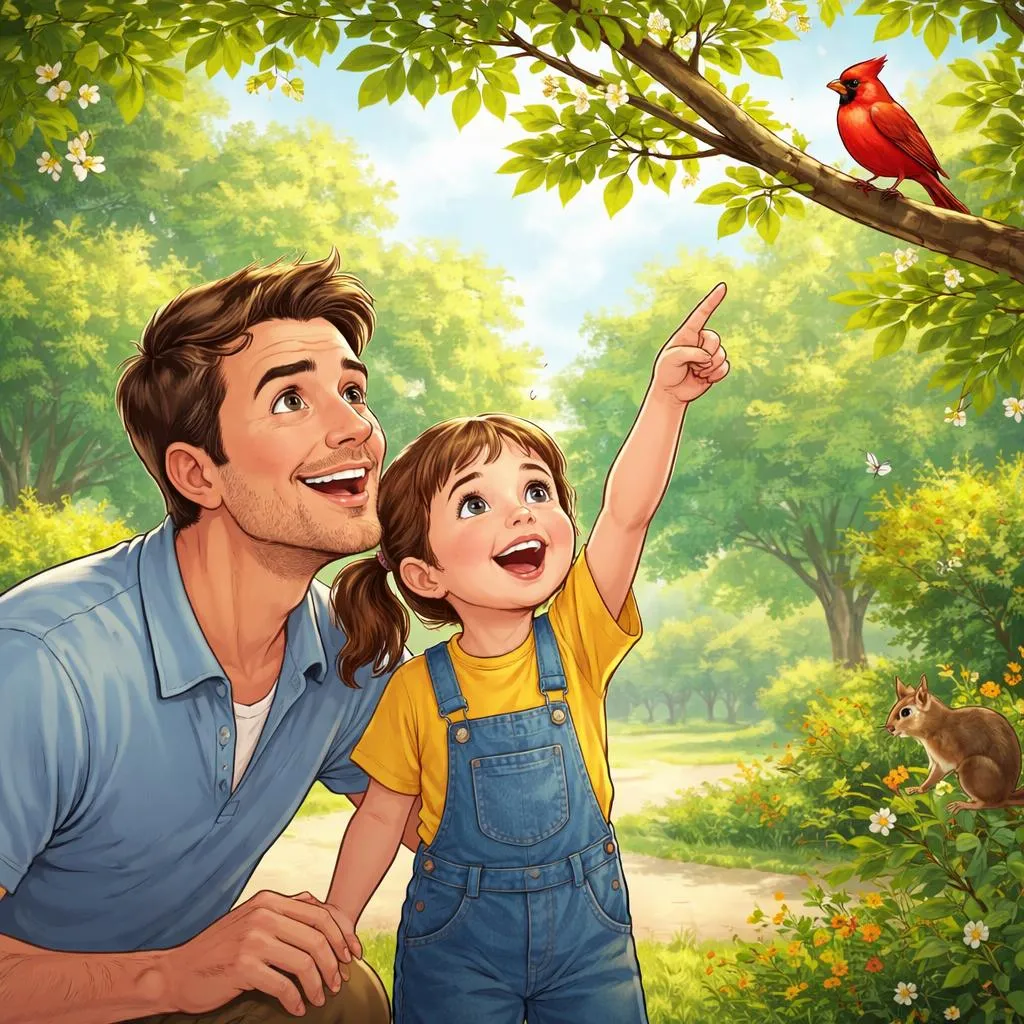

What Do These Expressions Mean? “There it is” and “look there” both direct someone's attention to a specific place. They tell a person to see something that the speaker has already noticed. Children say these words when spotting a plane, a squirrel, or a lost toy. Both share discovery.
“There it is” means the object you are looking for is at that location. It is a statement of fact. A child says it when the missing remote is spotted on the table. It ends a search.
“Look there” is an instruction to turn your eyes to that spot. It is a command. A child says it when a butterfly lands on a flower. It asks for attention.
These expressions seem similar. Both point to something. Both share a discovery. But one states the location while one commands another to look.
What's the Difference? One states the location. One commands looking. “There it is” is for when something was lost or being looked for. It answers the question “Where is it?” It ends the search.
“Look there” is for when you see something interesting and want to share it. It is not about a lost item. It is about wonder. It begins a shared experience.
Think of a child looking for a lost shoe. Spots it under the couch. “There it is!” is right. Now think of a child seeing a rainbow. Wants a parent to see it. “Look there!” is right. One is for finding. One is for sharing.
One is for lost items. The other is for interesting sights. “There it is” for the missing library book. “Look there” for the beautiful sunset. Use the first for searching. Use the second for admiring.
Also, “look there” is more urgent and exciting. “There it is” is more relieved. Tone matters.
When Do We Use Each One? Use “there it is” for when you find something that was lost or hidden. Use it for keys, toys, socks, or homework. Use it to end a search. It fits finding moments.
Examples at home: “There it is! Your hat was behind the door.” “There it is. I found the last puzzle piece.” “There it is. My glasses were on my head.”
Use “look there” for sharing interesting sights. Use it for animals, clouds, stars, or beautiful things. Use it to invite someone to see with you. It fits wonder moments.
Examples for sharing: “Look there! A deer in the yard.” “Look there. The moon is so big tonight.” “Look there. An eagle is flying.”
Children can use both. “There it is” for finding. “Look there” for sharing. Both connect people.
Example Sentences for Kids There it is: “There it is! I found your pencil.” “There it is. The remote was under the pillow.” “There it is. I see the toy in the closet.”
Look there: “Look there! A squirrel is eating a nut.” “Look there. The flower opened.” “Look there. The stars are coming out.”
Notice “there it is” is for finding. “Look there” is for sharing wonder. Children learn both. One for searching. One for marveling.
Parents can use both. Finding a lost mitten: “there it is.” Seeing a rainbow: “look there, honey.” Children learn both kinds of pointing.
Common Mistakes to Avoid Some children say “look there” when they are looking for something. That is not wrong, but “there it is” is better. If you found it, say “there it is.” “Look there” means “look at this interesting thing.”
Wrong: “Look there! I found your shoe.” Better: “There it is! I found your shoe.”
Another mistake: saying “there it is” for something that was not lost. A bird is not lost. It was never missing. Say “look there” for birds and clouds. Save “there it is” for lost items.
Wrong: “There it is, a plane.” Right: “Look there, a plane.”
Some learners point but do not use words. Pointing is fine, but words help blind people or people not looking. Say the phrase and point. Both together are clearest.
Also avoid shouting “look there” if the person is right next to the object. Say “right there” or “by your foot.” Be specific.
Easy Memory Tips Think of “there it is” as a relieved sigh. Phew, found it. For lost things.
Think of “look there” as a pointing finger. ?? See that? For sharing wonders.
Another trick: remember the purpose. “There it is” answers a question. “Look there” asks for attention. Answer gets “there it is.” Attention gets “look there.”
Parents can say: “There for found. Look for a beautiful sight to astound.” That means found items get “there it is.” Scenic or interesting sights get “look there.”
Practice at home. Find a lost toy: “there it is.” See a butterfly: “look there.” Two different pointing moments.
Quick Practice Time Let us try a small exercise. Choose the better phrase for each situation.
A child has been searching for their hairbrush for ten minutes. They see it on a shelf. a) “Look there, a hairbrush.” b) “There it is! I found it.”
A child sees a hot air balloon floating in the sky. They want a parent to see it. a) “There it is, a balloon.” b) “Look there! A hot air balloon.”
Answers: 1 – b. Finding a lost item after a search fits “there it is.” 2 – b. Sharing an interesting sight fits the wonder word “look there.”
Fill in the blank: “When I find my missing library book under the bed, I shout ______.” (“There it is” is the relieved, found-it choice for lost things.)
One more: “When I see a shooting star and want my mom to see it too, I say ______.” (“Look there” is the sharing-wonder, attention-getting choice.)
Pointing connects us. “There it is” ends a search. “Look there” starts a shared wonder. Teach your child both. A child who can point with words brings others into their world.
Wrap-up “There it is” announces the location of a lost or hidden item, ending a search. “Look there” directs someone's attention to an interesting or beautiful sight. Use “there it is” for missing socks, lost toys, and hidden keys. Use “look there” for birds, rainbows, stars, and other wonders. Both phrases share discovery. A child who learns both can show you what they find and what they love.