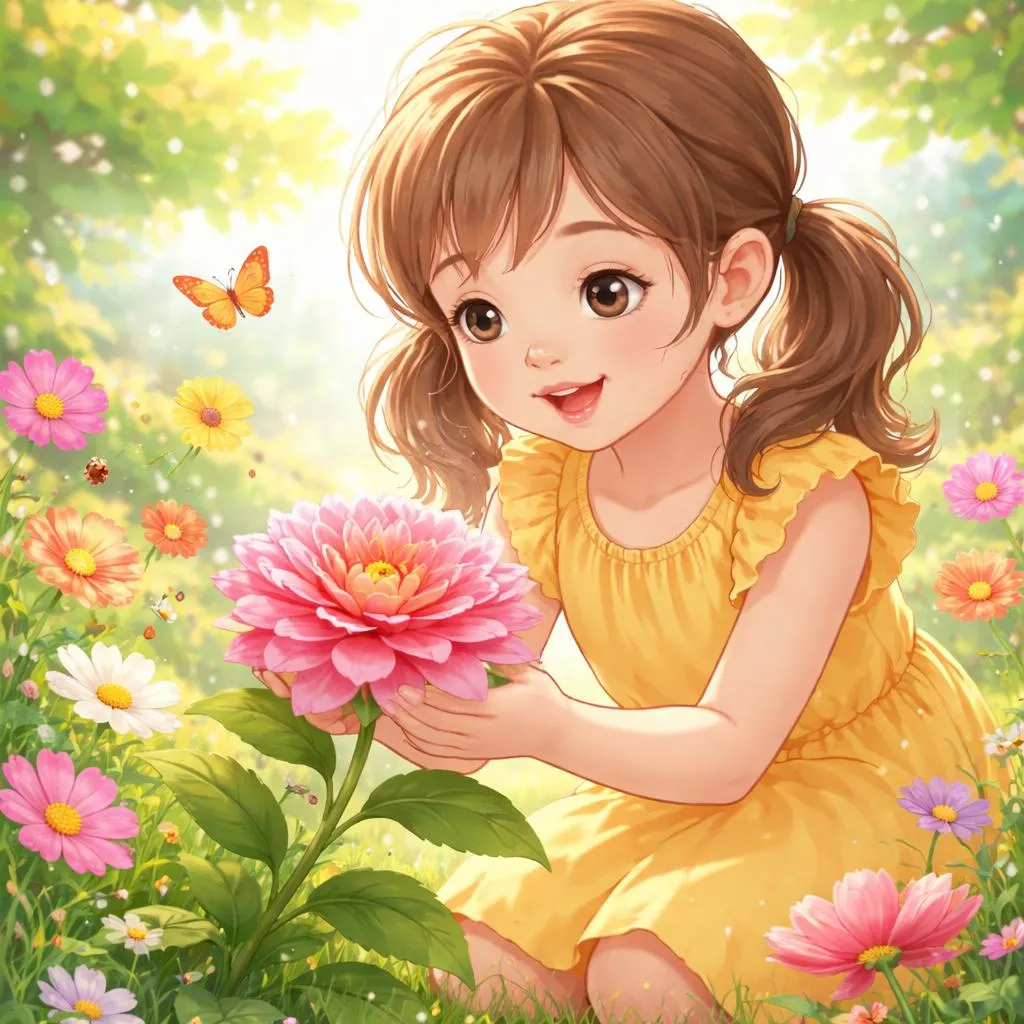

What Do These Expressions Mean? “It's pretty” and “it's lovely” both express admiration for something beautiful or pleasing. They tell someone that an object, person, or scene is attractive to you. Children say these words about flowers, drawings, clothes, or sunsets. Both spread kindness.
“It's pretty” means the thing is pleasant to look at. It is common and simple. A child says it when seeing a colorful butterfly. It is friendly and sweet.
“It's lovely” means the thing is beautiful and also creates a warm, gentle feeling. It is softer and more emotional. A child says it when seeing a peaceful garden. It feels more tender.
These expressions seem similar. Both say “this is beautiful.” Both make the speaker and listener feel good. But one is for everyday beauty while one is for gentle, warm beauty.
What's the Difference? One is for simple, everyday beauty. One is for softer, more tender beauty. “It's pretty” works for almost any beautiful thing. A flower, a drawing, a dress, a sunset. It is the standard, safe choice.
“It's lovely” is warmer and more emotional. It often describes things that are not just beautiful but also sweet or peaceful. A baby's smile, a cozy room, a kind gesture. It is a deeper word.
Think of a child seeing a rainbow. “It's pretty” is right. “It's lovely” is also right, but feels more gentle. One is for the eye. One is for the heart.
One is for friends. The other is for more special moments. “It's pretty” is what you say to a classmate. “It's lovely” is what you say to your grandmother. Use the first for casual. Use the second for tender.
Also, “lovely” can describe people's actions. “That was lovely of you to help” works. “Pretty” does not work for actions. Actions can be lovely, not pretty.
When Do We Use Each One? Use “it's pretty” for most everyday beauty. Use it for drawings, decorations, clothes, and nature. Use it as a quick, kind comment. It fits casual moments.
Examples at home: “It's pretty. I like the pink color.” “Your drawing is pretty. I like the stars.” “It's pretty outside today. The sun is shining.”
Use “it's lovely” for gentler, warmer beauty. Use it for peaceful scenes, sweet moments, or kind acts. Use it to be extra tender. It fits gentle moments.
Examples for tenderness: “It's lovely how you helped your brother.” “What a lovely sunset. So peaceful.” “It's lovely to see you smile.”
Children can use both. “It's pretty” for everyday. “It's lovely” for tenderness. Both are kind.
Example Sentences for Kids It's pretty: “It's pretty. Look at the butterfly.” “Your bracelet is pretty. I like the beads.” “It's pretty when the snow sparkles.”
It's lovely: “It's lovely to sit here with you.” “What a lovely day for a picnic.” “It's lovely that you shared your snack.”
Notice “it's pretty” is about how things look. “It's lovely” is about how things feel. Children learn both. One for eyes. One for heart.
Parents can use both. A drawing: “it's pretty.” A kind act: “that's lovely.” Children learn different beauty words.
Common Mistakes to Avoid Some children say “lovely” for everything. That wears out the word. Save “lovely” for special, tender moments. Use “pretty” for everyday beauty.
Wrong: “It's lovely” (a normal pencil). Right: “It's pretty” (a normal pencil).
Another mistake: saying “pretty” for people in a shallow way. “You look pretty” is nice, but “you are kind” is deeper. Teach children to compliment character too.
Wrong: Only saying “you're pretty.” Better: “That was lovely of you to help.”
Some learners forget that “pretty” can mean “very” in some contexts. “It's pretty cold” means somewhat cold. “It's lovely” never means that. Context matters.
Also avoid saying “it's pretty” for things that are not meant to be pretty. A mess is not pretty. A scratch is not pretty. Be honest with your words.
Easy Memory Tips Think of “it's pretty” as a shiny ribbon. Bright. Cheerful. Nice to see. For everyday beauty.
Think of “it's lovely” as a warm hug. Soft. Tender. Heartfelt. For gentle, warm beauty.
Another trick: remember the feeling. “Pretty” is for eyes. “Lovely” is for heart. Eyes get “pretty.” Heart gets “lovely.”
Parents can say: “Pretty for a sparkle. Lovely for a miracle.” That means everyday beauty gets “pretty.” Tender, warm beauty gets “lovely.”
Practice at home. A colorful drawing: “it's pretty.” A baby's laugh: “it's lovely.” Two different kinds of beauty.
Quick Practice Time Let us try a small exercise. Choose the better phrase for each situation.
A child shows you a drawing of a rainbow with bright crayons. a) “It's lovely. You are so sweet.” b) “It's pretty. I like the colors.”
A child shares their snack with a friend who forgot theirs. It was a kind act. a) “It's pretty that you shared.” b) “That was lovely of you to share.”
Answers: 1 – b. Bright colors in a drawing fit the visual “pretty.” 2 – b. A kind act of sharing fits the warm, tender “lovely.”
Fill in the blank: “When I see a colorful butterfly, I say ______.” (“It's pretty” is the natural, visual, everyday choice.)
One more: “When I see my baby cousin smile peacefully, I say ______.” (“It's lovely” fits the tender, heartwarming moment.)
Beauty comes in two forms. “It's pretty” sees beauty with eyes. “It's lovely” feels beauty with the heart. Teach your child both. A child who sees pretty and loves lovely grows up with full vision.
Wrap-up “It's pretty” describes visual beauty that is pleasant to look at. “It's lovely” describes a warmer, more tender beauty that touches the heart. Use “it's pretty” for drawings, colors, and everyday attractive things. Use “it's lovely” for peaceful scenes, kind acts, and sweet moments. Both phrases spread kindness. A child who learns both learns to see beauty everywhere.