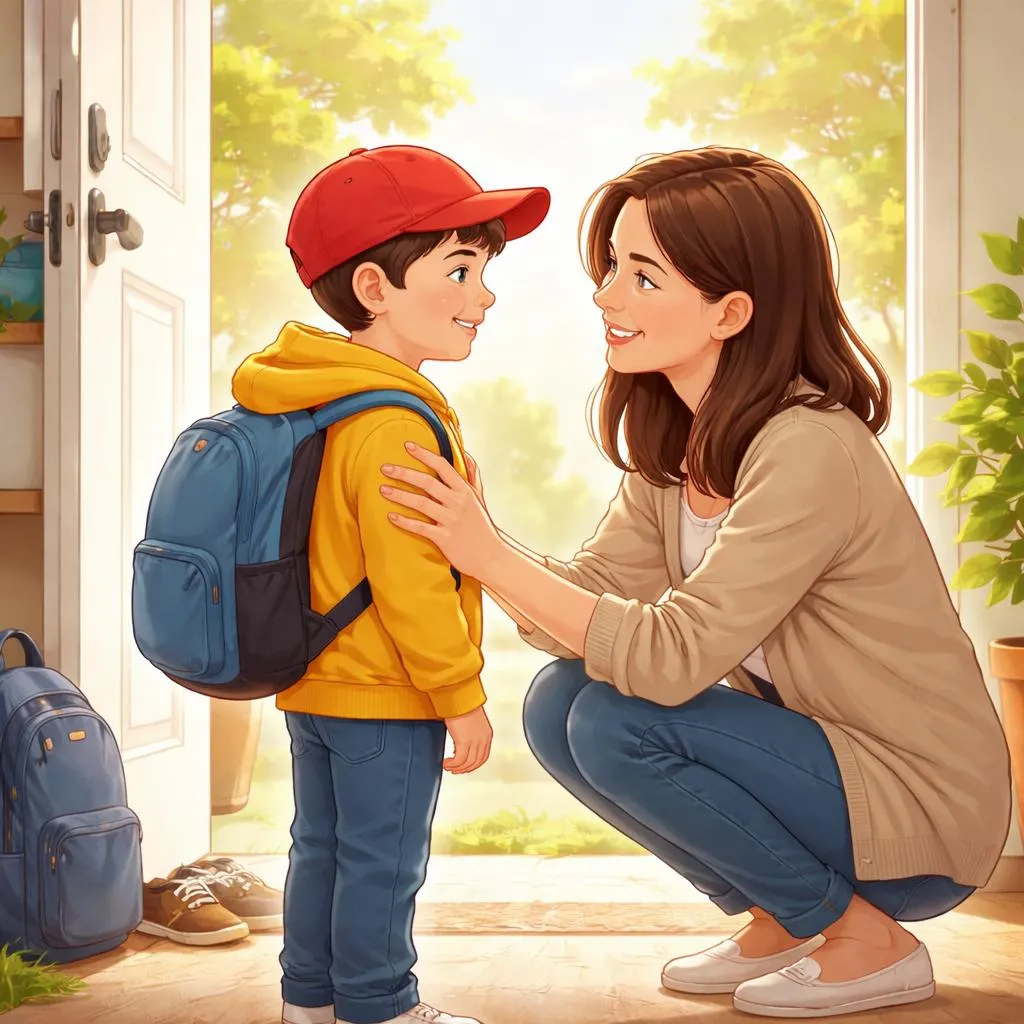

What Do These Expressions Mean? “Be safe” and “take care” both tell someone to avoid harm and stay well. They remind a person to make good choices that protect themselves. Children hear these words when leaving for school, a trip, or outdoor play. Both express love through concern.
“Be safe” means act in a way that prevents injury or danger. It is direct and clear. A parent says it when a child rides a bike. It focuses on avoiding harm.
“Take care” means look after yourself and your well-being. It sounds softer and more general. A parent says it when a child travels far away. It focuses on overall health and happiness.
These expressions seem similar. Both ask a child to stay out of trouble. Both send a child off with worry wrapped in love. But one is about immediate danger while one is about general well-being.
What's the Difference? One is for immediate safety. One is for general well-being. “Be safe” works best when there is a specific risk. Crossing a street. Riding a bike. Climbing a tree. It is a direct warning.
“Take care” works for all departures. It is gentler and less urgent. It means “look after yourself in every way.” It fits long trips or everyday goodbyes.
Think of a child running to the playground. “Be safe on the slide” is right. “Take care on the slide” is also fine but less specific. One focuses on the risk. One focuses on the child.
One is for short trips. One is for long separations. “Be safe” for a walk to the store. “Take care” for a week at Grandma's house. Match the phrase to the time away.
Also, “take care” can mean “goodbye” in a gentle way. “Be safe” rarely means goodbye alone. You can say “take care” as a full farewell. “Be safe” usually needs more words.
When Do We Use Each One? Use “be safe” for activities with clear risks. Use it for biking, swimming, climbing, or crossing streets. Use it when you want to remind a child of a specific danger. It fits action moments.
Examples at home: “Be safe on your skateboard. Wear your helmet.” “Be safe crossing the street. Look both ways.” “Be safe in the pool. No running.”
Use “take care” for general well-being. Use it for school, trips, or any goodbye. Use it when you want to be gentle and warm. It fits all departures.
Examples for general care: “Take care at school today. Listen to your teacher.” “Take care on your trip. Call me when you land.” “Take care of yourself. I love you.”
Children need both phrases. “Be safe” for risky activities. “Take care” for everyday goodbyes. One protects. One nurtures.
Example Sentences for Kids Be safe: “Be safe on your bike. Watch for cars.” “Be safe at the trampoline park. No rough play.” “Be safe. Hold my hand in the parking lot.”
Take care: “Take care at camp. I will miss you.” “Take care of your little brother on the walk home.” “Take care. Call me if you need anything.”
Notice “be safe” focuses on the danger. “Take care” focuses on the child. One is a warning light. One is a hug in words. Both say “I love you enough to worry.”
Parents can use both every day. Risky activity: “be safe.” Any goodbye: “take care.” Children learn different levels of concern.
Common Mistakes to Avoid Some children say “be safe” when there is no risk. That sounds strange. Sitting on the couch does not need “be safe.” Save it for moments with real danger.
Wrong: “Be safe eating your cereal.” Right: “Enjoy your cereal.”
Another mistake: saying “take care” too quickly. “Take care” can sound like “I don't care” if mumbled. Say it clearly. Make eye contact. A fast, flat “take care” feels empty.
Wrong: (mumbling) “Take care.” Right: “Take care, sweetie. I love you.”
Some learners forget to add the reason for “be safe.” “Be safe” alone is okay. But “be safe on your bike” is better. Specificity helps the child remember.
Also avoid saying “be safe” with fear in your voice. If you sound scared, the child gets scared. Say it with calm confidence. “Be safe” should feel like a tool, not a warning of doom.
Easy Memory Tips Think of “be safe” as a helmet. The helmet protects the head. Hard and specific. For activities with risks.
Think of “take care” as a warm coat. The coat covers the whole body. Soft and general. For everyday life.
Another trick: remember the risk level. “Safe” means avoiding danger. “Care” means being kind to yourself. Danger gets “be safe.” Everyday gets “take care.”
Parents can say: “Safe for risk. Care for a loving brisk.” That means risky activities get “be safe.” Everyday goodbyes get “take care.”
Practice at home. Child rides a bike: “be safe.” Child leaves for school: “take care.” Two different levels of worry. Both from love.
Quick Practice Time Let us try a small exercise. Choose the better phrase for each situation.
Your child is about to cross a busy intersection alone for the first time. a) “Take care crossing the street.” b) “Be safe. Look both ways before you cross.”
Your child is leaving for a week-long trip with grandparents. a) “Be safe on your trip.” b) “Take care. Have a wonderful time. I love you.”
Answers: 1 – b. A dangerous intersection needs the direct “be safe.” 2 – b. A long, fun trip fits the gentle “take care.”
Fill in the blank: “When my child rides a scooter down a hill, I call out ______.” (“Be safe” fits the clear physical risk.)
One more: “When my child leaves for a sleepaway camp, I whisper ______ as they board the bus.” (“Take care” fits the longer separation and general well-being.)
Worry is love in disguise. “Be safe” protects from harm. “Take care” nurtures the whole self. Teach your child both. They will learn that your worry means you care.
Wrap-up “Be safe” warns against specific dangers in risky activities. “Take care” gently wishes for overall well-being in any goodbye. Use “be safe” for biking, swimming, and crossing streets. Use “take care” for school, trips, and everyday departures. Both phrases send a child off with love. That love is the safest thing they carry.