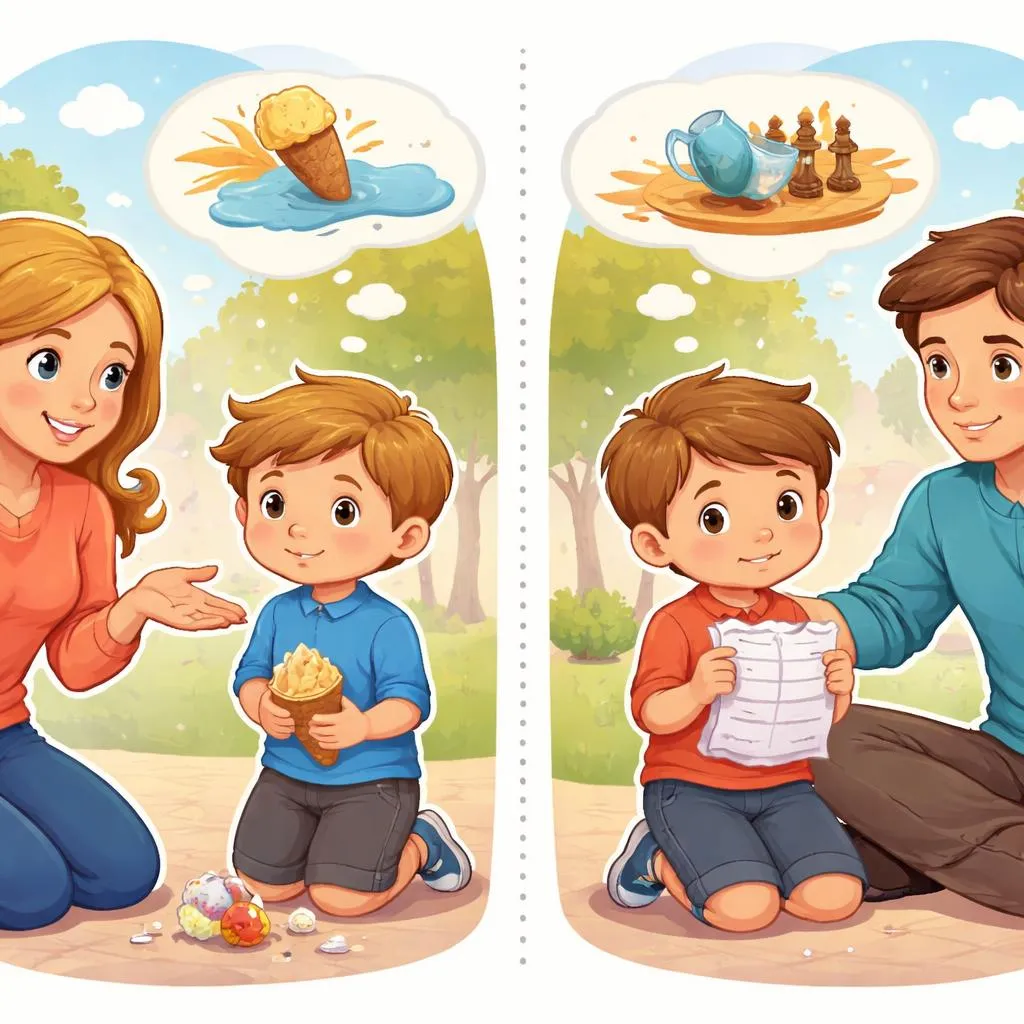

A child picks the wrong color shirt. They worry. A parent says "it doesn't matter." Another child makes a small error in a game. They freeze. A teacher says "it's of no consequence."
Both phrases mean "this is not important." Both help children release small worries. But they feel very different.
One is simple and everyday. One is big and formal. Parents and teachers use both. Understanding the difference helps children know what "not important" really means.
This article helps families explore these phrases. Your child will learn when something truly does not matter at all.
What Do These Expressions Mean?
"It doesn't matter" means "this choice or event has no effect on what is truly important." The phrase is casual and common. It says "do not spend energy on this."
For a child, think of this like choosing which shoe to put on first. Left or right? It does not matter. The result is the same. Both shoes go on.
"It's of no consequence" means "this event will cause no lasting effect or result in the future." The phrase is formal and weighty. It says "this will change nothing."
For a child, think of this like dropping a crumb on the floor. A parent says "it is of no consequence." They mean "this crumb will not change your day, your week, or your life."
These two expressions seem similar because both say "not important." Both tell a child to stop worrying. Both free up mental space for better things.
But one is for tiny daily choices. One is for bigger perspective.
What's the Difference?
The main difference lies in the formality and the scale. "It doesn't matter" is casual and everyday. "It's of no consequence" is formal and philosophical.
One is about preference. One is about impact.
"It doesn't matter" sounds simple and quick. You use it for small decisions and minor preferences. Which crayon? Which seat? Which game first? These do not matter.
"It's of no consequence" sounds more serious and final. You use it to give a child perspective on something that feels big but actually has no lasting effect.
Another difference involves the child's emotion. "It doesn't matter" works for neutral choices. "It's of no consequence" works when a child is truly upset about something that will not last.
Also, "it's of no consequence" is much less common. Using it makes the moment feel special or important.
So remember: it doesn't matter = small daily choices, casual. it's of no consequence = lasting impact is zero, formal.
When Do We Use Each One?
Use "it doesn't matter" for small, everyday decisions. Use it when a child cannot decide between two equal options. Use it for preferences that have no right answer.
For example, a child cannot decide whether to wear the red socks or the blue socks. You say "it doesn't matter. Both are fine. Just pick one."
Use "it doesn't matter" for minor mistakes. A child calls a dog "he" instead of "she." "It doesn't matter. The dog does not care."
Use "it's of no consequence" for bigger worries that truly have no lasting effect. Use it when a child is upset about a small failure. Use it for temporary problems.
For example, a child loses a race and cries. You say "it is of no consequence. In one year, you will not remember this race. What matters is that you tried."
Use "it's of no consequence" for social worries that feel huge. A child said something awkward. "It is of no consequence. No one will remember by tomorrow."
Also use "it's of no consequence" to teach perspective. A child breaks a cheap toy. "It is of no consequence. The toy was old. Your safety is what matters."
Remember: small daily choices and preferences = "it doesn't matter." Larger worries with no lasting effect = "it's of no consequence."
Example Sentences for Kids
Here are simple sentences for "it doesn't matter":
It doesn't matter if you use the red crayon or the blue crayon. Both will look nice.
(This addresses a small color choice.)
You forgot to say "thank you" right away. It doesn't matter. You can say it now.
(This addresses a small social slip.)
It doesn't matter which way you put the book on the shelf. It will stay there either way.
(This addresses a trivial organizational choice.)
Here are simple sentences for "it's of no consequence":
You tripped and fell in front of everyone at the assembly. It is of no consequence. By next week, no one will remember.
(This addresses an embarrassing moment with no lasting effect.)
You lost the game by one point. It is of no consequence. The fun was in playing together.
(This addresses a small loss that will not change your life.)
You broke the plastic spoon. It is of no consequence. We have many more.
(This addresses a broken item with no lasting importance.)
Notice how "it doesn't matter" is for tiny daily choices. "It's of no consequence" is for worries that feel big but have no lasting impact.
Common Mistakes to Avoid
Many people say "it's of no consequence" for tiny daily choices. This sounds silly. A child cannot pick a pencil. You say "it is of no consequence."
Incorrect: Pencil choice. "It is of no consequence."
Correct: "It doesn't matter. Just pick one."
Save the big phrase for moments that need big perspective.
Another mistake: using "it doesn't matter" for real feelings. A child is deeply upset about something. You say "it doesn't matter." This feels dismissive.
Incorrect: Child crying over lost toy. "It doesn't matter."
Correct: "I know this feels big right now. But in the long run, it is of no consequence. Your feelings matter, but this toy can be replaced."
When a child is truly upset, acknowledge their feelings first. Then offer perspective.
A third mistake: forgetting that both phrases can invalidate a child's feelings. A child says "this matters to me." You say "it doesn't matter." The child feels unheard.
Instead, say "I understand why you care about this. But let me help you see why it might not be as important as it feels." Validate first. Then offer perspective.
Easy Memory Tips
Here is a fun trick for kids. Think of a coin toss and a telescope.
"It doesn't matter" = a coin toss. Heads or tails? It does not matter. Flip the coin. Either way is fine. Tiny daily choices are like coin tosses.
"It's of no consequence" = a telescope. Look through the telescope. You see how big the world is. Your small problem gets smaller and smaller. Eventually, through the telescope, your worry is of no consequence.
Another memory tip: count the words. "It doesn't matter" has three short words. It feels quick and light. "It's of no consequence" has five longer words. It feels heavier and more thoughtful.
Draw a simple picture. Draw a child flipping a coin next to "it doesn't matter." Draw a child looking through a telescope at the stars next to "it's of no consequence." The images help children feel the difference.
Also try this question: "Is this a tiny daily choice or a worry that feels big but has no lasting effect?" If tiny choice, say "it doesn't matter." If big-feeling worry with no lasting effect, say "it's of no consequence."
Quick Practice Time
Try these easy exercises with your child. Fill in the blank with "it doesn't matter" or "it's of no consequence."
Your child cannot decide whether to put the green apple or the red apple in their lunch. You say "________________. Both are delicious."
Your child feels embarrassed because they burped loudly in class. They are sure everyone will remember forever. You say "________________. By tomorrow, no one will think about it."
Your child asks "should I put the toy car on the top shelf or the bottom shelf?" You say "________________. Either spot is fine."
Your child loses a game of checkers and cries. They feel like a failure. You say "________________. The game is over. What matters is that you tried your best and had fun."
Answers:
It doesn't matter (small daily food choice)
It's of no consequence (embarrassing moment that feels huge but has no lasting effect)
It doesn't matter (tiny organizational choice)
It's of no consequence (lost game feels big but has no lasting impact on life)
Now practice using both phrases at home. For tiny daily choices, say "it doesn't matter" with a shrug and a smile. For bigger worries that truly have no lasting effect, pause, use your gentle voice, and say "it is of no consequence." Your child will learn that most small choices do not matter, and even some big-feeling worries will fade away.
Wrap-up
Use "it doesn't matter" for small, everyday choices and preferences where either option is equally fine. Use "it's of no consequence" for worries that feel large in the moment but have no lasting effect on a child's life. Both reduce the weight of small things, but one handles daily decisions while one handles perspective.