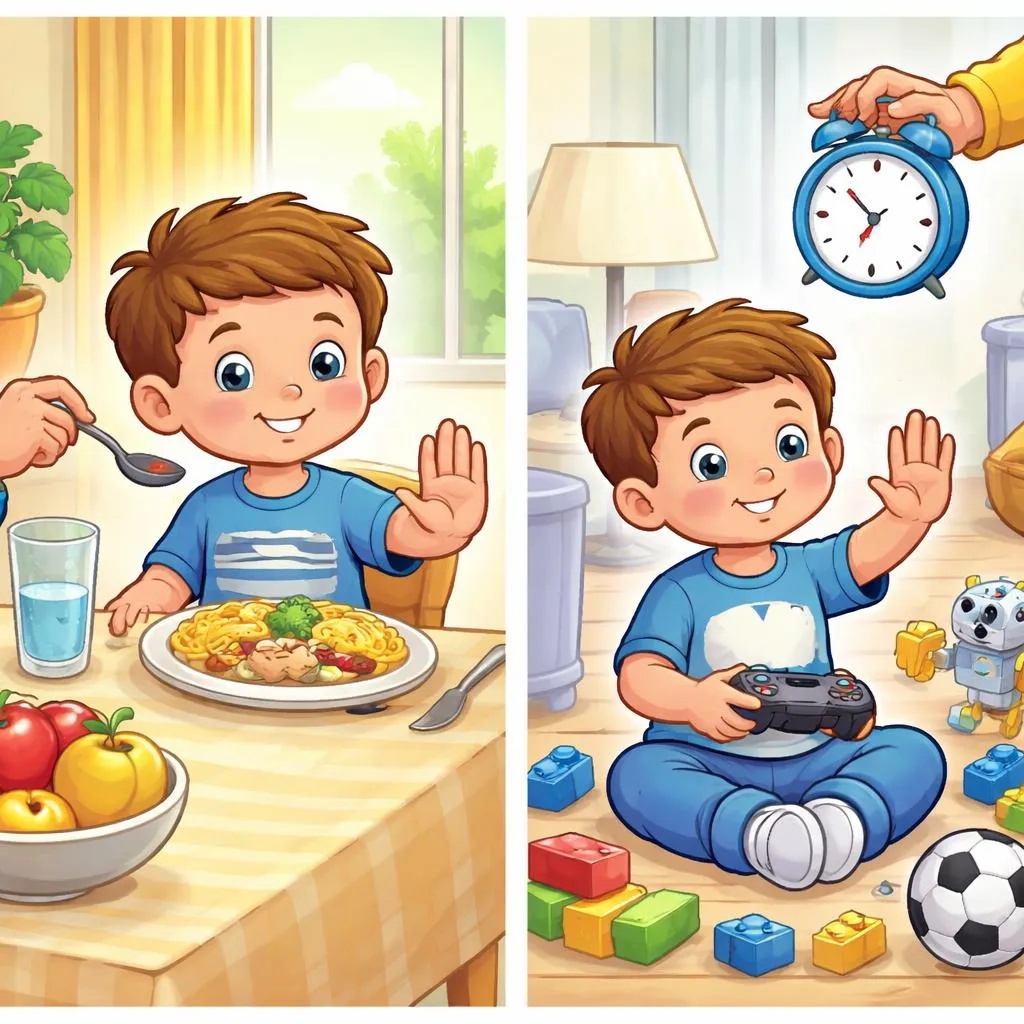

What Do These Expressions Mean? “That's enough” and “that's sufficient” both indicate a satisfactory amount. They tell someone you have as much as you need. Children say these words about food, playtime, or supplies. Both set healthy limits.
“That's enough” means I have the right amount now. It is common and direct. A child says it when full at dinner. It feels warm and final.
“That's sufficient” means this meets the requirement exactly. It sounds formal and precise. An adult says it in a report or a meeting. It feels cold and exact.
These expressions seem very similar. Both mean “no more needed.” Both stop an action. But one is for daily life while one is for official use.
What's the Difference? One is everyday. One is formal. “That's enough” works for family and friends. It fits meals, toys, and time. It never sounds strange.
“That's sufficient” works for professional situations. It sounds like a teacher or a boss. A child saying it sounds like a little adult. It is correct but unusual.
Think of a child at dinner. “That's enough chicken” sounds natural. “That's sufficient chicken” sounds like a robot. Both mean the same. One fits a child's voice.
One is for boundaries. The other is for measurements. “That's enough” stops behavior ("stop tickling me"). “Sufficient” rarely stops behavior. It measures quantity.
Also, “enough” can be emotional. “I've had enough!” means frustrated. “Sufficient” has no emotion. Use “enough” for feelings. Use “sufficient” for numbers.
When Do We Use Each One? Use “that's enough” for most situations. Use it for food, play, noise, and behavior. Use it when you want to set a kind boundary. It fits daily life.
Examples at home: “That's enough sugar for today.” “That's enough jumping on the couch.” “I said that's enough. Please stop.”
Use “that's sufficient” for formal or exact moments. Use it for measuring ingredients or meeting requirements. Use it when you need precise language. Children almost never need this word.
Examples for exactness: “Five dollars is sufficient for the movie ticket.” “Two eggs are sufficient for this recipe.” “Your explanation is sufficient. I understand.”
Most children can live without “sufficient.” Teach them to recognize it for reading. But for speaking, “that's enough” works every time. Keep it simple and kind.
Example Sentences for Kids That's enough: “That's enough water. My cup is full.” “That's enough TV for now. Let's play outside.” “I said that's enough tickling. I need a break.”
That's sufficient: “Two scoops of ice cream are sufficient.” (measuring) “Ten dollars is sufficient for the gift.” (formal) “Your answer is sufficient. You may sit down.” (teacher talk)
Notice “that's enough” works for stopping actions. “That's sufficient” works for counting things. One sets boundaries. One measures amounts. Children need the first much more.
Parents can say “that's enough” all day long. “That's enough arguing.” “That's enough cookies.” Save “sufficient” for vocabulary lessons. Natural parenting uses natural words.
Common Mistakes to Avoid Some children say “that's sufficient” to sound grown up. It sounds strange. Friends may not understand. Stick with “that's enough” for daily talk. Simple is better.
Wrong: “That's sufficient playing. Time for bed.” Right: “That's enough playing. Time for bed.”
Another mistake: using “that's enough” in a mean voice. “That's ENOUGH!” shouted scares people. Use a calm, firm voice. Boundaries work better with kindness.
Wrong: “THAT'S ENOUGH!” (yelling) Right: “That's enough now. Let's take a break.”
Some learners forget to say please or explain why. “That's enough” alone can sound harsh. Add “please” or a reason. Kind words keep love alive.
Wrong: “That's enough.” (cold) Right: “That's enough, please. My ears need quiet.”
Also avoid saying “that's enough” when it is not true. Do not use it to control unfairly. Enough means enough. Be honest. Children learn boundaries from your honesty.
Easy Memory Tips Think of “that's enough” as a stop sign. Red and clear. It stops action. Boundaries live here.
Think of “that's sufficient” as a measuring cup. Exact lines. No emotion. It measures quantity. Numbers live here.
Another trick: remember the feeling. “Enough” has E for “emotion.” “Sufficient” has S for “science.” Emotion gets “enough.” Science gets “sufficient.”
Parents can say: “Enough for stop. Sufficient for shop.” That means stopping behavior gets “enough.” Measuring purchases or ingredients gets “sufficient.”
Practice at dinner. Full stomach: “that's enough.” Measuring flour: “that's sufficient for the recipe.” Your child learns two different worlds.
Quick Practice Time Let us try a small exercise. Choose the better phrase for each situation.
Your child has had four cookies. They reach for a fifth. You want to stop. a) “That's sufficient cookies.” b) “That's enough cookies for today.”
You are following a recipe that calls for one cup of milk. You pour one cup exactly. a) “That's enough milk.” b) “That's sufficient milk for the recipe.”
Answers: 1 – b. Stopping behavior fits the warm “enough.” 2 – b. An exact measurement fits the formal “sufficient.”
Fill in the blank: “When my brother won't stop tapping my arm, I say ______.” (“That's enough” sets a clear boundary for behavior.)
One more: “When the science experiment calls for 5 ml of liquid, I measure and say ______.” (“That's sufficient” fits precise, formal measurements.)
Knowing when to stop is a skill. “That's enough” teaches boundaries. “That's sufficient” teaches precision. Both are good. One is for life. One is for school.
Wrap-up “That's enough” sets kind boundaries for daily life. “That's sufficient” measures exact amounts for formal situations. Use “enough” for behavior, food, and time. Use “sufficient” for recipes, science, and reports. Both say “this is the right amount.” One warms the heart. One fills the measuring cup.