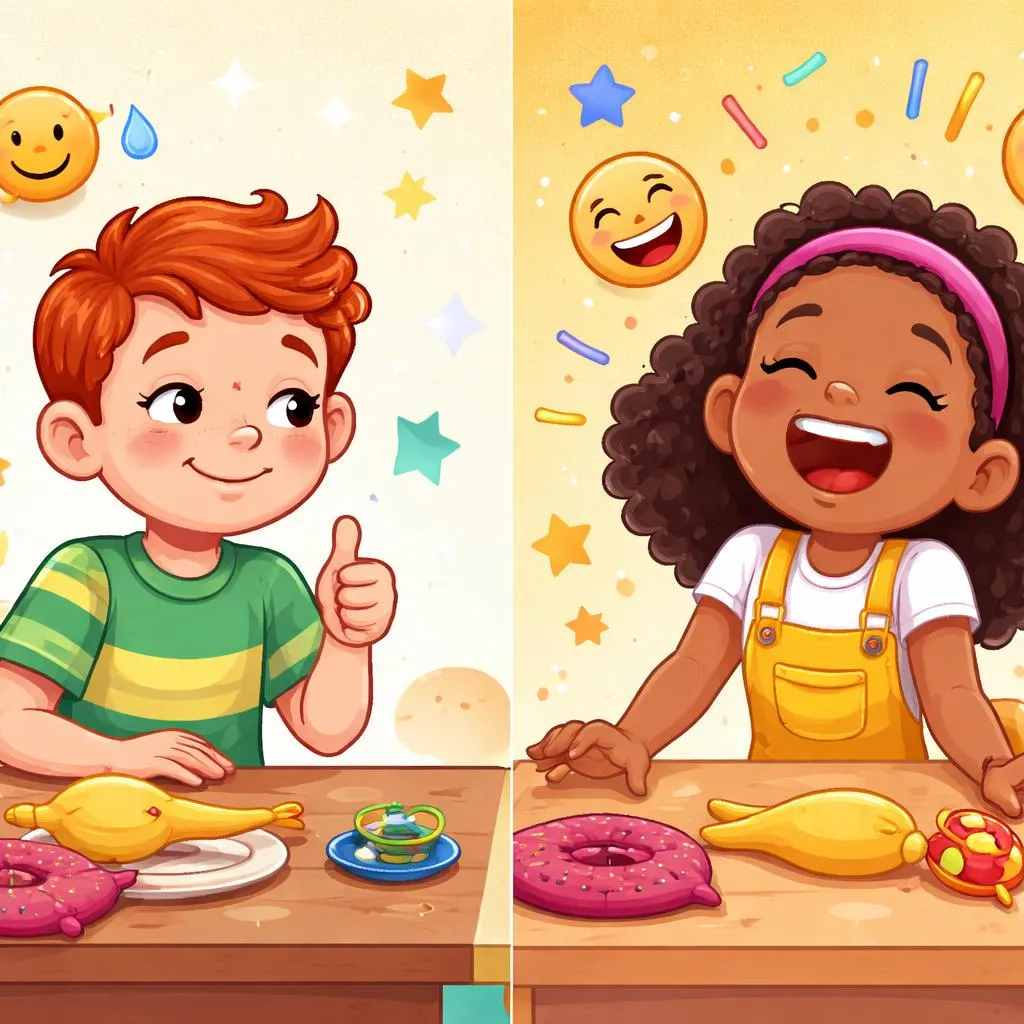

What Do These Expressions Mean? “That's funny” and “that's hilarious” both react to something amusing. They tell someone that a joke or situation made you laugh. Children say these words during play, stories, or family time. Both share joy and connection.
“That's funny” means I find this slightly amusing or clever. It is common and friendly. A child says it when a friend makes a pun. It feels warm and polite.
“That's hilarious” means I find this extremely funny. It sounds much stronger and more excited. A child says it after a belly laugh or a silly fall. It feels like bursting with joy.
These expressions seem very similar. Both mean “I am laughing.” Both encourage more humor. But one is a chuckle while the other is a roar.
What's the Difference? One is small laughter. The other is big laughter. “That's funny” works for gentle jokes and smiles. A clever word. A silly face. A small prank. It fits everyday humor.
“That's hilarious” works for moments that make you bend over laughing. A funny story. A silly video. A joke with a shocking punchline. It fits rare, big laughs.
Think of a child hearing a knock-knock joke. “That's funny” fits a standard joke. “That's hilarious” would be too strong. One matches the moment. One overshoots.
One is more polite. The other can be overwhelming. “That's funny” never feels fake. “That's hilarious” said too often loses meaning. Save it for true belly laughs.
Also, “hilarious” is bigger than “very funny.” It means almost uncontrollable laughter. Use it sparingly. That keeps it special.
When Do We Use Each One? Use “that's funny” for most humorous moments. Use it for jokes, puns, and silly observations. Use it when you smile or chuckle. It fits daily life.
Examples at home: “That's funny that the dog chased its tail.” “That's funny. I didn't expect that ending.” “Your joke about the banana? That's funny.”
Use “that's hilarious” for extreme laughter. Use it when you cannot stop laughing. Use it for comedy shows, hilarious stories, or silly accidents. It fits rare, big moments.
Examples for big laughs: “The way you fell into the pool? That's hilarious!” “That video of the dancing cat? That's hilarious.” “Your impression of the teacher? That's hilarious.”
Children can use both. “That's funny” works every time. “That's hilarious” saves for special laughs. Both spread happiness.
Example Sentences for Kids That's funny: “That's funny. You tricked me for a second.” “The clown's red nose? That's funny.” “That's funny. I never thought of that.”
That's hilarious: “The whole pie landed on his face? That's hilarious!” “That's hilarious. I can't stop laughing.” “Your story about the squirrel? That's hilarious.”
Notice “that's funny” brings a smile. “That's hilarious” brings a loud laugh. One is a giggle. One is a guffaw. Both are wonderful.
Parents can use both at dinner. “That's funny, the way you said that word.” “That's hilarious, the story about the runaway hat.” Children learn the scale of humor.
Common Mistakes to Avoid Some children say “that's hilarious” for every joke. It sounds fake. Save it for truly funny moments. Use “that's funny” for the rest.
Wrong: “That's hilarious” (after a tiny smile). Right: “That's funny” (for small laughs).
Another mistake: using “hilarious” for mean jokes. If a joke hurts someone, it is not hilarious. It is mean. Do not call mean things hilarious.
Wrong: “That's hilarious that you fell.” (someone got hurt) Right: “Are you okay? That looked painful.”
Some learners forget to laugh genuinely. Words without real laughter feel empty. If something is funny, laugh first. Then say the words.
Also avoid overusing either phrase. Let your laugh be the main reaction. Words are the second layer. Real joy needs no label.
Easy Memory Tips Think of “that's funny” as a little giggle. He he. Small and quick. A smile, not a scream.
Think of “that's hilarious” as a big belly laugh. Ha ha ha HA! You hold your stomach. Loud and long.
Another trick: remember the syllables. “Funny” has two beats. “Hilarious” has four beats. Two for small. Four for big. Match the word to the laugh.
Parents can say: “Funny for ha. Hilarious for HA HA HA!” That helps children hear the difference. A chuckle gets “funny.” A roar gets “hilarious.”
Practice telling jokes together. A simple joke gets “that's funny.” A joke that makes you fall off the chair gets “hilarious.” Your child learns the scale of funny.
Quick Practice Time Let us try a small exercise. Choose the better phrase for each situation.
Your friend says “Why did the cookie go to the doctor? It felt crumbly.” You smile. a) “That's hilarious!” b) “That's funny.”
Your friend shows you a video of a dog sliding on ice for ten seconds. You cannot breathe from laughing. a) “That's funny.” b) “That's hilarious!”
Answers: 1 – b. A simple pun fits a warm “funny.” 2 – b. Uncontrollable laughter fits “hilarious.”
Fill in the blank: “When my dad makes a silly face at breakfast, I say ______.” (“That's funny” fits small, everyday silliness.)
One more: “When my best friend tells the story of falling asleep in class and snoring, I say ______.” (“That's hilarious” fits an embarrassing, funny story.)
Laughter is medicine. Sharing what is funny builds bonds. Using the right word makes your joy clear. Teach your child that small funnies and big funnies both matter. Every laugh is a gift.
Wrap-up “That's funny” responds to small, everyday humor. “That's hilarious” reacts to extreme, unstoppable laughter. Use “funny” for smiles and chuckles. Use “hilarious” for laughs that bend you over. Both words share joy. Laughter is a language everyone understands.