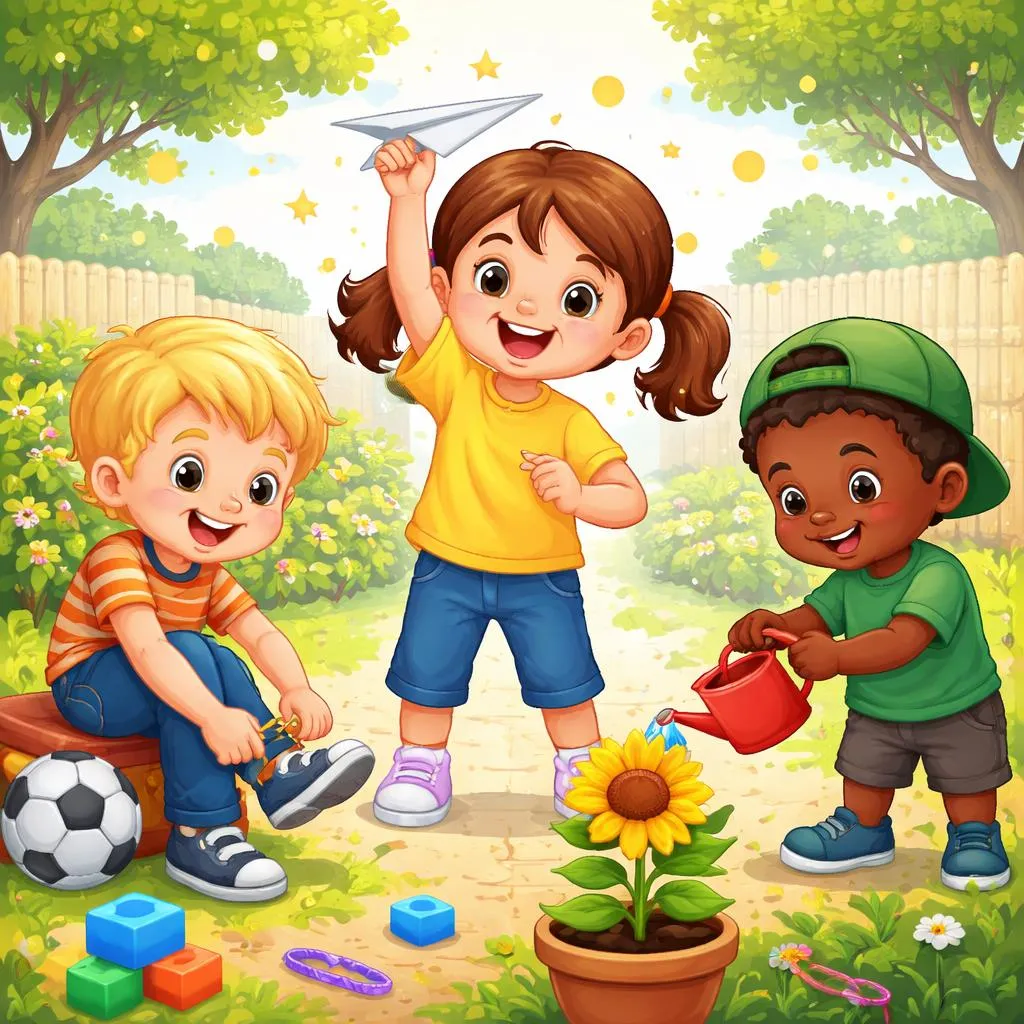

Fun Introduction
Last weekend, Mia baked cookies with mom. She mixed flour easily. The recipe was simple to follow. Both felt good. Mia poured milk. Mom smiled. Dad watched. He explained the difference. Easy means needing little effort. Simple means having few parts. Mia understood now. She skipped to the table.
Mia licked the spoon clean. The batter tasted sweet. Mom patted her head. Dad nodded slowly. He said easy is like riding a bike downhill. Simple is like a sandwich with one slice. Mia felt clever. She decorated cookies.
Word Breakdown
Core Principle
We reject boring dictionary definitions. We use pictures in your mind. We add functions and memory hooks. This helps you remember forever.
Easy To Do
Image: Imagine being easy to ride a scooter. You glide smoothly without falling. That is easy to do. It means needing little effort.
Function: It is for tasks requiring low energy. Like easy to tie your shoes. Or easy to spell your name.
Sensory Description: You hear a soft hum. You feel relaxed inside. Your muscles move lightly.
Memory Anchor: A child coasting on a scooter. See the smooth ride? That is easy to do.
Simple To Do
Image: Think of being simple to make a paper plane. You fold three times. That is simple to do. It means having few steps.
Function: It is for tasks with clear parts. Like simple to draw a circle. Or simple to pack a bag.
Sensory Description: You see clear lines. You feel organized inside. Your hands follow a pattern.
Memory Anchor: A child folding a paper plane. See the three folds? That is simple to do.
Advanced Comparison
Easy is about effort level. Simple is about complexity. Easy feels light. Simple feels clear. Use easy for tasks that feel light. Use simple for tasks with few steps.
Scene Comparison
Scene One happens at school. Mia is easy to solve the math puzzle. Numbers come quickly. Teacher claps. This is easy to do—little effort.
Scene Two takes place at home. Leo is simple to set the table. He places three items. Mom thanks him. This is simple to do—few steps.
Scene Three occurs at the park. Ben is easy to kick the ball. He scores without trying. Mia is simple to build a block tower. She stacks five blocks. Notice the shift. Easy focuses on effort. Simple focuses on steps.
Pitfalls Deep Reminder
Mistake One is saying “I was simple to lift the heavy box.” Why wrong? Simple means few steps. Lifting heavy needs effort. Funny result? You think the box has few parts. Correct phrase is I was easy to lift it. Memory trick: Easy lifts.
Mistake Two is saying “I was easy to follow the three-step dance.” Why wrong? Easy means little effort. Dance has clear steps. Funny result? You think dancing needs no work. Correct phrase is I was simple to follow. Memory trick: Simple steps.
Mistake Three is saying “I was simple to run a marathon.” Why wrong? Marathon needs huge effort. Simple means few parts. Funny result? You think marathon has three steps. Correct phrase is I was easy to train? Actually training marathon is not easy. Better: I was easy to jog? No. Correction: Running marathon is not easy. So phrase should be avoided. But example: I was simple to run a lap. That would be wrong. Correct: I was easy to run a lap. Memory trick: Easy efforts.
Mistake Four is saying “I was easy to assemble the toy car.” Why wrong? Assembly has many parts. Easy means little effort. Funny result? You think assembling needs no work. Correct phrase is I was simple to assemble. Memory trick: Simple parts.
Interactive Exercises
Read each sentence. Think of the right phrase.
I was easy to ride the bike. She was simple to make toast. We were easy to learn the song. He was simple to draw a square. They were easy to climb the hill.
Act with a friend. Use the phrases.
Scene A: Being Easy
A: I am easy to carry this bag.
B: It feels light as a feather.
Scene B: Being Simple
A: I am simple to pack my lunch.
B: Just a sandwich and fruit.
Spot the Mistake
Which sentence sounds odd? Explain why.
I was simple to lift the feather.
Lifting feather needs little effort. Use easy instead.
I was easy to follow the recipe.
Recipe has clear steps. Use simple instead.
I was simple to run upstairs.
Running needs effort. Use easy instead.
Create Sentences
Use both phrases.
Easy to do: I am easy to learn new games.
Simple to do: I am simple to tie my laces.
Bonus Challenge
You carry a heavy backpack. Do you feel easy or simple? Answer: Easy. It needs little effort.
Rhyme Time
Easy glides, simple clicks.
One feels light, the other sticks.
Little effort? Easy, breeze.
Few steps? Simple, please.
Homework Task
Pick one activity. Complete it this week. Share with family.
Option One: Observation Journal. Get a small notebook. Draw three pictures. Write a sentence under each.
Picture One: You feel easy. Sentence: I was easy to ride my scooter.
Picture Two: You feel simple. Sentence: I was simple to make a card.
Picture Three: You feel easy. Sentence: I was easy to read the book.
Show your journal to a parent. Explain the differences.
Option Two: Role Play. With a parent, act out moments. Use phrases correctly.
You: Mom, I am easy to help with dishes.
Parent: That is kind of you.
You: Dad, I am simple to set the table.
Parent: Just put three things.
Practice until it feels natural.
Option Three: Sharing Time. Tomorrow at school, tell a friend. Describe one easy and one simple. Say: Yesterday I was easy to solve the puzzle. I was simple to pack my bag. Ask your friend about theirs.
Life Practice
Week Challenge: Try one task. Complete within seven days. Share your success.
Task One: Observation Log. For three days, note easy and simple moments. Draw icons.
Day One: Easy moment. Draw a light feather.
Day Two: Simple moment. Draw three dots.
Day Three: Easy moment. Draw a smiling face.
Show your log to your teacher. Place it on the classroom wall.
Task Two: Action Demo. Use both phrases in real actions.
Step One: Show easy lightly. Say: I am easy to do this.
Step Two: Show simple clearly. Say: I am simple to do that.
Demonstrate to a sibling. Explain the difference.
Task Three: Social Mission. Use phrases with others.
Feel easy to help a friend. Say: I am easy to carry your books.
Feel simple to help a friend. Say: I am simple to teach this trick.
Record a short voice message. Send it to your teacher.
Task Four: Creative Story. Write a short tale. Include both phrases.
Title: The Quick Snack.
Story: I was easy to spread peanut butter. Then I was simple to add banana slices. Lunch was ready fast.
Share your story in class.
Remember, practice makes perfect. Use these phrases often. Soon they will feel easy.