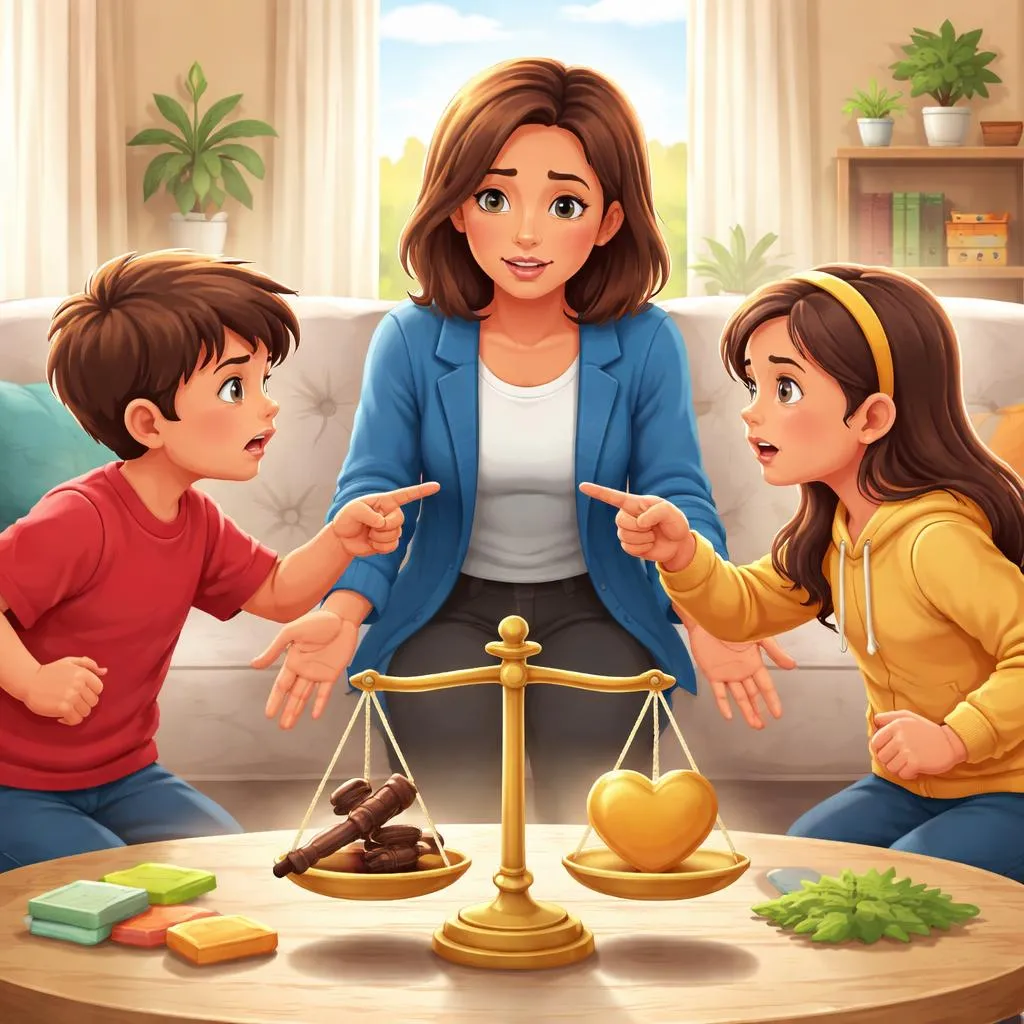

What Do These Expressions Mean? “Be fair” and “be just” both tell a child to treat others equally and without favoritism. They teach children to give everyone the same chance, share equally, and follow rules. Children hear these words when siblings argue or when a game needs rules. Both build a sense of right and wrong.
“Be fair” means treat everyone the same and don't show favoritism. It is common and warm. A parent says it when one child gets more than another. It focuses on equal treatment.
“Be just” means act according to what is morally right and true. It is stronger and more formal. A judge or a leader might say it. It focuses on deep moral correctness.
These expressions seem similar. Both teach children to do the right thing. Both prevent unfairness. But one is for everyday fairness while one is for deep moral justice.
What's the Difference? One is for everyday rules. One is for deep moral truth. “Be fair” is what parents say about dessert, turns, and chores. It is about equal shares and no cheating. It is practical.
“Be just” is a bigger word. It means standing up for what is right, even when it is hard. It means punishing wrongs and protecting the innocent. It is for bigger life lessons.
Think of two children fighting over the last cookie. “Be fair and split it” is right. “Be just” would be too big for a cookie. One matches the moment. One is for serious choices.
One is for small daily choices. The other is for moral character. “Be fair” works for games, snacks, and turns. “Be just” works for telling the truth, defending someone being bullied, or admitting a mistake. Use the first for everyday. Use the second for deep lessons.
Also, “be just” sounds formal. Young children understand “be fair” better. Say “be fair” first. Then teach “be just” as they grow.
When Do We Use Each One? Use “be fair” for everyday fairness. Use it for sharing snacks, taking turns, and playing games. Use it to prevent whining and fighting. It fits daily life.
Examples at home: “Be fair. You had a turn. Now give your brother a turn.” “Be fair when you split the crackers.” “Be fair. Everyone gets the same size piece.”
Use “be just” for deep moral lessons. Use it when a child is being bullied or when they did something wrong and need to make it right. Use it to build character. It fits serious teaching.
Examples for justice: “Be just. Even if you are scared, tell the truth.” “Be just. Stand up for the child who is being teased.” “A just person admits when they are wrong and tries to fix it.”
Children need both phrases. “Be fair” for snacks and games. “Be just” for courage and truth. Both build a good heart.
Example Sentences for Kids Be fair: “Be fair. Everyone gets one cookie.” “Be fair when you pick teams. Don't leave anyone out.” “Be fair. I will time your turns.”
Be just: “Be just. Tell the truth even if you might get in trouble.” “A just person helps someone who is being hurt.” “Be just. Do the right thing, even when no one is watching.”
Notice “be fair” is about equal treatment. “Be just” is about moral courage. Children learn both. One for sharing. One for bravery.
Parents can use both. Splitting candy: “be fair.” Telling the truth: “be just.” Children learn fairness and justice.
Common Mistakes to Avoid Some parents say “be just” for small fairness issues. That sounds too serious. A cookie is a fairness issue, not a justice issue. Save “be just” for moral choices.
Wrong: “Be just and split the cookie.” Right: “Be fair. Break it in half.”
Another mistake: thinking fairness always means everyone gets the same. Sometimes fairness means giving more to someone who needs more. Teach your child that being fair means meeting needs, not just equal numbers.
Wrong: “We both get exactly the same, or it's not fair.” Better: “You need more because you are bigger? That is fair too.”
Some learners forget that justice can be hard. Being just means doing the right thing even when it is scary. Help your child practice small acts of justice. Praise them for bravery.
Also avoid being unfair yourself. Children learn fairness from watching you. If you play favorites, they will too. Model the fairness you want to see.
Easy Memory Tips Think of “be fair” as a balanced scale. Both sides weigh the same. Equal shares. Equal turns. For everyday sharing.
Think of “be just” as a shield. The shield protects the weak. Fights for truth. For moral courage.
Another trick: remember the size. “Fair” is for small daily choices. “Just” is for big moral ones. Small gets “fair.” Big gets “just.”
Parents can say: “Fair for a cookie. Just for a goodie.” That means daily sharing gets “be fair.” Brave, truthful choices get “be just.”
Practice at home. Split a snack: “be fair.” Tell the truth about breaking something: “be just.” Two different levels of right.
Quick Practice Time Let us try a small exercise. Choose the better phrase for each situation.
Two children want to use the same swing. One has been waiting longer. a) “Be just and wait your turn.” b) “Be fair. He was here first.”
A child sees a classmate being teased. The child wants to help but is scared. a) “Be fair to the teased child.” b) “Be just. Stand up for him, even if you are scared.”
Answers: 1 – b. A swing turn is a fairness issue. “Be fair.” 2 – b. Defending someone takes moral courage. “Be just.”
Fill in the blank: “When my children split a candy bar, I tell them to ______.” (“Be fair” is the everyday, sharing-focused phrase.)
One more: “When my child knows a secret that could hurt someone if hidden, I tell them to ______.” (“Be just” fits the moral courage to tell the truth.)
Fairness and justice go together. “Be fair” makes sure everyone gets their share. “Be just” makes sure everyone is treated right. Teach your child both. A child who is fair and just grows into a leader everyone trusts.
Wrap-up “Be fair” teaches children to share equally, take turns, and treat everyone the same in daily life. “Be just” teaches deeper moral courage: telling the truth, defending the weak, and doing right even when it is hard. Use “be fair” for snacks, games, and toys. Use “be just” for truth-telling, standing up for others, and making hard right choices. Both phrases build a child of character. A fair child is liked. A just child is honored.