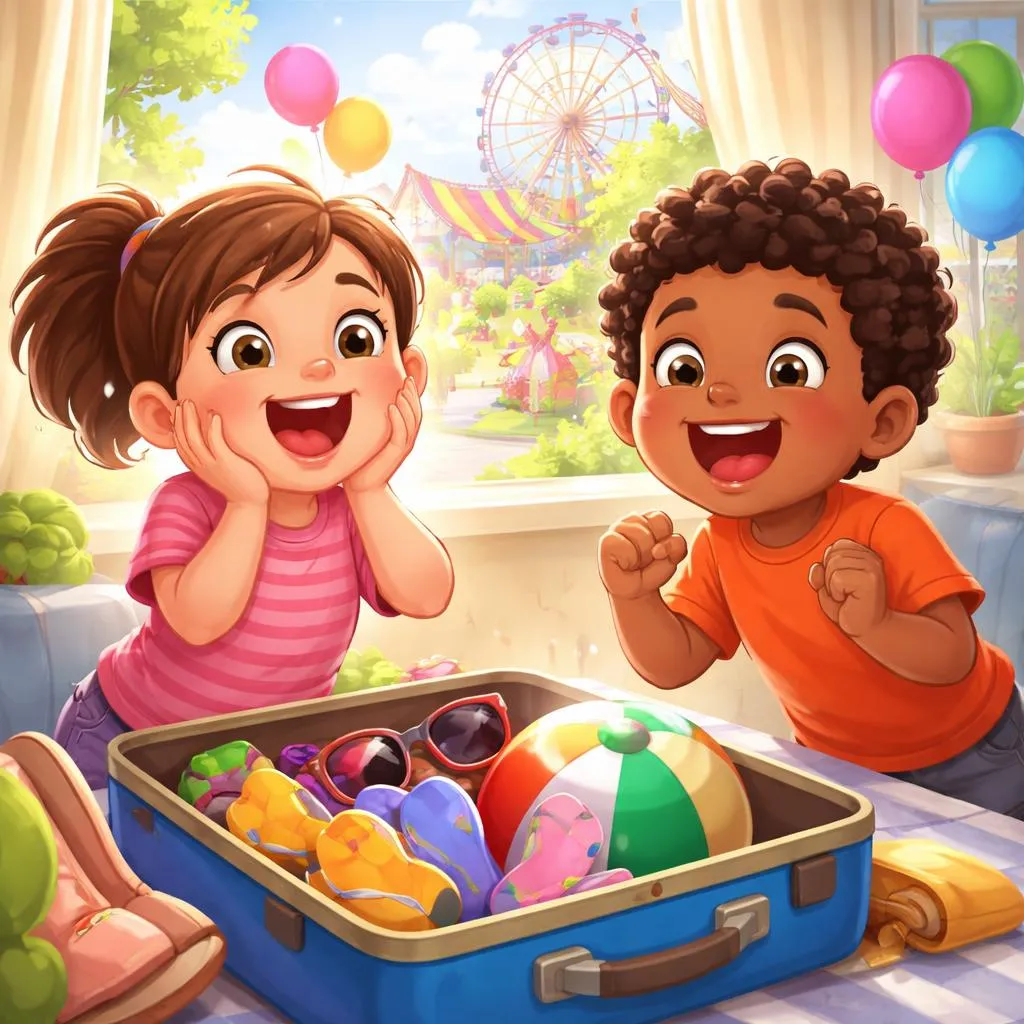

What Do These Expressions Mean? “I'm excited” and “I can't wait” both express happy anticipation. They tell someone you feel joyful about a future event. Children say these words about birthdays, trips, and holidays. Both share positive energy.
“I'm excited” means I feel happy and full of energy about what will happen. It describes an emotion inside. A child says it when counting days to a party. It is warm and steady.
“I can't wait” means the waiting feels hard because I want the event so much. It describes urgency and impatience. A child says it when bouncing with joy. It is stronger and more intense.
These expressions seem very similar. Both mean “I am happy about the future.” Both show eagerness. But one is calm while the other is jumping.
What's the Difference? One is steady. The other is urgent. “I'm excited” lives in your chest like a warm glow. You can feel excited for days or weeks. It lasts.
“I can't wait” lives in your feet like a bounce. It feels like now is too slow. You say it when the event is very close or very desired. It is stronger.
Think of a child before a birthday. “I'm excited for Saturday” sounds happy. “I can't wait for Saturday” sounds like counting minutes. Both are true. One is calmer.
One is more polite. The other can sound demanding. “I'm excited” always sounds nice. “I can't wait” said too loudly can sound like a complaint. “I can't wait for this boring week to end” is different.
Also, “I'm excited” works for big and small events. A new pencil? “I'm excited!” “I can't wait” feels too big for a pencil. Match the phrase to the moment.
When Do We Use Each One? Use “I'm excited” for most happy future events. Use it for trips, presents, guests, and treats. Use it when you want to share joy without pressure. It fits daily life.
Examples at home: “I'm excited to see Grandma tomorrow.” “I'm excited about the school play.” “I'm excited for pizza night.”
Use “I can't wait” for very strong feelings. Use it when the event is very soon or very special. Use it when you feel bursting with joy. It fits peak moments.
Examples for intensity: “I can't wait for summer vacation!” “I can't wait to open my presents.” “You are coming today? I can't wait!”
Children can use both. “I'm excited” is safe for all situations. “I can't wait” adds extra fun energy. Use both to express different levels of happy.
Example Sentences for Kids I'm excited: “I'm excited to see the new puppy.” “I'm excited for our camping trip.” “I'm excited to try the slide at the park.”
I can't wait: “I can't wait for the weekend!” “I can't wait to eat the cake.” “Only one more day! I can't wait.”
Notice “I'm excited” sounds like a happy statement. “I can't wait” sounds like a happy exclamation. One is for telling. One is for feeling very strongly. Both are beautiful.
Parents can use both at dinner. “I'm excited to hear about your day.” (warm) “I can't wait to see your art project.” (eager) Children learn levels of joy from your words.
Common Mistakes to Avoid Some children say “I can't wait” for everything. That wears out the phrase. Save it for truly special things. Use “I'm excited” for daily happiness.
Wrong: “I can't wait for toast at breakfast.” Right: “I'm excited for toast.”
Another mistake: forgetting to finish the sentence. “I can't wait” needs “for” or “to.” “I can't wait for Saturday.” “I can't wait to go.” Do not leave it hanging.
Wrong: “I can't wait.” (with no context) Right: “I can't wait to see you.”
Some learners use “I can't wait” to rush others. “I can't wait” is not a command. It does not mean “go faster.” It means “I feel eager.”
Also avoid saying “I'm excited” when you are not. False excitement confuses people. It is okay to feel neutral. Honesty about feelings builds trust.
Easy Memory Tips Think of “I'm excited” as a slow dance. You sway side to side. You smile. You glow. Warm and steady.
Think of “I can't wait” as a bouncing ball. The ball hits the ground fast. It bounces up and down. Full of quick energy.
Another trick: remember the length. “Excited” has three long syllables. “Can't wait” has two quick ones. Long for steady joy. Short for bursting joy. Match the rhythm to the feeling.
Parents can say: “Excited for everyday. Can't wait for hooray.” That means daily joy gets “excited.” Big celebrations get “can't wait.”
Practice counting days to an event. Now say “I'm excited.” Now jump and say “I can't wait!” Feel the difference in your body. That is the lesson.
Quick Practice Time Let us try a small exercise. Choose the better phrase for each situation.
Your mom says you will bake cookies after school today. You feel happy. a) “I can't wait for after school!” b) “I'm excited to bake cookies.”
Your birthday is tomorrow morning. You can barely sleep. a) “I'm excited for my birthday.” b) “I can't wait for my birthday!”
Answers: 1 – b. Daily happy events fit “I'm excited.” 2 – b. A big event very soon fits “I can't wait.”
Fill in the blank: “When my dad says we are having pancakes for breakfast, I say ______.” (“I'm excited” fits a small, pleasant surprise.)
One more: “When we pull into the amusement park parking lot, I shout ______.” (“I can't wait” fits the bursting energy of arrival.)
Joy comes in different sizes. Small joys get “excited.” Big joys get “can't wait.” Both are gifts. Both share happiness with others. Teaching your child both spreads light in the world.
Wrap-up “I'm excited” shares steady, warm happiness. “I can't wait” expresses urgent, bouncing eagerness. Use “I'm excited” for most happy events. Use “I can't wait” for very special, very close moments. Joy is beautiful in all its forms. Share your happy words freely. The world needs your light.