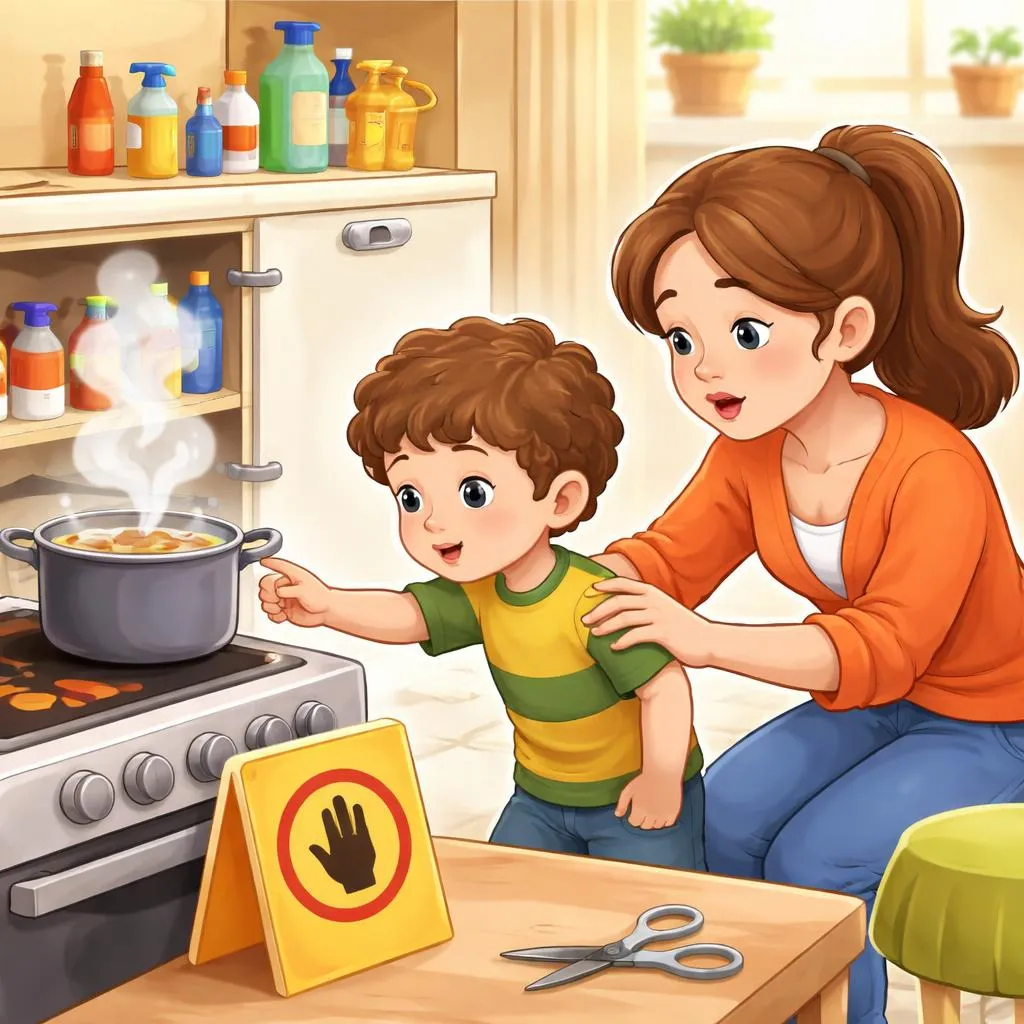

What Do These Expressions Mean? “Don't touch” and “keep away” both tell someone to avoid physical contact with something. They instruct a child to stay at a distance from an object or area. Children hear these words about hot stoves, sharp tools, or fragile items. Both prevent injury.
“Don't touch” means do not put your hands or body on this thing. It is direct and clear. A parent says it when a child reaches for a hot pan. It is a simple, immediate command.
“Keep away” means maintain distance and do not go near this thing. It is broader and more about staying back. A parent says it about a broken glass or a dangerous animal. It implies a safety zone.
These expressions seem similar. Both say “stay back from this.” Both prevent accidents. But one is about the action of touching while one is about maintaining distance.
What's the Difference? One is about the act of touching. One is about proximity. “Don't touch” warns against making contact. If you are close but not touching, is that allowed? The phrase says “if you reach out, stop.”
“Keep away” warns against being near at all. It means “stay back, do not come close.” The danger might be from falling, biting, or splashing. It is about the whole body, not just hands.
Think of a hot stove. “Don't touch the stove” means do not put your hand on it. “Keep away from the stove” means stand back from the whole appliance. One is for contact. One is for distance.
One is for things that hurt upon touch. The other is for things dangerous from nearby. “Don't touch” is for hot, sharp, or fragile items. “Keep away” is for unstable things, wild animals, or dangerous zones. Choose based on the type of danger.
Also, “keep away” sounds more serious and lasting. “Don't touch” is for a moment. “Keep away” suggests ongoing danger.
When Do We Use Each One? Use “don't touch” for items that are dangerous when handled. Use it for hot surfaces, sharp objects, or fragile valuables. Use it for quick, immediate warnings. It fits contact-based dangers.
Examples at home: “Don't touch. The stove is hot.” “Don't touch the broken glass.” “Don't touch the knife. It is very sharp.”
Use “keep away” for zones or things dangerous from nearby. Use it for wild animals, unstable furniture, or dangerous areas. Use it for longer-term warnings. It fits proximity-based dangers.
Examples for distance: “Keep away from the edge of the cliff.” “Keep away from that dog. It might bite.” “Keep away from the broken window.”
Children need both phrases. “Don't touch” for items. “Keep away” for danger zones. Both keep children safe.
Example Sentences for Kids Don't touch: “Don't touch the candle. It's hot.” “Don't touch. That's Mommy's phone.” “Don't touch the outlet. It's dangerous.”
Keep away: “Keep away from the pool without an adult.” “Keep away from the strange cat.” “Keep away from the construction site.”
Notice “don't touch” warns about hands. “Keep away” warns about the whole body. Children learn both. One for contact. One for distance.
Parents can use both. Hot pan: “don't touch.” Busy road: “keep away from the street.” Children learn different safety rules.
Common Mistakes to Avoid Some parents say “don't touch” for things that are dangerous at a distance. If the danger is falling or biting, “keep away” is better. Use the right phrase for the right risk.
Wrong: “Don't touch the edge of the cliff.” (you can touch it safely) Better: “Keep away from the edge of the cliff.”
Another mistake: saying “keep away” for a small, touchable item. A hot pan does not need “keep away.” “Don't touch” is enough. Match the phrase to the size of the danger zone.
Wrong: “Keep away from the hot pan.” Right: “Don't touch the hot pan.”
Some learners forget to explain why. “Don't touch” alone is okay. But “don't touch, it's hot” is better. Reasons help children learn.
Also avoid shouting either phrase. A calm, firm voice works best. Shouting scares without teaching. Calm warnings teach safety.
Easy Memory Tips Think of “don't touch” as a hand pulling back. The hand almost touches something hot. It stops just in time. For contact danger.
Think of “keep away” as a fence. The fence keeps you at a distance. You cannot get close. For zone danger.
Another trick: remember the body part. “Touch” uses hands. “Keep away” uses feet and whole body. Hands get “don't touch.” Whole body gets “keep away.”
Parents can say: “Touch for the hand. Away for the whole land.” That means items get “don't touch.” Danger zones get “keep away.”
Practice at home. Hot stove: “don't touch.” Open window high up: “keep away from the window.” Two dangers. Two phrases.
Quick Practice Time Let us try a small exercise. Choose the better phrase for each situation.
A child reaches for a hot mug of tea on the table. a) “Keep away from the tea.” b) “Don't touch. The mug is hot.”
A child walks near a busy street with fast cars. a) “Don't touch the street.” (not quite right) b) “Keep away from the street. Stay on the sidewalk.”
Answers: 1 – b. A hot mug is a contact danger. “Don't touch.” 2 – b. A busy street is a zone danger. “Keep away.”
Fill in the blank: “When my child reaches for a hot pan on the stove, I say ______.” (“Don't touch” is the immediate, contact-based warning.)
One more: “When my child walks toward a deep hole in the yard, I say ______.” (“Keep away from the hole” fits the zone-based danger.)
Keeping children safe is love. “Don't touch” protects from contact dangers. “Keep away” protects from zone dangers. Teach your child both. A child who knows boundaries stays safe.
Wrap-up “Don't touch” warns against making physical contact with a dangerous object. “Keep away” warns against getting close to a danger zone at all. Use “don't touch” for hot, sharp, or fragile items. Use “keep away” for edges, wild animals, or unsafe areas. Both phrases keep children safe. Clear boundaries grow into lifelong safety habits.