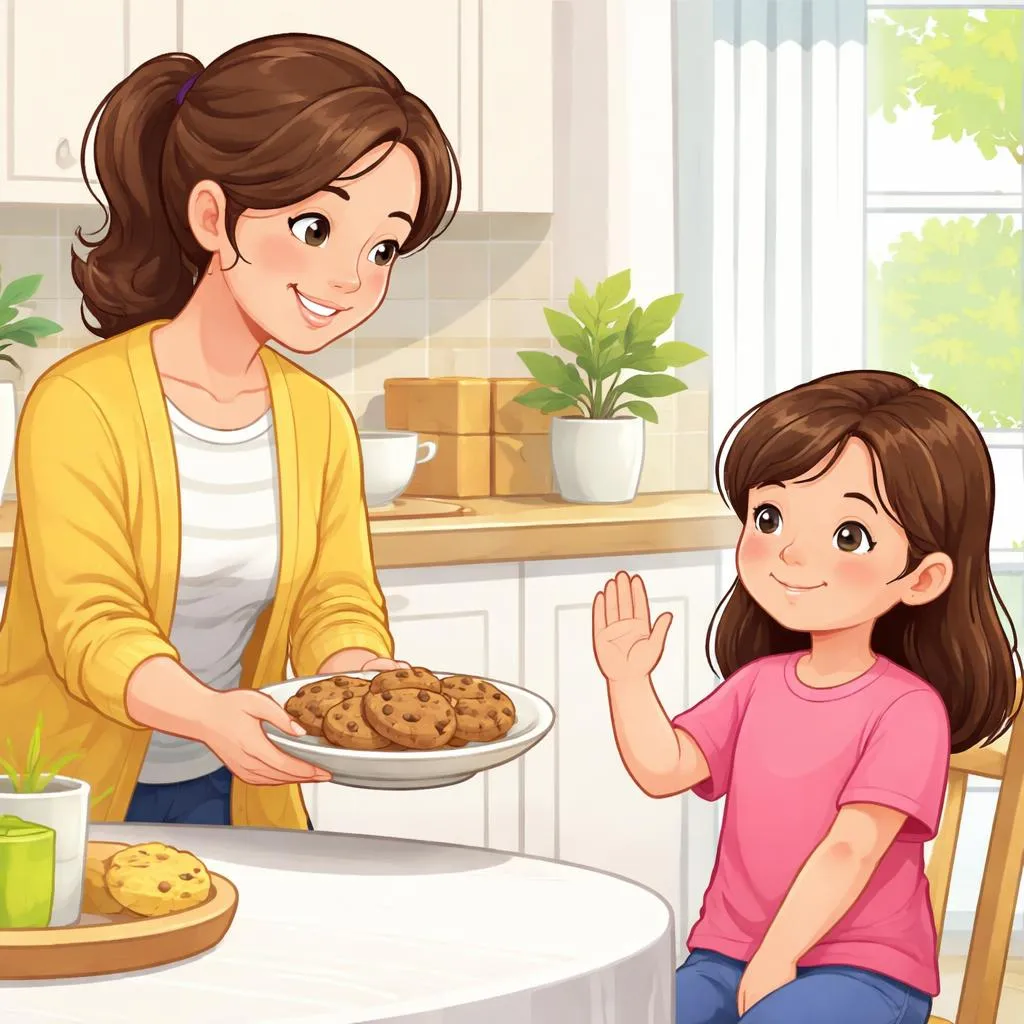

What Do These Expressions Mean? “No, thank you” and “I'm fine” both politely decline an offer. They tell someone that you do not want what they are offering. Children say these words when offered food, help, or a turn they do not need. Both show good manners.
“No, thank you” means I do not want your offer, and I am grateful anyway. It is clear and polite. A child says it when offered a snack they do not want. It feels direct and kind.
“I'm fine” means I am already okay and do not need anything. It is softer and less direct. A child says it when asked if they need help. It feels gentle and self-sufficient.
These expressions seem similar. Both say “no” to an offer. Both avoid hurting the giver's feelings. But one is very clear while one is softer.
What's the Difference? One is a direct, polite no. One is a softer, indirect no. “No, thank you” clearly refuses the offer. The person knows you do not want the thing. It is perfect for offers of food or objects.
“I'm fine” means “I am satisfied already.” It suggests you do not need anything because you already have enough. It is softer and can sometimes leave the offerer unsure. It works well for offers of help.
Think of a child offered a second cookie. “No, thank you, I am full” is very clear. “I'm fine” could mean “I am fine with what I have.” One is a clear no. One is a gentle, “I'm okay.”
One is for things you do not want. The other is for help you do not need. “No, thank you” for a drink you do not want. “I'm fine” when someone asks if you are okay. Match the phrase to the offer.
Also, “I'm fine” can mean “I am not hurt.” If a child falls, “I'm fine” means no injury. “No, thank you” would be strange after a fall. Context matters.
When Do We Use Each One? Use “no, thank you” for offers of objects or food. Use it when offered a snack, a toy, or a turn. Use it when you want to be clearly polite. It fits offers of things.
Examples at home: “Would you like more broccoli?” “No, thank you.” “Do you want a turn on the game?” “No, thank you.” “Can I get you some juice?” “No, thank you.”
Use “I'm fine” for offers of help or concern. Use it when someone asks if you need assistance. Use it when you are okay and do not need anything. It fits help-based offers.
Examples for help: “Do you need help carrying that?” “I'm fine, thanks.” “Are you okay?” “I'm fine. Just tired.” “Would you like me to tie your shoe?” “I'm fine, I can do it.”
Children can use both. “No, thank you” for objects. “I'm fine” for offers of help. Both are polite. Both are kind.
Example Sentences for Kids No, thank you: “No, thank you. I don't like pickles.” “No, thank you. I already have a sticker.” “No, thank you. I am not hungry right now.”
I'm fine: “I'm fine. I can do it myself.” “I'm fine, thank you. I don't need help.” “Are you okay?” “I'm fine. Just a little tired.”
Notice “no, thank you” clearly refuses a thing. “I'm fine” gently refuses help or concern. Children learn both. Both say “no” without being rude.
Parents can use both. Offering food: “no, thank you.” Offering help: “I'm fine, sweetie.” Children learn polite refusal by example.
Common Mistakes to Avoid Some children say “I'm fine” when offered food they do not want. That can confuse the offerer. “I'm fine” might mean “I already ate” or “I don't like that food.” Say “no, thank you” for clear refusal of things.
Wrong: “I'm fine” (offered a cookie they do not want). Better: “No, thank you. I'm not hungry.”
Another mistake: saying “no, thank you” when someone asks if you are hurt. If you fall and someone asks “are you okay?” say “I'm fine.” “No, thank you” is for offers, not concern questions.
Wrong: “Are you okay?” “No, thank you.” Right: “Are you okay?” “I'm fine.”
Some learners say “I'm fine” in a grumpy voice. “I'm fine” said with crossed arms means “leave me alone.” Say it with a smile if you mean it kindly. Tone matters.
Also avoid saying “no, thank you” too quickly. Pause. Smile. Say it gently. A rushed “no thank you” can feel like rejection. Kindness takes a breath.
Easy Memory Tips Think of “no, thank you” as a gentle hand pushing away. The hand says “no” but the face says “thank you anyway.” Clear and kind. For objects and food.
Think of “I'm fine” as a small nod. The head nods. The mouth says “I'm okay.” Reassuring and soft. For offers of help.
Another trick: remember the offer type. “No, thank you” for things offered. “I'm fine” for help offered. Things get “no, thank you.” Help gets “I'm fine.”
Parents can say: “No thank you for stuff. I'm fine for enough.” That means food and toys get “no, thank you.” Help and concern get “I'm fine.”
Practice at home. Offered a cracker: “no, thank you.” Asked if okay: “I'm fine.” Two polite refusals. One kind child.
Quick Practice Time Let us try a small exercise. Choose the better phrase for each situation.
A friend offers your child a piece of candy they do not want. a) “I'm fine.” b) “No, thank you. I don't want any candy.”
An adult asks your child, “Are you okay? You look sad.” a) “No, thank you.” b) “I'm fine. Just thinking about something.”
Answers: 1 – b. An offer of food or an object fits “no, thank you.” 2 – b. A question about well-being fits “I'm fine.”
Fill in the blank: “When my grandma offers me more potatoes and I am full, I say ______.” (“No, thank you” is the clear, polite choice.)
One more: “When my teacher asks if I need help with my heavy backpack, I say ______.” (“I'm fine” fits an offer of help when you are okay alone.)
Saying no politely is a skill. “No, thank you” refuses objects kindly. “I'm fine” refuses help gently. Teach your child both. Politeness makes no feel like kindness.
Wrap-up “No, thank you” politely declines offers of food, toys, or objects. “I'm fine” gently refuses offers of help or concern. Use “no, thank you” for things you do not want. Use “I'm fine” when someone asks if you need help or are okay. Both phrases say no without hurting feelings. Kindness turns every no into a yes to respect.