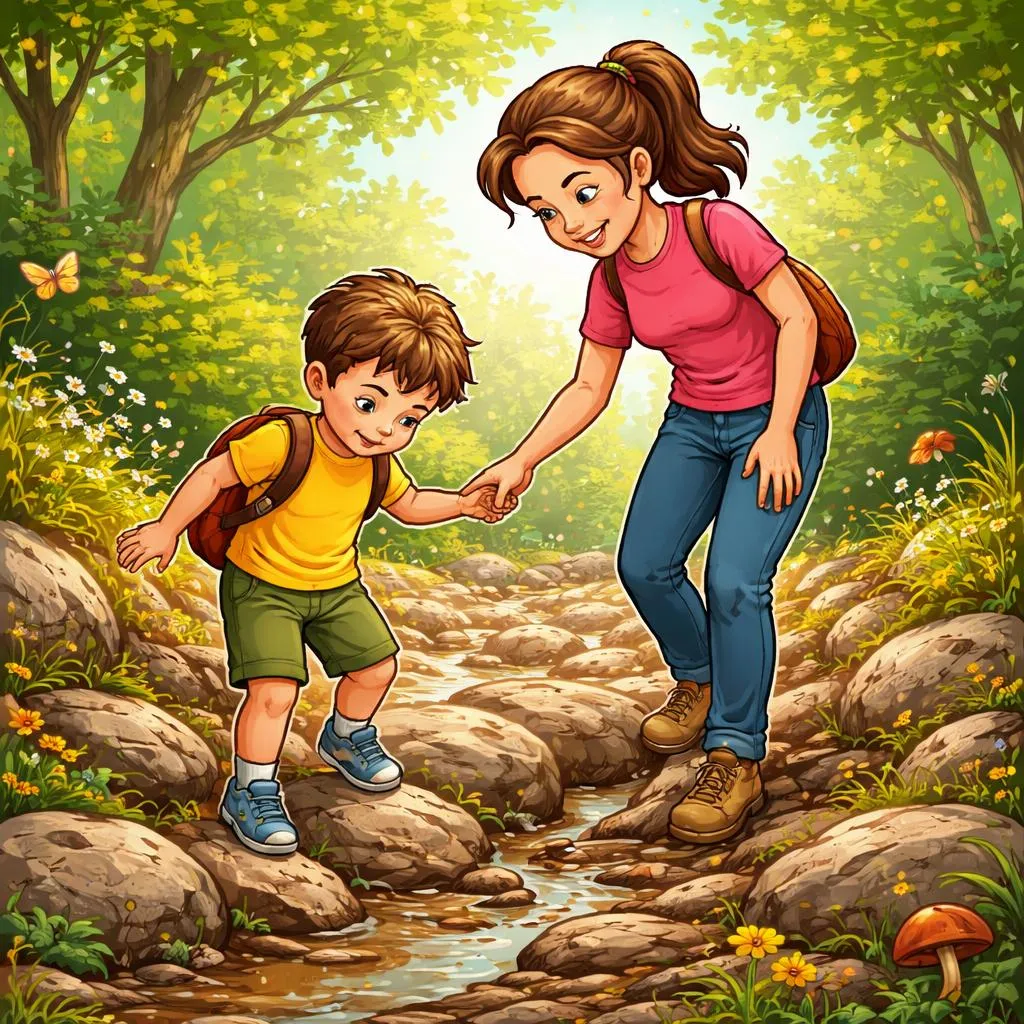

What Do These Expressions Mean? “Watch your step” and “mind your feet” both warn someone to pay attention to where they walk. They tell a person to look at the ground and avoid tripping. Children hear these words on stairs, curbs, or messy floors. Both prevent falls.
“Watch your step” means look at where you are placing your feet. It is common and direct. A parent says it when a child approaches a slippery floor. It is clear and urgent.
“Mind your feet” means pay attention to your own feet and what they might step on. It is softer and less common. A parent says it when a child might step on a toy. It feels gentler and more about the child's own awareness.
These expressions seem similar. Both say “look down and be careful.” Both prevent tripping and falling. But one is more common while one is softer.
What's the Difference? One is for general walking hazards. One is for avoiding objects. “Watch your step” works for uneven ground, stairs, ice, or wet floors. It warns about the surface itself. It is the classic, standard phrase.
“Mind your feet” works for stepping on things that should not be stepped on. Toys, pets' tails, small objects on the floor. It is about where you put your feet, not the ground condition. It is softer and more specific.
Think of a child on stairs. “Watch your step” is right. “Mind your feet” is also okay but less common. One is for the stairs. One is for the child's feet.
One is for all ages. The other is more for young children. “Watch your step” works for adults and kids. “Mind your feet” sounds like something a parent says to a toddler. Choose based on age.
Also, “mind your feet” can mean “be careful not to trip yourself up.” “Mind your own feet” is about self-awareness. “Watch your step” is about the ground ahead.
When Do We Use Each One? Use “watch your step” for most walking hazards. Use it on stairs, ice, wet floors, or curbs. Use it when the ground itself is dangerous. It fits outdoor and indoor safety.
Examples at home: “Watch your step. The floor is wet.” “Watch your step on these stairs.” “Watch your step. There's a crack in the sidewalk.”
Use “mind your feet” for avoiding objects. Use it when there are toys, cords, or pets on the floor. Use it for young children who need gentle reminders. It fits tidying moments.
Examples for objects: “Mind your feet. You almost stepped on the cat's tail.” “Mind your feet. There are Legos on the floor.” “Mind your feet. Don't trip on your backpack.”
Children can use both. “Watch your step” for dangerous ground. “Mind your feet” for objects underfoot. Both keep a child safe.
Example Sentences for Kids Watch your step: “Watch your step. The path is rocky.” “Watch your step here. The floor is slippery.” “Watch your step. Don't miss that last stair.”
Mind your feet: “Mind your feet. You left your shoes in the middle of the room.” “Mind your feet. The baby's blanket is on the floor.” “Mind your feet. Step over the cord.”
Notice “watch your step” warns about the ground. “Mind your feet” warns about the feet's placement. Children learn both. One for surface. One for objects.
Parents can use both. Wet floor: “watch your step.” Scattered toys: “mind your feet.” Children learn different types of walking warnings.
Common Mistakes to Avoid Some children say “mind your feet” for a dangerous surface. That sounds odd. Ice is not about minding feet. It is about watching the step. Use the right phrase for the right hazard.
Wrong: “Mind your feet. The ice is slippery.” Better: “Watch your step. The ice is slippery.”
Another mistake: saying “watch your step” for stepping on a toy. That also works, but “mind your feet” is more specific. If the problem is an object, say “mind your feet.” It is clearer for young children.
Wrong: “Watch your step” (steps on a toy on the floor). Also okay. But “mind your feet” is more accurate.
Some learners forget that both phrases are kind warnings. Do not shout them. Say them calmly. A scared child trips more easily.
Also avoid saying “watch your step” after the child trips. Say it before. Prevention is the goal. Warn early. Warn kindly.
Easy Memory Tips Think of “watch your step” as eyes looking down. The eyes watch the ground ahead. For dangerous surfaces. Ground-focused.
Think of “mind your feet” as hands moving feet. The hands move feet away from objects. For clutter and pets. Foot-focused.
Another trick: remember the hazard. “Step” hazard is the ground. “Feet” hazard is what the feet might hit. Ground gets “watch your step.” Objects get “mind your feet.”
Parents can say: “Step for the floor. Feet for what's before.” That means ground danger gets “watch your step.” Objects in the way get “mind your feet.”
Practice at home. Wet floor: “watch your step.” Toys on carpet: “mind your feet.” Two different warnings. One safe child.
Quick Practice Time Let us try a small exercise. Choose the better phrase for each situation.
Your child is about to walk on a freshly mopped floor. It is very slippery. a) “Mind your feet. It's slippery.” b) “Watch your step. The floor is wet.”
Your child's backpack is lying on the floor. They are about to step on it. a) “Watch your step by your backpack.” b) “Mind your feet. Your backpack is right there.”
Answers: 1 – b. A slippery surface hazard fits “watch your step.” 2 – b. An object on the floor fits the softer “mind your feet.”
Fill in the blank: “When I carry hot soup down the stairs, I tell myself ______.” (“Watch your step” fits the ground hazard of stairs.)
One more: “When my toddler almost steps on a toy car, I say ______.” (“Mind your feet” fits the gentle, object-focused warning.)
Walking carefully saves pain. “Watch your step” protects from bad ground. “Mind your feet” protects from clutter. Teach your child both. A child who watches where they walk seldom falls.
Wrap-up “Watch your step” warns about dangerous surfaces like ice, stairs, or wet floors. “Mind your feet” gently reminds a child to avoid stepping on objects like toys or pets. Use “watch your step” for ground hazards. Use “mind your feet” for clutter underfoot. Both phrases prevent trips and falls. A child who listens to both walks safely through the world.