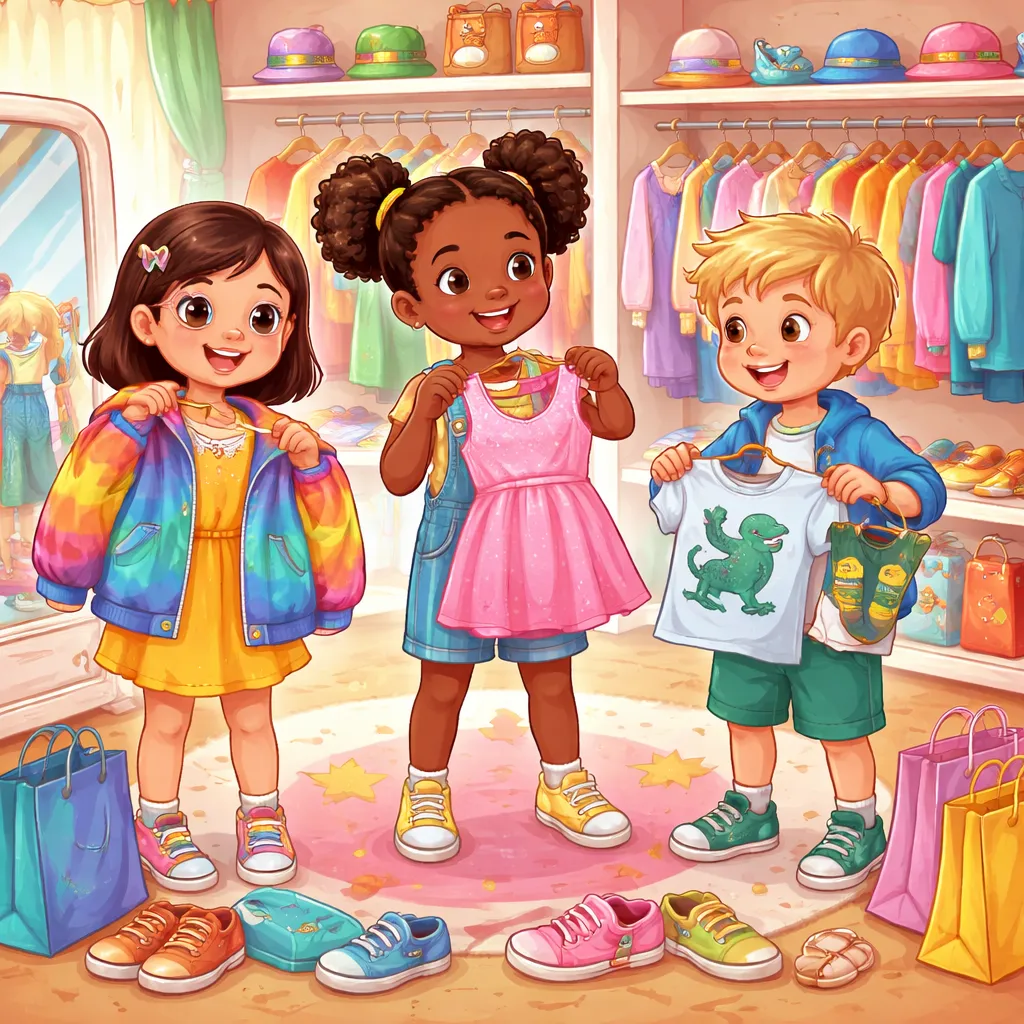

What Is This Situation? Every morning, clothes need to be chosen. What to wear today? Pants or shorts? Red shirt or blue? The closet is full of possibilities. Choosing clothes is a child's first step in expressing who they are.
English dialogue for choosing clothes gives children the words to participate in this decision. They learn the names of clothing. They learn to state their preference. They learn to compromise when needed. The words turn dressing into a conversation.
This situation happens every morning, in bedrooms and closets. It happens when getting ready for school, for a playdate, for a family outing. Choosing clothes is a daily ritual. That makes it perfect for language practice.
These phrases are simple and respectful. They ask for opinions. They state preferences. They offer choices. With these words, your child learns to make decisions and to talk about them.
Key English Phrases for This Situation Use phrases for opening the choice. "What do you want to wear today?" invites decision. "Would you like the red shirt or the blue one?" offers specific options. "Let us pick out your clothes" starts the process.
Use phrases for stating preference. "I want the red shirt" states a choice. "I like this one" points to a favorite. "These pants are my favorite" names a preference.
Use phrases for considering weather. "It is cold today. You need pants" explains the reason. "It is hot. A short-sleeve shirt is good" connects clothes to weather. "What is the weather like?" involves the child in the logic.
Use phrases for negotiating. "How about this shirt with these pants?" offers a combination. "This shirt does not match these pants. Let us try another" teaches matching. "You can choose your shirt, and I will choose your pants" divides decision-making.
Use phrases for finishing. "Good choice" affirms the decision. "You look great" praises the result. "Now you are ready" marks completion.
Simple Conversations for Kids Dialogue 1: Offering Choices Parent: "Time to get dressed. What do you want to wear?" Child: "The red shirt." Parent: "Red shirt is a good choice. And what pants?" Child: "Blue pants." Parent: "Red shirt and blue pants. Let us get them." Child: "I can do it." Parent: "Okay. You get the red shirt and blue pants."
This conversation gives the child full choice. The parent offers open questions. The child decides. The parent affirms. The child takes action. The morning starts with independence.
Dialogue 2: Weather Consideration Child: "I want to wear my shorts." Parent: "It is cold today. You need pants. How about these warm pants?" Child: "But I like shorts." Parent: "I know. When it is warm again, you can wear shorts. Today, pants keep you warm. Do you want the blue pants or the gray pants?" Child: "Blue pants." Parent: "Good choice. Blue pants for a cold day."
This conversation involves negotiation. The child states a preference. The parent explains the reason for a different choice. The parent offers a compromise. The child chooses within the options. The decision works for both.
Dialogue 3: Matching Clothes Parent: "You picked your shirt. Now what pants will go with it?" Child: "These." Parent: "Let us see. That shirt is striped. Those pants are striped too. They might not match. How about these plain blue pants?" Child: "Okay. The blue ones." Parent: "Good. Striped shirt with plain pants. That looks nice. You have a good eye for matching."
This conversation teaches about matching. The parent explains the reasoning. The child accepts the suggestion. The parent praises the final choice. The child learns a style concept.
Vocabulary You Should Know Shirt is the top you wear. You can say "I want the red shirt." This is a common choice.
Pants are what cover your legs. You can say "These pants are comfortable." This word names the bottom piece.
Shorts are short pants for warm weather. You can say "I want to wear shorts." This word names a warm-weather favorite.
Match means go together well. You can say "These colors match." This word teaches a style concept.
Weather is what it is like outside. You can say "It is cold today." This word connects clothes to the day.
Choose means to pick one thing from many. You can say "You can choose your clothes." This word names the action.
How to Use These Phrases Naturally Use a patient and respectful tone. Clothing choices matter to children. Your tone should say "Your opinion matters." Listen. Consider. The conversation is a dialogue, not a command.
Say the phrases when there is time. Morning rush is not the time for long discussions. Build in extra time for choices. When you are not rushed, you can let your child decide.
Offer limited choices. "Red shirt or blue shirt?" is easier than "What do you want to wear?" Two or three choices is enough. Too many options overwhelm.
Let your child make real choices. If the choice does not matter, let them decide. If the choice matters (weather, occasion), explain why. Respect their preference when possible.
Praise the decision-making, not just the outfit. "You chose your clothes all by yourself" builds pride. "You thought about the weather and picked good pants" shows you noticed their reasoning.
Common Mistakes to Avoid One mistake is making all the choices for your child. Even if their choices are silly, let them decide sometimes. Letting them choose builds independence.
Another mistake is criticizing their choice. "That does not match" can hurt. "Let us see if we can find something that goes better" is kinder. Guide, do not criticize.
Some parents give too many choices. A closet full of options can be overwhelming. Offer two or three options. Keep it simple.
Avoid changing their choice after they have decided. If they pick the red shirt, let them wear the red shirt. Changing their choice teaches that their decision does not matter.
Tips for Parents and Practice Ideas Lay out clothes the night before. Morning decisions are harder. Choosing the night before gives time and reduces morning stress.
Let your child organize their closet. Put favorite clothes where they can reach. Let them see their options. Independence starts with access.
Use a weather check. "Let us look outside. What is the weather?" Your child learns to connect weather to clothing. The weather becomes part of the decision.
Create a clothing chart. Take photos of different outfits. Your child points to the outfit they want. The chart helps children who are still learning to express themselves.
Let your child dress a doll first. The doll wears what your child wants to wear. The doll practices the choice. Then your child wears the same.
Fun Practice Activities Play dress-up. Use costumes or grown-up clothes. Your child practices choosing and naming clothes. "I want the hat. I want the scarf." Play makes practice fun.
Make a paper doll. Draw a simple figure. Your child draws clothes for it. They name each piece. "Shirt. Pants. Shoes." The paper doll practices vocabulary.
Create a clothing store. Use clothes from your child's closet. Your child is the customer. You are the salesperson. "What would you like to wear today?" The store makes choices playful.
Sing a clothing song. "Shirt, pants, socks, shoes. What will I choose? Shirt, pants, socks, shoes. I know what I will wear." Music makes the words easy.
Play the matching game. Take out several shirts and pants. Your child finds which ones go together. They say "This shirt matches these pants." The game teaches style vocabulary.
English dialogue for choosing clothes turns a daily routine into a time of decision-making and language practice. Your child learns the names of clothing. They learn to state preferences. They learn to consider weather and matching. And they learn that their choices matter. When you ask "What do you want to wear?" and wait for the answer, you are saying "Your voice matters. Your style matters. You matter." That is the real lesson of choosing clothes. It is not just about what goes on your body. It is about who you are becoming. One outfit, one choice, one conversation at a time.