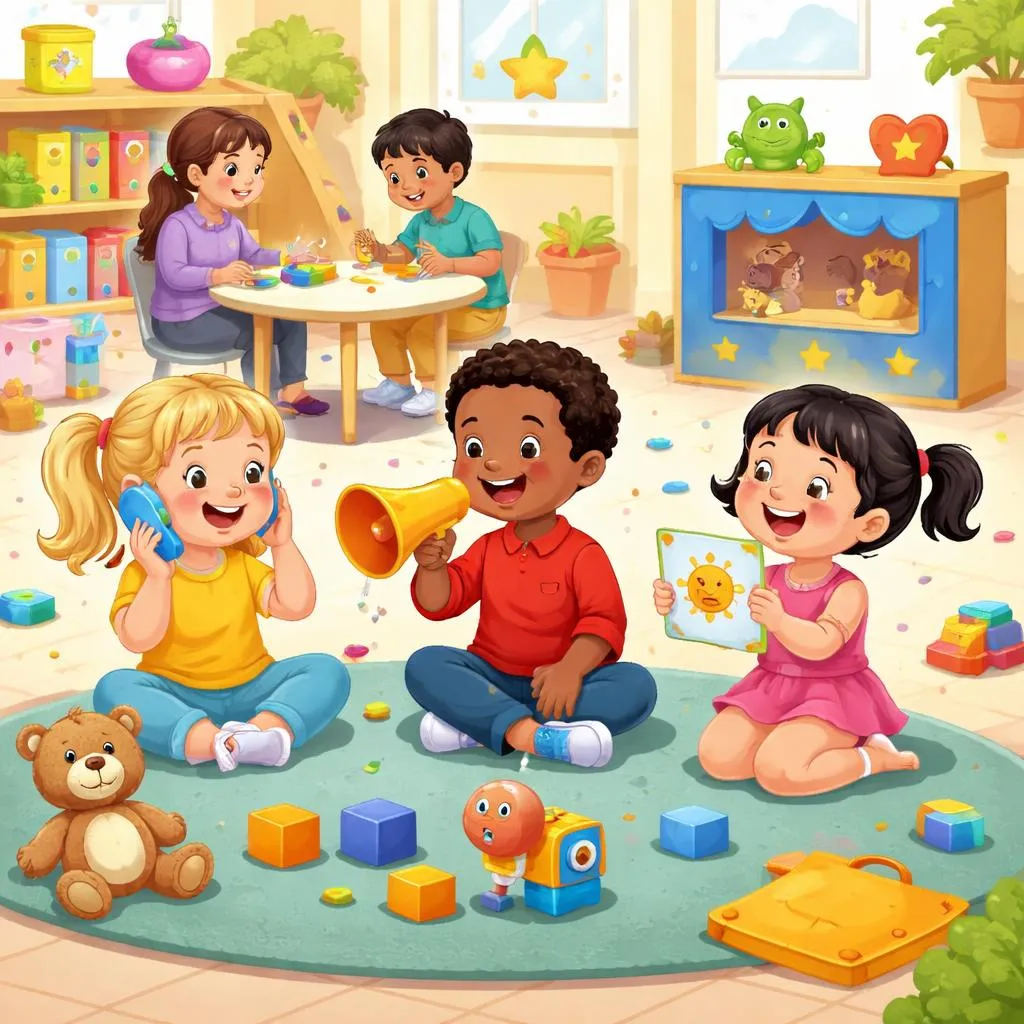

Hello, dear teachers and parents! Today brings an exciting opportunity to explore a crucial aspect of early childhood development. Young children need to express themselves. They need to understand others. They need to share thoughts and feelings. "Communication activities for preschoolers" build these essential skills. Through play and guided interaction, children learn to talk, listen, and connect. Let us discover together how these activities shape young communicators.
What Are Communication Activities for Preschoolers? "Communication activities for preschoolers" are structured opportunities for young children to practice language skills. These activities focus on both speaking and listening. They help children express thoughts clearly. They teach children to understand others. They build the foundation for all future learning.
Communication involves many different skills. Children learn new words and how to use them. They learn to form sentences that others understand. They learn to ask questions when confused. They learn to listen carefully to answers. Each activity targets one or more of these skills.
These activities look like play to young children. But underneath the fun lies serious learning. A simple game of "I Spy" builds vocabulary and attention. A story circle develops listening and comprehension. Show and tell practices clear speaking. The play context keeps children engaged while skills develop.
The preschool years prove critical for communication development. Brains grow rapidly during this period. Language centers develop quickly. Social understanding expands daily. Well-designed activities support this natural growth. They provide the practice young minds need.
Meaning and Explanation of Communication Skills Communication skills divide into several important areas. Each area contributes to overall ability to connect with others.
Vocabulary forms the foundation of communication. Words name objects, actions, feelings, and ideas. A rich vocabulary lets children express exactly what they mean. Preschoolers learn new words rapidly. They absorb language from everything around them. Activities that introduce new words in context prove especially effective.
Sentence building moves beyond single words. Children learn to combine words into phrases and sentences. They discover grammar rules naturally through hearing and using language. Simple sentences grow into more complex expressions. Activities that model good sentences support this development.
Listening comprehension matters as much as speaking. Children must understand what others say. They need to follow directions. They need to comprehend stories. They need to grasp questions before answering. Activities that practice listening build this essential skill.
Conversation skills involve taking turns. One person speaks while others listen. Then the listener becomes speaker. This back-and-forth pattern forms the basis of all dialogue. Preschool activities that practice turn-taking build conversation competence.
Non-verbal communication adds another layer. Facial expressions convey feelings. Gestures emphasize points. Body language shows attention or disinterest. Children learn to read these signals in others. They also learn to use them intentionally. Activities that highlight non-verbal cues build this awareness.
Categories of Communication Activities "Communication activities for preschoolers" fall into several useful categories. Each category targets different skills while maintaining engagement.
Listening games form one important category. Simon Says teaches careful attention to words. Freeze Dance requires listening for musical cues. Story time with questions checks comprehension. These activities build the ability to hear and process language.
Speaking activities encourage verbal expression. Show and tell lets children share about meaningful objects. Picture description practices using descriptive words. Morning greeting routines build confidence in social speech. These activities give children practice using their voices.
Vocabulary building activities introduce new words. Themed weeks might focus on weather words or animal names. Picture books expose children to rich language. Object labeling around the classroom builds word knowledge. These activities expand the words children can use.
Conversation practice activities develop dialogue skills. Partner sharing during circle time lets children talk to each other. Puppet play creates safe conversations between characters. Telephone games show how messages travel. These activities build back-and-forth communication.
Storytelling activities combine many skills. Children listen to stories, then retell them. They create their own stories with guidance. They act out stories with props and costumes. These activities build narrative understanding and expressive language.
Daily Life Examples of Communication Activities Communication learning happens throughout the preschool day. Everyday moments provide natural opportunities for practice.
Morning greeting time starts the day with communication. Children say hello to teachers and friends. They answer questions about how they feel. They share news from home. This routine builds social confidence and conversational skill.
Circle time offers structured communication practice. Children listen to announcements. They sing songs together. They answer questions about the calendar and weather. They share ideas during discussions. This group setting builds both speaking and listening in a supportive environment.
Snack time creates natural conversation opportunities. Children ask for food items. They comment on what they like. They talk with friends at the table. Teachers model polite request language. This casual setting builds practical communication.
Free play generates countless communication moments. Children negotiate roles in dramatic play. "I will be the mommy, and you be the baby." They request toys from friends. "Can I have the blue block?" They describe what they are building. "Look at my tall tower!" These authentic interactions build real communication skills.
Story time develops listening and comprehension. Children gather to hear a book read aloud. They answer questions about the story. They predict what might happen next. They connect story events to their own experiences. This focused listening time builds attention and understanding.
Printable Flashcards for Communication Activities Flashcards support communication development in many ways. Clear images with matching words build vocabulary. Printable versions offer flexibility for teachers and parents.
Emotion flashcards help children name feelings. Cards show happy, sad, angry, surprised, and scared faces. Children learn to identify these emotions in themselves and others. They practice saying, "I feel happy today." This builds emotional vocabulary and self-expression.
Action word flashcards build verb knowledge. Cards show jumping, eating, sleeping, running, and laughing. Children practice saying what people do. They can act out the actions while naming them. This connects words to physical experience.
Question word flashcards support conversation skills. Cards show who, what, where, when, why, and how. Children learn to ask and answer questions using these words. "Who is your friend?" "What is your favorite color?" This builds dialogue competence.
Category flashcards organize related vocabulary. Food cards, animal cards, clothing cards, and toy cards build themed word sets. Children learn words that belong together. This supports cognitive organization along with vocabulary.
Conversation starter cards provide discussion prompts. "What makes you laugh?" "Where do you like to go?" "What is your favorite game?" These cards give children something to talk about. They practice extended speaking on a topic.
Learning Activities and Games for Communication Games turn communication practice into joyful play. These activities work well for preschoolers. Children stay engaged while building essential skills.
Telephone Game demonstrates how messages travel. Children sit in a circle. One child whispers a message to the next. The message passes around the circle. The last child says the message aloud. Everyone compares it to the original. This teaches careful listening and clear speaking.
Story Circle builds narrative skills together. One child starts a story with one sentence. "Once upon a time, there was a little cat." The next child adds a sentence. The story continues around the circle. This builds creativity, listening, and sentence formation.
Feelings Charades explores emotional vocabulary. One child acts out a feeling without speaking. Happy, sad, angry, surprised, or scared. Others guess the emotion. The actor confirms or corrects. This builds recognition of emotional expressions.
Mystery Bag builds descriptive language. Place an object in a bag without showing it. Children take turns feeling the object and describing it. "It is soft." "It is round." Others guess what it might be. This builds descriptive vocabulary and inference.
Partner Drawing practices giving and following directions. Two children sit back to back. One holds a simple picture. The other holds a blank paper and crayons. The first child describes the picture without naming it. "Draw a circle at the top." The second child follows directions. Compare pictures at the end. This builds precise language and careful listening.
Show and Tell remains a classic for good reason. Children bring an item from home to share. They practice speaking in front of others. They answer questions about their item. They listen to others' presentations. This builds confidence and public speaking skills.
Question Game practices asking and answering. One child thinks of an object. Others ask yes or no questions to guess it. "Is it alive?" "Is it in this room?" "Can you eat it?" This builds question formation and logical thinking.
Rhyme Time develops phonological awareness. Say a word and ask for a rhyming word. "Cat, what rhymes with cat?" Children suggest hat, bat, rat, or mat. This builds sound awareness important for later reading.
The "communication activities for preschoolers" lay the foundation for all future learning. Children who communicate well can ask questions when confused. They can express needs clearly. They can form friendships through conversation. They can understand instructions and follow directions. These skills affect every aspect of school and life. The preschool years offer a golden opportunity for communication development. Brains are ready to absorb language. Social interest is growing rapidly. Play provides the perfect context for practice. Through thoughtful activities, teachers and parents support this natural development. Children learn to speak clearly, listen carefully, and connect meaningfully with others. These abilities will serve them throughout their lives, in school, work, and relationships. Every conversation builds on this early foundation. Every new friendship grows from these first communication skills. Investing time in communication activities pays dividends forever.