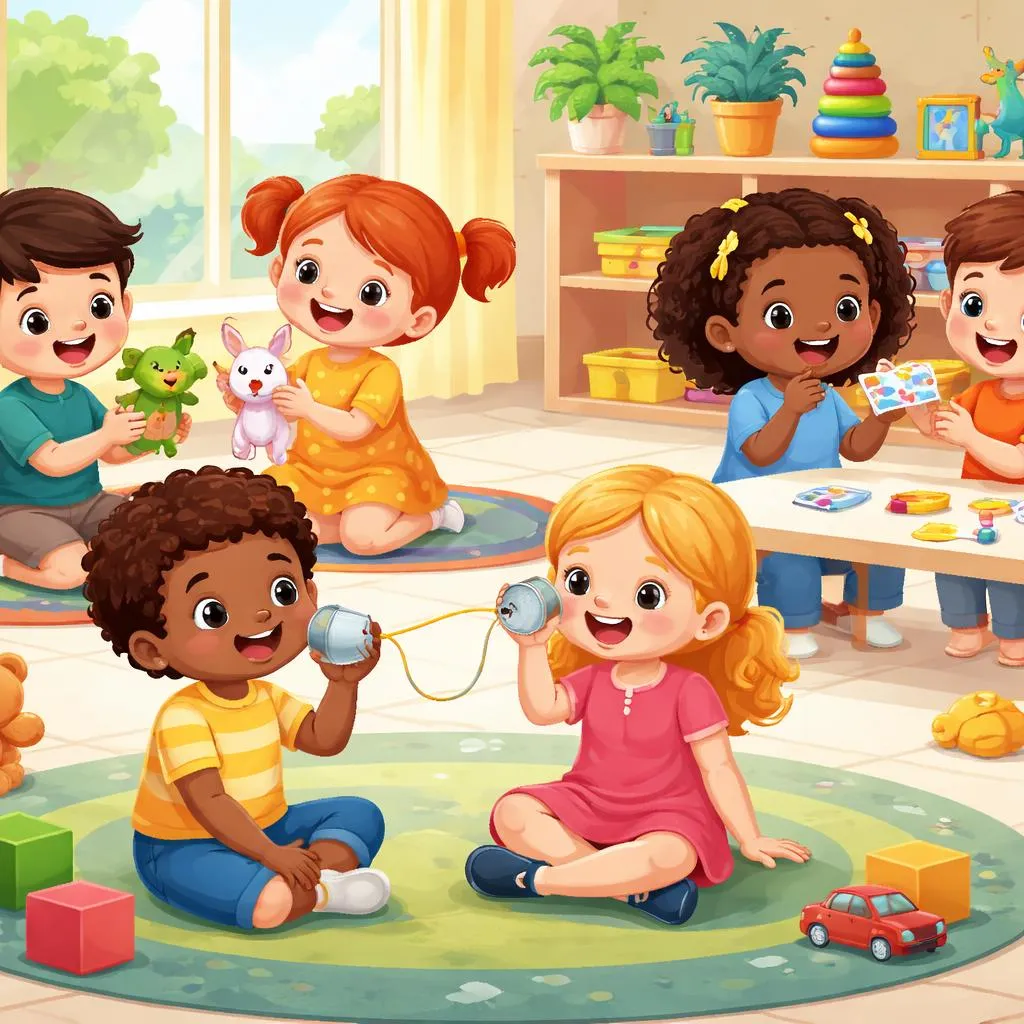

Hello, wonderful educators! Today we are exploring a crucial aspect of early childhood development. We will focus on "communication skills activities for preschoolers." Communication is how we share ideas, feelings, and information. For young children, developing these skills is essential. It helps them make friends, express needs, and learn. We will examine what communication skills are. We will explore different types of activities. We will share practical teaching strategies. We will provide engaging classroom ideas. This guide will help you foster communication skills effectively. Let's begin this important journey together.
What Are Communication Skills for Preschoolers?
Communication skills are the abilities to share information with others. For preschoolers, this includes many different areas. Speaking clearly is one part. Listening carefully is another. Understanding body language matters too. Taking turns in conversation is essential.
Preschoolers are just learning how to communicate effectively. They are building vocabulary. They are learning sentence structure. They are figuring out how conversations work. They need practice and support.
Good communication skills help children in every part of life. They can ask for what they need. They can share ideas with friends. They can understand instructions. They can express feelings appropriately.
Communication involves both speaking and listening. Both are equally important. Children must learn to express themselves clearly. They must also learn to pay attention to others.
Categories of Communication Skills Activities
Communication activities can be grouped into several categories. Each develops different abilities.
Speaking Activities: These help children express themselves verbally. Show and tell, describing objects, and telling stories all build speaking skills. Children learn to form sentences and choose words.
Listening Activities: These help children pay attention to others. Following directions, identifying sounds, and responding to questions build listening skills. Children learn to focus and comprehend.
Non-Verbal Communication Activities: These help children understand body language and facial expressions. Mirror games, emotion charades, and gesture recognition build this awareness.
Conversation Skills Activities: These help children learn how dialogues work. Turn-taking games, question and answer practice, and group discussions build conversation abilities.
Vocabulary Building Activities: These expand the words children can use. Word games, picture labeling, and theme-based talks build vocabulary knowledge.
Storytelling Activities: These help children organize and share narratives. Sequencing pictures, telling personal experiences, and creating stories build narrative skills.
Daily Life Examples of Communication Practice
We can weave communication practice into everyday classroom routines. This makes learning natural and continuous.
During morning circle, encourage sharing. "Who would like to tell us something about their weekend?" This builds speaking confidence.
During transitions, give clear directions. "First, put your books away. Then, line up by the door." Children practice listening and following.
During conflicts, guide communication. "Tell Sam how you feel using your words." "Listen to what Maria is saying." This builds real-life skills.
During snack time, encourage conversation. "What is your favorite snack?" "Tell me about what you did this morning." This builds social communication.
During story time, ask questions. "What do you think will happen next?" "Why did the character feel sad?" This builds comprehension and expression.
Printable Materials for Communication Activities
Visual supports enhance communication learning. Here are many printable ideas.
Emotion Cards: Create cards showing different facial expressions. Happy, sad, angry, surprised, scared, tired. Children name the emotion and describe a time they felt that way.
Sequence Cards: Create cards showing simple stories in order. A child waking up, eating breakfast, going to school. Children arrange them and tell the story.
Question Cards: Create cards with simple questions. "What is your favorite color?" "What do you like to play?" Children take turns asking and answering.
Picture Cards for Description: Create cards with interesting pictures. Children describe what they see using complete sentences.
Conversation Starter Cards: Create cards with topics. "Pets," "Favorite foods," "Things to do outside." Children use them to start conversations.
Learning Activities or Games for Communication Skills
Games make communication practice fun and memorable. Here are many engaging ideas.
Activity 1: Show and Tell
Each child brings an item from home. They show it to the class and tell about it. What is it? Where did it come from? Why is it special? This builds speaking confidence.
Activity 2: Listen and Draw
Give simple drawing instructions. "Draw a circle. Draw a triangle on top of the circle. Draw two small circles inside the circle." Children listen and follow. Compare results. This builds listening and following directions.
Activity 3: Emotion Charades
Act out an emotion without speaking. Happy, sad, angry, surprised, scared. Children guess the emotion. Then discuss times they felt that way. This builds emotional vocabulary.
Activity 4: Telephone Game
Whisper a message to one child. They whisper to the next. Continue around the circle. The last person says the message aloud. Compare to the original. This builds listening and memory.
Activity 5: Question of the Day
Each day, ask a question. "What is your favorite animal?" Children take turns answering. They practice speaking in front of others. They learn to listen to peers.
Activity 6: Story Circle
Start a story with one sentence. "Once upon a time, there was a little rabbit." The next child adds a sentence. Continue around the circle. This builds narrative skills and creativity.
Activity 7: Mystery Box
Place an object in a box with a hole. Children reach in without looking. They describe what they feel. Others guess what it is. This builds descriptive language.
Activity 8: Partner Interviews
Pair children up. Give them simple questions to ask each other. "What is your name?" "How old are you?" "What is your favorite color?" They practice asking and answering.
Activity 9: Following Directions Game
Give multi-step directions. "Touch your nose, then clap your hands, then jump once." Children follow. Increase complexity over time. This builds listening and memory.
Activity 10: Picture Talk
Show an interesting picture. Ask children to describe what they see. What is happening? Who is in the picture? What might happen next? This builds observation and language.
Activity 11: Rhyming Game
Say a word. Children take turns saying words that rhyme. Cat, hat, bat, sat. This builds phonological awareness and vocabulary.
Activity 12: I Spy Listening
Say, "I spy with my little eye, something that is red." Children look and guess. This builds listening and observation.
Activity 13: Puppet Conversations
Use puppets to model conversations. Puppets can ask questions and respond. Children then take turns with puppets. This reduces anxiety about speaking.
Activity 14: Feelings Check-In
Each day, ask children how they are feeling. Provide emotion words. "I feel happy because..." "I feel tired because..." This builds emotional vocabulary.
Activity 15: Barrier Games
Place a barrier between two children. One child arranges blocks and describes the arrangement. The other tries to copy without seeing. Compare results. This builds descriptive and listening skills.
Activity 16: Song Time with Actions
Sing songs that include actions. "If You're Happy and You Know It" works well. Children listen and do the actions. This builds listening and following.
Activity 17: What's Missing?
Place several items on a tray. Children study them. Cover the tray. Remove one item. Children guess what's missing. This builds observation and memory.
Activity 18: Yes/No Questions Game
Think of an object. Children ask yes or no questions to guess. "Is it alive?" "Is it in this room?" "Is it bigger than a book?" This builds questioning skills.
Activity 19: Finish the Sentence
Start a sentence. "When I go outside, I like to..." Children complete it. Go around the circle with different starters. This builds sentence completion.
Activity 20: Sound Guessing Game
Make sounds behind a screen. Crinkle paper. Tap a pencil. Pour water. Children guess what makes the sound. This builds listening discrimination.
Activity 21: Story Sequencing with Pictures
Provide pictures from a simple story out of order. Children arrange them correctly and tell the story. This builds sequencing and narrative skills.
Activity 22: Compliment Circle
Sit in a circle. Each child gives a compliment to the person next to them. "I like your smile." "You are a good friend." This builds positive communication.
Activity 23: Role Play Scenarios
Set up simple scenarios. Pretend to order food at a restaurant. Pretend to ask for help at a store. Children practice appropriate language. This builds real-world skills.
Activity 24: Same and Different
Show two objects. Children describe how they are the same and different. "Both are round. One is red, one is blue." This builds comparison language.
Activity 25: Weather Report
Each day, have a child give a weather report. "Today is sunny and warm." This builds descriptive language and confidence.
Activity 26: Recipe Following
Make a simple snack together. Give clear instructions. Children listen and help. This builds following directions.
Activity 27: Telephone Number Practice
Practice saying phone numbers. This builds memory and clear speech. It also teaches important safety information.
Activity 28: Greeting Practice
Practice different greetings. "Good morning." "Hello, how are you?" "Nice to see you." Children greet each other at the start of day.
Activity 29: Farewell Practice
Practice different farewells. "Goodbye." "See you later." "Have a good day." Children say goodbye at the end of day.
Activity 30: Story Retelling
Read a short story. Then ask children to retell it in their own words. This builds comprehension and narrative skills.
Activity 31: Picture Sequencing Cards
Create cards with 3-4 pictures showing a simple sequence. A seed, a sprout, a flower. Children arrange and describe the process.
Activity 32: Emotion Mirror Game
Make an emotion face. Children mirror it back. Then discuss what makes people feel that way. This builds emotional recognition.
Activity 33: Listening Walk
Take a walk outside. Stop and listen. What sounds do you hear? Birds? Cars? Wind? Children report what they heard. This builds listening awareness.
Activity 34: Question Basket
Have a basket of question cards. Children take turns picking a card and answering the question. "What makes you laugh?" "What is your favorite game?"
Activity 35: Partner Drawing
Pair children. Give them one paper and one pencil. They must work together to draw something. They need to communicate to succeed.
Activity 36: Mystery Sound Tubes
Fill containers with different materials. Rice, beans, bells, sand. Children shake and describe the sound. They guess what's inside.
Activity 37: Story Prediction
While reading a story, pause and ask what might happen next. Children share predictions. This builds thinking and language.
Activity 38: Favorite Things Sharing
Each child shares their favorite thing. Favorite toy, food, activity. They explain why they like it. This builds personal expression.
Activity 39: Problem-Solving Discussions
Present simple problems. "Two children want the same toy. What can they do?" Children discuss solutions. This builds negotiation skills.
Activity 40: Celebration of Communication
Create a special day to celebrate communication. Children share something special. They listen to each other. They practice all their skills.
We have explored many communication skills activities for preschoolers. These activities build speaking, listening, and social skills. They help children express themselves clearly. They teach children to listen to others. They build vocabulary and confidence. They prepare children for successful interactions throughout life. Use these strategies in your classroom. Adapt them to your students' needs. Watch as your learners become better communicators every day. Their words will flow more freely. Their listening will become more attentive. Their connections with others will grow stronger. Communication is the key to all learning and relationships.