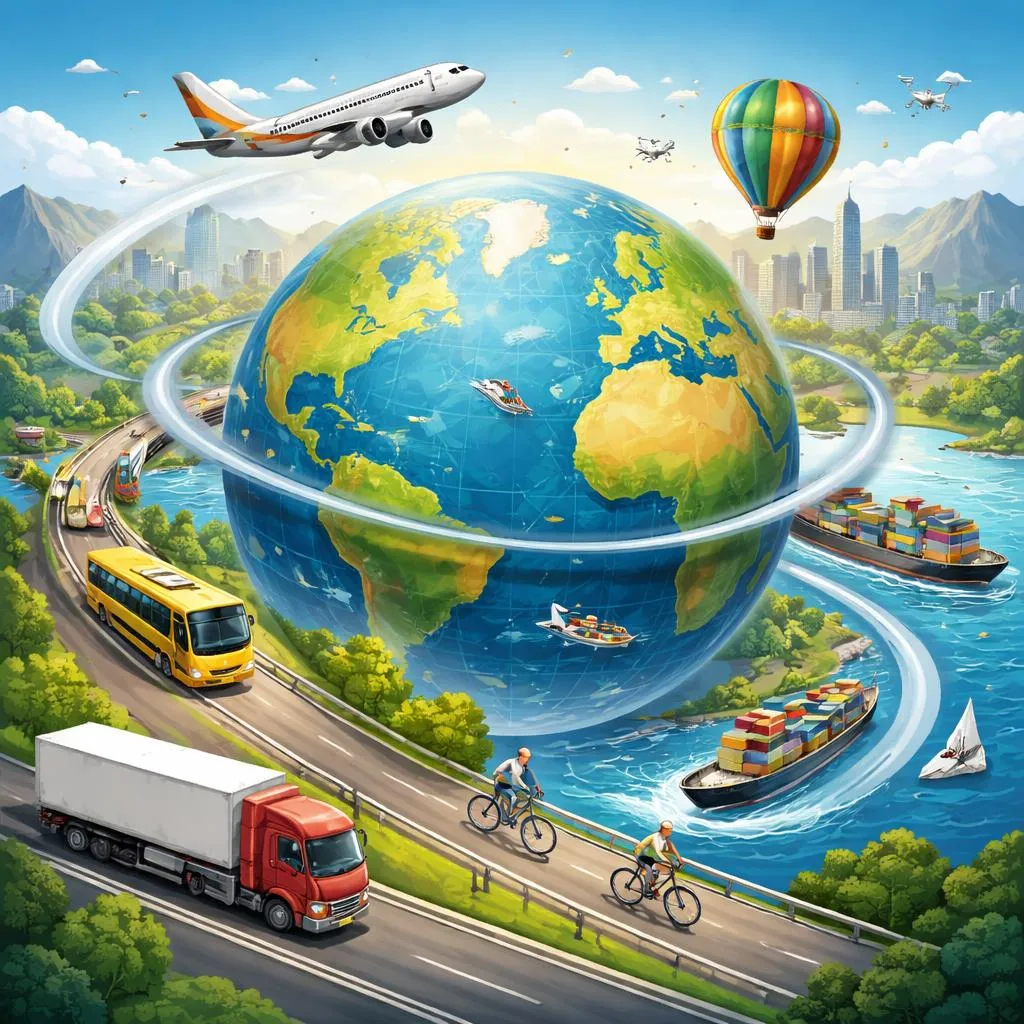

Hello, wonderful educators! Today we are exploring a fascinating topic that connects to every child's life. We will focus on "forms of transportation." These are the many ways people and goods move from place to place. Transportation is all around us. Children ride in cars and buses. They see planes in the sky and boats on water. Learning about transportation builds real-world understanding. We will examine what transportation is. We will explore different categories and examples. We will share practical teaching strategies. We will provide engaging classroom activities. This guide will help you teach transportation vocabulary effectively. Let's begin this journey through the world of movement together.
What Are Forms of Transportation?
Forms of transportation are the different ways we travel from one place to another. They include vehicles that move on land, water, and air. They also include animal-powered and human-powered methods. Each form has unique features and purposes. Some carry people. Some carry goods. Some do both.
Transportation helps us connect with the world. We go to school, work, and stores. We visit family and friends. We explore new places. Goods travel from factories to stores. Transportation makes all this possible.
Learning transportation words helps children describe their world. They can talk about riding the bus to school. They can discuss a plane trip to visit grandparents. They can name vehicles they see on the street.
Transportation vocabulary also appears in stories and songs. Characters travel by train, boat, or bicycle. Knowing these words helps children understand narratives.
Meaning and Explanation of Transportation Forms
Let us explore the meaning behind different transportation forms. Each type has specific characteristics and purposes.
Land Transportation: These move on ground. They include vehicles with wheels, tracks, or legs. Cars, buses, trains, bicycles, and motorcycles are common. Some need roads. Some need rails. Some need paths.
Water Transportation: These move on water. They include boats, ships, ferries, and submarines. Some are small for rivers and lakes. Some are huge for oceans. They carry people and cargo across water.
Air Transportation: These move through the air. They include airplanes, helicopters, hot air balloons, and rockets. They are the fastest for long distances. They connect countries around the world.
Animal-Powered Transportation: These use animals to move. Horses, donkeys, camels, and elephants carry people or pull carts. This was common before engines. Some places still use them today.
Human-Powered Transportation: These use human energy. Bicycles, scooters, skateboards, and walking are examples. They are healthy and good for the environment.
Public Transportation: These carry many people together. Buses, trains, subways, and trams are public transport. They help reduce traffic and pollution.
Emergency Transportation: These help in urgent situations. Ambulances carry sick people. Fire trucks carry firefighters. Police cars carry officers. Helicopters rescue people in trouble.
Recreational Transportation: These are for fun and sport. Bicycles for riding. Sailboats for sailing. Hot air balloons for floating. Canoes for paddling.
Categories or Lists of Common Transportation Forms
Organizing transportation into categories helps learning. It creates mental folders for students. Let us look at helpful categories.
Road Vehicles: These travel on roads. Car, bus, truck, van, motorcycle, scooter, bicycle, taxi, police car, fire truck, ambulance, garbage truck, mail truck, school bus, limousine, go-kart, tractor, RV. Children see these every day.
Rail Vehicles: These travel on tracks. Train, subway, tram, trolley, monorail, bullet train, freight train, steam train, cable car, funicular. Some run underground. Some run above ground.
Water Vehicles: These travel on water. Boat, ship, sailboat, canoe, kayak, rowboat, ferry, cruise ship, cargo ship, tanker, submarine, hovercraft, jet ski, yacht, raft, barge, pontoon. Each is for different water conditions.
Air Vehicles: These travel through air. Airplane, helicopter, hot air balloon, blimp, glider, jet, rocket, space shuttle, drone, seaplane, biplane, fighter jet, passenger jet. Some carry many people. Some carry just one.
Special Purpose Vehicles: These have specific jobs. Tractor for farming. Bulldozer for construction. Forklift for lifting. Crane for moving heavy things. Tow truck for pulling broken cars. Snowplow for clearing snow. Garbage truck for waste collection.
Animal Transport: These use animals. Horse, donkey, camel, elephant, ox cart, horse-drawn carriage, sled pulled by dogs, covered wagon, rickshaw. These are less common today but still exist in some places.
Human-Powered Transport: These use human energy. Bicycle, tricycle, unicycle, skateboard, scooter, roller skates, roller blades, walking, running, skipping, hopping. These are good for health and fun.
Emergency Vehicles: These respond to urgent needs. Ambulance, fire truck, police car, rescue helicopter, coast guard boat, lifeguard vehicle, SWAT truck, bomb squad vehicle. They have special lights and sounds.
Public Transport: These carry many people. City bus, school bus, subway train, commuter train, tram, ferry, shuttle bus, trolley, light rail. They help communities move efficiently.
Recreational Transport: These are for fun. Bicycle, sailboat, canoe, kayak, hot air balloon, hang glider, parachute, surfboard, skateboard, roller skates, snowmobile, ATV, go-kart.
Daily Life Examples with Transportation Forms
We can weave transportation words into everyday conversations. This makes learning natural and continuous.
During morning arrival, notice how students came to school. "Did you come by car today?" "Did you ride the bus?" "Did you walk with your family?" This connects vocabulary to real experience.
During story time, identify transportation in books. "Look, the family is going on a train." "The character is riding a bicycle." "That boat is sailing on the river."
During outdoor play, point out vehicles. "Listen, I hear an airplane." "Look at that truck delivering food." "A police car just went by with its siren."
During dramatic play, provide vehicle toys. Children naturally use transportation words. "I'm driving the bus." "The fire truck is going to put out a fire." "My car is very fast."
During transition times, use transportation themes. "Line up like train cars." "Let's walk quietly like bicycles." "We'll zoom to the carpet like airplanes."
Printable Flashcards for Transportation Forms
Flashcards provide excellent visual support for vocabulary lessons. Here are many ideas for creating them.
Vehicle Picture Cards: Create cards with clear photographs of each vehicle on one side. Write the vehicle name on the other side. Include a wide variety from all categories.
Category Cards: Create cards showing different transportation categories. Land, water, air. Students sort vehicle cards into the correct categories.
Vehicle Sound Cards: Create cards that represent vehicle sounds. Vroom for car. Choo-choo for train. Beep-beep for truck. Whoosh for airplane. Splash for boat. Students match sounds to vehicles.
Vehicle and Place Cards: Create cards showing vehicles on one set. Create cards showing where they go. Roads for cars. Tracks for trains. Water for boats. Sky for planes. Students match vehicles to their paths.
Vehicle Purpose Cards: Create cards showing what vehicles do. Carry people. Carry goods. Fight fires. Help sick people. Students match vehicles to purposes.
Then and Now Cards: Create cards showing historical transportation and modern equivalents. Horse and carriage next to car. Steamship next to cruise ship. This builds history connections.
Learning Activities or Games for Transportation Forms
Games make vocabulary practice fun and memorable. Here are many engaging ideas.
Activity 1: Vehicle Sorting
Provide a collection of toy vehicles or pictures. Have students sort them by category. Land vehicles together. Water vehicles together. Air vehicles together. This builds categorization skills.
Activity 2: Transportation Bingo
Create bingo cards with vehicle pictures. Call out vehicle names. Students cover matching pictures. First to cover a row wins. This builds listening and recognition.
Activity 3: I Spy a Vehicle
Say, "I spy with my little eye, a vehicle that flies in the sky." Students guess airplane or helicopter. "I spy a vehicle that carries many people on roads." Students guess bus.
Activity 4: Vehicle Charades
Act out a vehicle without speaking. Pretend to steer a car. Pretend to fly like a plane. Pretend to paddle a boat. Students guess the vehicle.
Activity 5: Transportation Scavenger Hunt
Take a walk around the neighborhood. Give students a list of vehicles to spot. Car, bus, truck, bicycle, motorcycle. Check off each one spotted. This builds observation skills.
Activity 6: Vehicle Sound Game
Play recordings of vehicle sounds. A car horn. A train whistle. A boat horn. A police siren. An airplane engine. Students identify the vehicle by sound.
Activity 7: Build a Vehicle
Provide blocks, boxes, and art materials. Students build their own vehicles. They name their creation and describe what it does. "This is my rocket ship. It goes to the moon."
Activity 8: Transportation Memory Match
Create pairs of vehicle cards. Place them face down. Students turn over two trying to find matches. They name the vehicle when they make a match.
Activity 9: Where Does It Go?
Name a vehicle. Students show where it travels. For car, they move hands like driving on road. For boat, they make wave motions. For plane, they stretch arms like wings.
Activity 10: Vehicle Patterns
Create patterns using vehicle pictures. Car, bus, car, bus. Students continue the pattern. They create their own vehicle patterns.
Activity 11: Transportation Song Creation
Create simple songs about vehicles using familiar tunes. "The wheels on the bus go round and round." Add verses for other vehicles.
Activity 12: Vehicle Interview
Students interview each other about transportation. "How did you get to school today?" "What is your favorite vehicle?" "Have you ever ridden on a train?" They share answers.
Activity 13: Transportation Art
Provide paper and art supplies. Students draw their favorite vehicle. They write or dictate a sentence about it. Display the artwork.
Activity 14: Vehicle Riddles
Create riddles about vehicles. "I have wings but I am not a bird. I fly high in the sky. What am I?" Students guess airplane.
Activity 15: Transportation Parade
Students choose a vehicle to be. They move around the room making that vehicle's sound and motion. Cars drive. Planes fly. Boats float. This adds physical activity.
Activity 16: Vehicle Color Sort
Provide vehicle pictures in different colors. Students sort them by color. Red vehicles together. Blue vehicles together. This combines color and transportation learning.
Activity 17: Transportation Alphabet
Go through the alphabet naming vehicles. A is for ambulance. B is for bus. C is for car. See how many the class can name together.
Activity 18: Vehicle Counting
Place different numbers of vehicle toys on a table. Students count them. They can count all vehicles or count by type. How many cars? How many trucks?
Activity 19: Transportation Story Time
Read books about transportation. Many wonderful picture books exist. Discuss the vehicles in the story and what they do.
Activity 20: Vehicle Opinion Line
Create a line across the room. One end says "favorite" other end "least favorite." Name a vehicle. Students stand where they agree. Discuss reasons.
Activity 21: Transportation Puzzle
Create simple puzzles with vehicle pictures cut into pieces. Students assemble the puzzles and name the vehicle. This builds problem-solving.
Activity 22: Vehicle Sorting by Size
Provide vehicle pictures in different sizes. Small cars, big trucks. Students sort them by size. They use size vocabulary.
Activity 23: Transportation Pictionary
Draw a vehicle on the board. Students guess what it is. The drawer cannot speak or write words. This builds visual literacy.
Activity 24: Vehicle Question Game
One student thinks of a vehicle. Others ask yes or no questions to guess. "Does it fly?" "Does it have wheels?" "Does it carry many people?" This builds questioning skills.
Activity 25: Transportation Collage
Provide magazines with vehicle pictures. Students cut out vehicles and create a transportation collage. They name each vehicle they include.
Activity 26: Vehicle Race Game
Create a simple board game with vehicle pictures. Students roll a dice and move their token. When they land on a vehicle, they name it and say one fact.
Activity 27: Transportation Flashcards Drill
Hold up vehicle flashcards. Students say the name as quickly as possible. Increase speed for challenge. This builds automatic recall.
Activity 28: Vehicle Matching Game
Create cards with vehicle names on one set. Create cards with pictures on another. Students match words to pictures. This builds reading connections.
Activity 29: Transportation Show and Tell
Ask students to bring a toy vehicle from home. They show it to the class and tell about it. "This is my fire truck. It has a ladder. It puts out fires."
Activity 30: Vehicle Guessing Bag
Place a toy vehicle in a bag. Students reach in without looking. They feel the vehicle and guess what it is. They pull it out to check.
Activity 31: Transportation Timeline
Create a simple timeline showing how transportation has changed. Horse and carriage, steam train, car, airplane, rocket. Discuss how we travel faster now.
Activity 32: Vehicle Sorting by Speed
Provide vehicle pictures. Students sort them by how fast they think they go. Slowest to fastest. This builds comparison skills.
Activity 33: Transportation Graph
Create a class graph showing favorite vehicles. Count how many students prefer each type. Discuss which is most and least popular.
Activity 34: Vehicle Writing Prompts
Give writing prompts about transportation. "If I could travel anywhere by any vehicle, I would..." "My favorite vehicle is..."
Activity 35: Transportation Field Trip
If possible, visit a transportation museum or see vehicles up close. A train station, airport viewing area, or bus depot. Real experiences are powerful.
We have explored the wonderful world of transportation together. Learning about different "forms of transportation" helps children understand how people and goods move. They can name vehicles they see every day. They can talk about how they travel. They can imagine future journeys. We looked at what transportation is. We explored helpful categories. We found examples in daily life. We created printable flashcards for practice. We shared engaging games and activities. This integrated approach makes learning natural and meaningful. Use these strategies in your classroom. Adapt them to your students' needs. Watch as your learners gain vocabulary and understanding. They will notice vehicles around them with new awareness. Their world will become richer with every transportation word they learn.