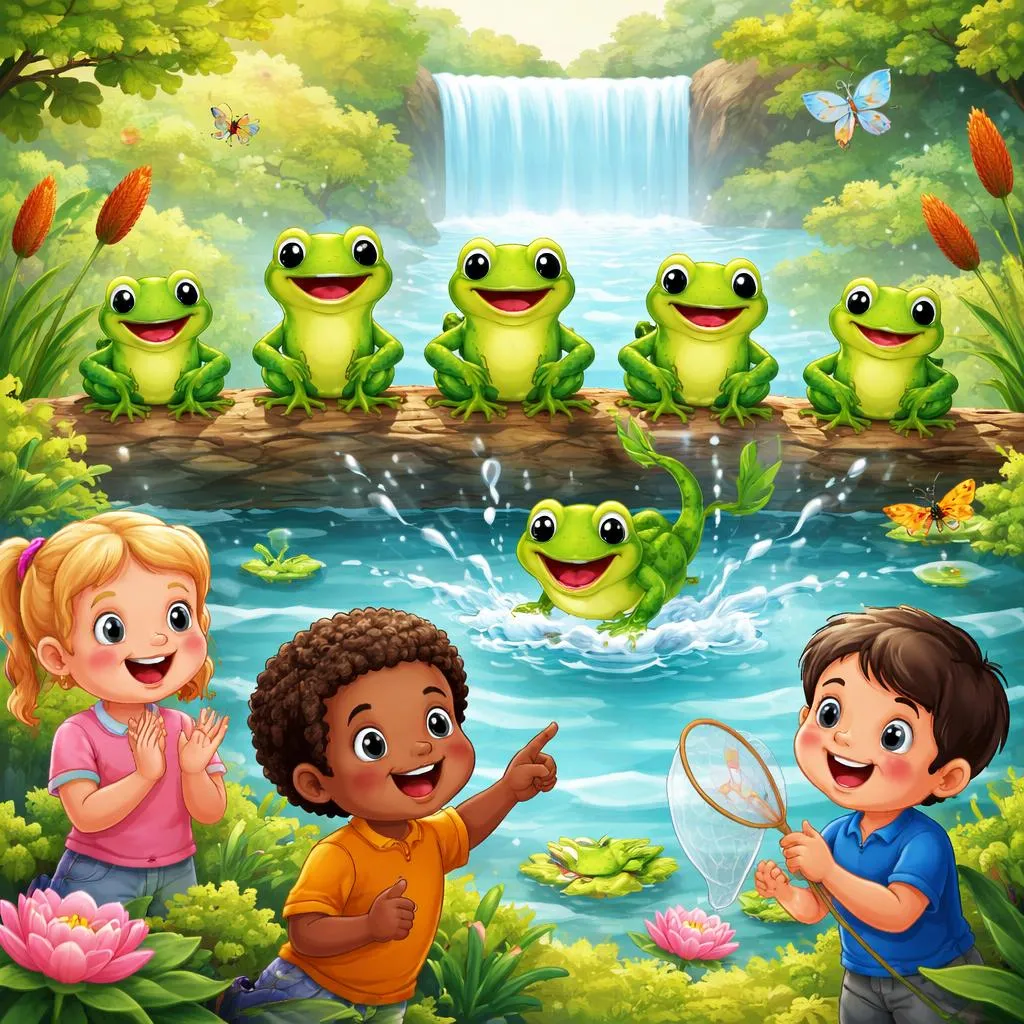

Hello, wonderful educators! Welcome to a delightful exploration of a classic children's rhyme. Today, we will dive into the wonderful world of “5 green and speckled frogs lyrics.” This isn't just a simple song for counting. It is a powerful tool for the classroom. We will look at how to use this rhyme to teach English. We will explore vocabulary, math, and even science concepts. This article will provide you with a comprehensive guide. You can use these ideas to create engaging and effective lessons. Let's get started on this froggy adventure together!
What is the “5 Green and Speckled Frogs” Rhyme?
This rhyme is a beloved counting song. It tells the story of five little frogs. They sit on a log, eating delicious bugs. One by one, they jump into the water. The rhyme is perfect for young children. It combines music with a simple story. This makes learning fun and memorable. The repetition helps children grasp new concepts easily. We often use this song to teach subtraction. It also introduces animal vocabulary. The visual of frogs on a log is very strong. Children can picture the scene in their minds. This aids in comprehension and retention.
The Lyrics of the Nursery Rhyme
Let us look closely at the words. The most common version of “5 green and speckled frogs lyrics” goes like this:
Five green and speckled frogs,
Sat on a speckled log,
Eating some most delicious bugs. (yum, yum!)
One jumped into the pool,
Where it was nice and cool,
Then there were four green and speckled frogs.
(Glub, glub!)
The song then repeats, counting down from four to one. After the last frog jumps, the final line changes. It usually ends with, "Then there were no green and speckled frogs." The sounds like "yum, yum" and "glub, glub" are fun to say. They add a playful element to the learning.
Vocabulary Learning from the Song
This rhyme introduces several key vocabulary words. We can focus on nouns, verbs, and adjectives.
Nouns: The main nouns are frogs, log, pool, and bugs. We can show pictures of each. We can ask students to point to the log in a drawing. We can talk about what a pool is.
Adjectives: The key adjectives are green, speckled, and delicious. We can explore the color green. We can find other green things in the classroom. The word speckled is very descriptive. We can look at patterns. We can show animal pictures with spots. The word delicious relates to taste. We can talk about foods we find delicious.
Verbs: The main action verbs are sat, eating, and jumped. We can act these out. We can all sit on the floor. We can pretend to eat. We can jump up and down. Acting out verbs helps solidify meaning.
Phonics Points to Practice
This rhyme offers several excellent phonics opportunities. We can focus on initial sounds. The word frog starts with the /fr/ blend. We can practice this sound. We can list other words that start with the same sound. Words like friend, fry, and fruit are good examples.
We can also look at rhyming words. The rhyme has clear rhyming pairs. "Frogs" rhymes with "logs." "Pool" rhymes with "cool." Recognizing rhyming patterns is a key early reading skill. We can ask the class to think of other words that rhyme with frog. Words like dog, bog, and jog might come up. This builds phonemic awareness.
Grammar Patterns We Can Teach
The simple structure of the song is great for grammar. We can introduce the past tense. The song uses the past tense verb "jumped." We can explain that this action already happened. We can contrast it with the present tense. We can say, "The frog is sitting. Now, the frog jumped." This shows the change in time.
We can also focus on prepositions of place. The frogs are "on a log." They jump "into the pool." These are important positional words. We can practice with classroom objects. We can put a book on a table. We can put a pencil into a cup. Using physical objects makes the meaning clear. This helps children understand where things are.
Learning Activities for the Classroom
Let's explore some engaging activities. These activities bring the “5 green and speckled frogs lyrics” to life.
Activity 1: Frog Puppet Math
We can create simple frog puppets. Use green paper or craft sticks. Children can use these to act out the song. As the song counts down, one frog jumps away. This makes subtraction concrete. It is a hands-on math lesson.
Activity 2: Speckled Log Craft
We can make a classroom log. Use a rolled-up piece of brown paper. Children can add "speckles" with paint or markers. Then, we can make five green frog cutouts. We can put the frogs on the log. As we sing, we remove a frog. This reinforces counting and fine motor skills.
Activity 3: Bug Hunt
We can hide plastic bugs around the room. After learning the song, children can go on a bug hunt. This connects to the "eating bugs" part of the song. It adds a physical, exploratory element to the lesson.
Printable Materials for Your Lessons
Having good visual aids is very helpful. You can create simple flashcards. One card can have a picture of a frog. Another card can have a log. A third card can show a pool. You can also make number cards from one to five.
You can design a simple worksheet. It can have five frogs on a log at the top. At the bottom, it can have a pond. Children can draw lines to show the frogs jumping in. They can then write the numbers. For example, "5 - 1 = 4." This connects the song to written math. These printables give students a take-home resource. They can share their learning with their families.
Educational Games to Reinforce Learning
Games make learning joyful and effective. Here are a few game ideas.
Game 1: Musical Logs
This is a variation of musical chairs. We place hoops or paper logs on the floor. We need one less log than the number of children. We play the frog song. When the music stops, children must sit on a log. The child without a log is out. We remove one log each round. This game teaches quick thinking and counting.
Game 2: Feed the Frog
We make a frog puppet with a large mouth. We cut out fly shapes from paper. On each fly, we write a letter, a number, or a word. Children take turns "feeding" the frog. They must say the letter or number on the fly. This game can adapt to many different learning goals. It makes review sessions very fun.
Game 3: Frog Jump Measurement
We use toy frogs that can hop. Children make their frogs jump. Then, we measure the distance. We can use non-standard units like blocks. We can count how many blocks long the jump was. This introduces simple measurement concepts. It connects the song to a whole new area of learning.
We can see how a simple song offers many learning paths. We started with the “5 green and speckled frogs lyrics.” From there, we explored vocabulary. We practiced phonics and grammar. We created engaging activities. We designed printable materials. We played educational games. This integrated approach helps children learn deeply. It connects language with math, science, and art. The next time you sing this rhyme, remember its potential. It is more than just a song. It is a complete learning experience waiting to happen. Use these ideas in your classroom. Watch your young learners engage and grow. Their understanding of language and numbers will jump forward, just like the frogs!