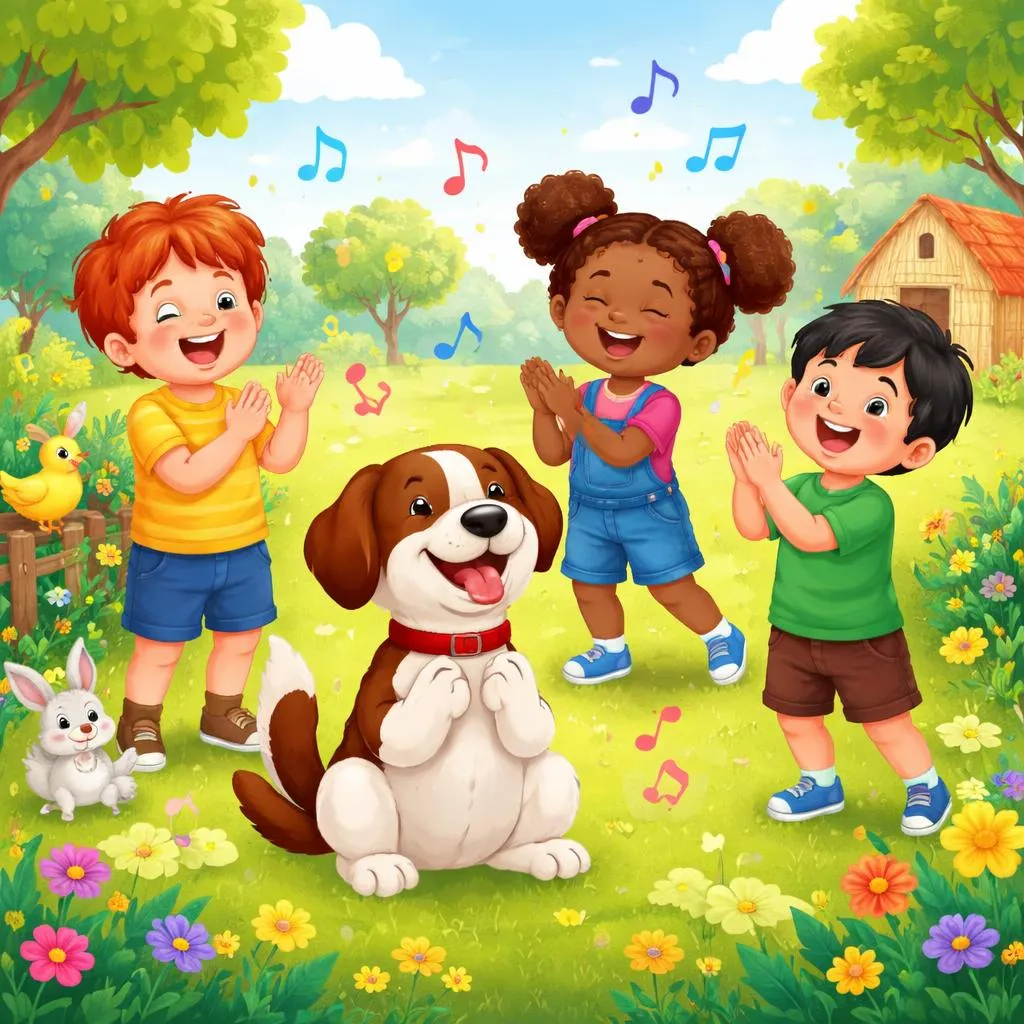

Hello, dear teachers and parents! Today brings a wonderful opportunity to explore a beloved farmyard classic. This catchy tune has delighted children for generations. It tells the story of a farmer and his wonderful dog. The "Bingo Dog Song Lyrics" offer so much more than entertainment. They teach spelling through repetition. They build memory skills through clapping patterns. They introduce farm vocabulary in a joyful way. Let us discover together why this song remains a favorite in classrooms everywhere.
What Is the "Bingo" Nursery Rhyme?
The "Bingo" song is a traditional English nursery rhyme and clapping game. It dates back to the 18th century. The earliest written version appeared in 1780. The song tells about a farmer who had a dog. The dog's name was Bingo. The name becomes the focus of the song's playful spelling pattern.
The song follows a simple structure. Each verse introduces the farmer and his dog. Then the song spells B-I-N-G-O. With each verse, one letter disappears. Claps replace the missing letters. This pattern continues until no letters remain. Only claps fill that part of the song.
What makes this song special is its interactive nature. Children do not just sing. They clap along. They watch the letters disappear. They anticipate the pattern. The song builds memory and attention through this engaging structure.
The "Bingo Dog Song Lyrics" vary slightly across versions. Some use "farmer" while others use "ploughman." Some spell the full name each time. Others remove letters gradually. The core elements remain the same. A farmer, a dog, and a name that gets spelled and clapped.
The Lyrics of the "Bingo" Nursery Rhyme
Let us look closely at the words of this wonderful song. The lyrics follow a clear pattern that builds anticipation. Here are the complete verses.
The first verse introduces the farmer, the dog, and the full name:
There was a farmer had a dog
And Bingo was his name-o
B-I-N-G-O
B-I-N-G-O
B-I-N-G-O
And Bingo was his name-o
The second verse removes the first letter. Claps replace the B:
There was a farmer had a dog
And Bingo was his name-o
(clap)-I-N-G-O
(clap)-I-N-G-O
(clap)-I-N-G-O
And Bingo was his name-o
The third verse removes two letters. Claps replace B and I:
There was a farmer had a dog
And Bingo was his name-o
(clap)-(clap)-N-G-O
(clap)-(clap)-N-G-O
(clap)-(clap)-N-G-O
And Bingo was his name-o
The fourth verse removes three letters. Claps replace B, I, and N:
There was a farmer had a dog
And Bingo was his name-o
(clap)-(clap)-(clap)-G-O
(clap)-(clap)-(clap)-G-O
(clap)-(clap)-(clap)-G-O
And Bingo was his name-o
The fifth verse removes four letters. Claps replace B, I, N, and G:
There was a farmer had a dog
And Bingo was his name-o
(clap)-(clap)-(clap)-(clap)-O
(clap)-(clap)-(clap)-(clap)-O
(clap)-(clap)-(clap)-(clap)-O
And Bingo was his name-o
The final verse removes all letters. Only claps remain:
There was a farmer had a dog
And Bingo was his name-o
(clap)-(clap)-(clap)-(clap)-(clap)
(clap)-(clap)-(clap)-(clap)-(clap)
(clap)-(clap)-(clap)-(clap)-(clap)
And Bingo was his name-o
The repetition makes this song perfect for young learners. After hearing the pattern once, children know what comes next. They anticipate the claps. They feel proud when they can join in.
Vocabulary Learning from the Bingo Song
The "Bingo Dog Song Lyrics" introduce several important words. Young learners encounter farm vocabulary first. The farmer works on a farm. He owns animals and land. Children learn what a farmer does through the song.
Animal vocabulary centers on the dog. Dogs appear frequently in children's lives. Many families have pet dogs. Others know dogs from books and videos. The song builds on this existing knowledge.
The name "Bingo" itself teaches vocabulary. Bingo is also a game. Children learn that some words have multiple meanings. The same word can name a dog and a game. This builds flexible thinking about language.
Spelling words appear through the letter sequence. B-I-N-G-O spells the dog's name. Children learn that letters combine to form words. They see that names follow the same spelling rules as other words.
Action words appear in the clapping pattern. Children learn that "clap" means to hit hands together. The song provides many opportunities for this action. The word becomes connected to the physical movement.
Family words appear in the farmer description. "Had a dog" shows possession. Children learn that "had" means owned in the past. This introduces past tense verbs naturally.
Phonics Points in the Bingo Song
Phonics learning happens naturally with this song. The letter names receive special attention. Children spell B-I-N-G-O repeatedly. This builds letter name recognition.
The letter sounds connect to the spelling. B makes the /b/ sound. I makes the short /i/ sound. N makes the /n/ sound. G makes the /g/ sound. O makes the long /o/ sound. Children hear the letter names and can connect them to sounds later.
The "ng" blend appears in Bingo. This combination makes a special sound. Children hear it in the middle of the name. They can find other "ng" words like song, ring, and king after learning this song.
The clapping pattern builds phonemic awareness. Children learn to track sounds in sequence. They know when a sound is missing. They replace it with a clap. This builds awareness of individual sounds in words.
Rhythm and rhyme support phonics learning. The song's steady beat helps children segment sounds. They feel the pattern of language. This rhythmic awareness supports reading development later.
Grammar Patterns Emerging from the Song
Grammar teaching becomes effortless with this song. The natural language provides perfect models. Children absorb correct structures without formal lessons.
"There was" introduces existence in the past. This phrase appears at the beginning. "There was a farmer" tells us he existed. Children learn this structure for introducing characters in stories.
"Had a dog" shows possession. The verb "had" indicates the farmer owned the dog. Children learn that "have" and "had" show ownership. They can later create sentences like "I have a cat" using this model.
"Was his name-o" shows naming. "Was" connects the name to the dog. The "-o" ending adds a playful touch. Children learn that "was" links subjects to descriptions.
The repeated name spelling shows nouns in action. Bingo is a proper noun. It names a specific dog. Children learn that names start with capital letters. They see this in the written version of the song.
Prepositions appear in context. "On the farm" would appear in extended versions. Children learn location words through the farm setting. These small but important words gain meaning through context.
Learning Activities for the Bingo Song
The "Bingo Dog Song Lyrics" inspire countless learning activities. These ideas extend the song into deeper language practice. Each activity builds different skills while maintaining the fun.
Dog puppets bring the song to life. Create simple dog puppets using paper bags or craft sticks. Children name their dogs. They sing the song using their dog's name. This personalizes the experience. Children can spell their own dog names using the Bingo pattern.
Farm dramatic play creates the song's setting. Set up a farm corner with animal toys. Include a farmer hat and tools. Children act out the song with the farmer and dog. They sing while moving animals around. This immersive experience builds vocabulary and understanding.
Clapping patterns develop motor skills. Practice the clapping sequence without singing first. Children clap five times steadily. Then add the song. Then replace letters with claps. This builds coordination and timing. Children feel successful when they master the pattern.
Name spelling extends the game to children's own names. Choose a child's name with five letters. Use the same pattern. Clap away letters one by one. Emma becomes clap-M-M-A, then clap-clap-M-A, and so on. This personalizes the learning. Children love seeing their own names in the game.
Letter cards provide visual support. Print large cards showing B-I-N-G-O. Hold them up during the first verse. As letters disappear, remove the corresponding cards. Children see the letters physically removed. This visual reinforcement strengthens learning.
Printable Materials for the Bingo Song
Printable materials support learning at home and school. These resources give children something to hold and use. They extend the song into independent practice.
Dog puppets templates provide creative opportunities. Print simple dog outlines on heavy paper. Children color and cut them out. Attach to craft sticks for simple puppets. Children retell the song using their puppets. This builds oral language skills through dramatic play.
Letter cards support the clapping game. Print large cards showing B-I-N-G-O. Laminate them for repeated use. Children hold them up during singing. As letters disappear, they lower the corresponding cards. This builds letter recognition and sequencing skills.
Farm scene coloring pages extend the theme. Print pictures showing a farmer, dog, and barn. Children color while listening to the song. This connects art to literacy learning. The farm imagery reinforces vocabulary.
Mini books let children own the song. Create a simple folded book with pages for each verse. Each page shows the letters remaining. Children color the illustrations. They practice reading their books to family members. This builds pride and reading confidence.
Name cards personalize the game. Print each child's name on a separate card. Use them for the name spelling activity. Children practice spelling their own names using the Bingo pattern. This builds name recognition and spelling skills.
Educational Games Based on the Song
Games turn learning into pure joy. These game ideas use the "Bingo Dog Song Lyrics" as their foundation. Children practice language skills while having fun.
Bingo Letter Hide and Seek builds letter recognition. Hide magnetic or paper letters around the room. Children search for B, I, N, G, and O. When they find a letter, they bring it to the group. Continue until all five letters are found. Then sing the song together using the found letters.
Doggy, Where's Your Name? builds listening skills. Place the five letter cards in order on the floor. Children walk around them while singing. When the song stops, call out a letter. Children rush to stand by that letter. This combines movement with letter recognition.
Farm Animal Addition extends the game. Add other farm animals to the song. "There was a farmer had a cow." Spell COW. Clap away letters. This extends the pattern to new vocabulary. Children learn animal names and spelling simultaneously.
Clap Pattern Memory challenges listening skills. Clap a rhythm pattern. Children repeat it back. Start with the Bingo pattern. Then create new patterns. This builds auditory memory and discrimination skills.
Name That Tune builds musical recognition. Hum the melody without words. Children guess which song it is. Once identified, everyone sings together with the Bingo words. This builds musical memory and song recognition.
The "Bingo Dog Song Lyrics" continue teaching long after the final clap fades. The simple words carry rich language learning potential. Farm vocabulary becomes concrete through repetition. Spelling patterns become familiar through the name Bingo. Clapping builds coordination and phonemic awareness. Grammar structures appear in natural language. Every child connects to the friendly farmer and his wonderful dog. Through this beloved song, children learn without even trying. They absorb vocabulary, phonics, and rhythm through joyful participation. That is the lasting magic of traditional songs in language teaching. The farmer, the dog, and the clapping pattern will stay with children for years, always ready to bring a smile and a learning moment.