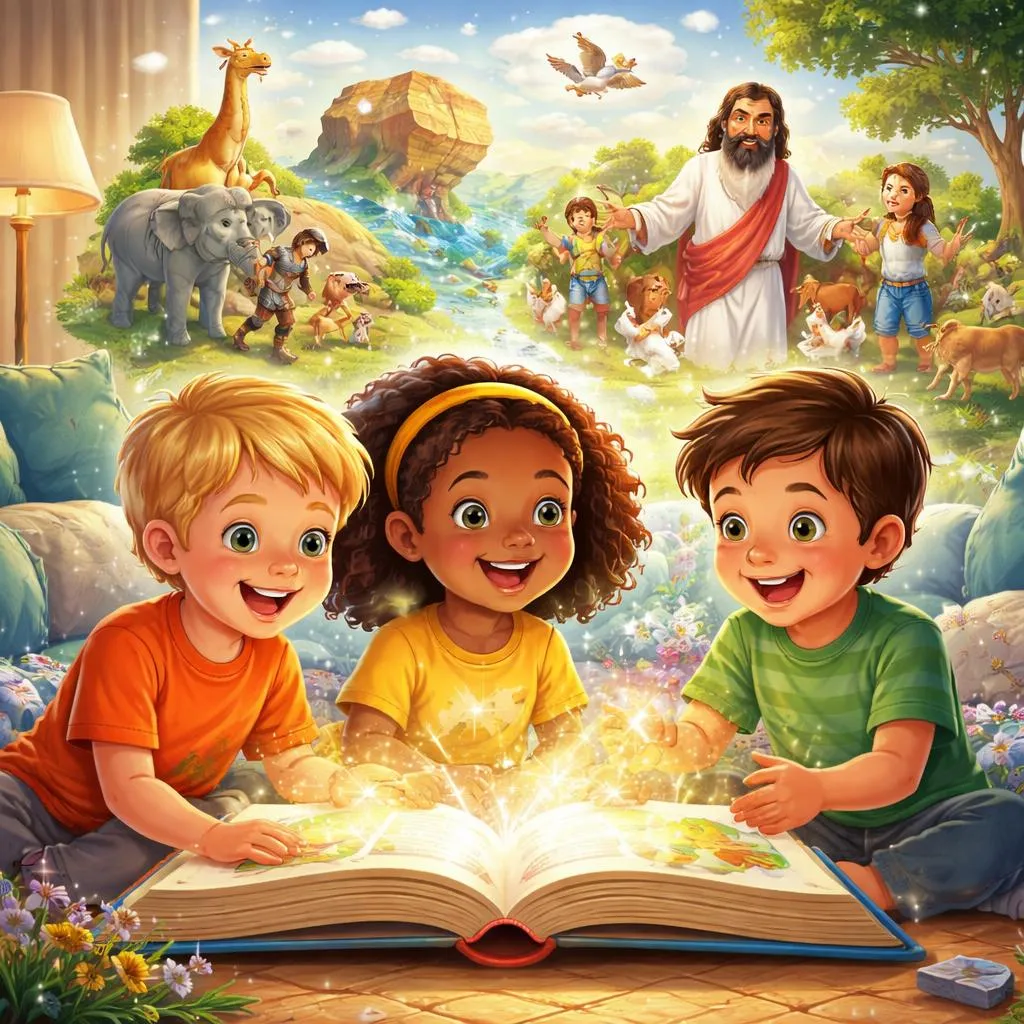

There is something magical about a book with pictures. The images draw children in before a single word is read. Children's bible stories illustrated combine the power of ancient narratives with the immediate appeal of visual art. The pictures help children understand what the words describe. They show the emotions on characters' faces. They bring distant times and places close enough to touch. This article explores how illustrated Bible stories create deeper understanding and why the pictures matter as much as the words in early faith formation.
What Are Children's Bible Stories Illustrated? Children's bible stories illustrated are biblical narratives presented with pictures that help tell the story. The illustrations are not decorations. They are essential to the storytelling. They show what the text describes. They add details the words leave out. They reveal character emotions through facial expressions. They create the world where the story happens. These books come in many styles. Some use realistic paintings that look like art in a museum. Others use bright, simple cartoons that feel friendly and approachable. Some use detailed line drawings that invite careful looking. The words are simplified for young readers. The pictures carry at least half the meaning. Together, they create a complete experience that engages both verbal and visual learners.
Meaning and Explanation Behind Illustrated Bible Stories Illustrations serve multiple purposes in children's Bible storybooks. First, they aid comprehension. Young children cannot visualize ancient settings on their own. What did Noah's ark look like? How big was Goliath? What did Jesus look like teaching on a hillside? Pictures answer these questions instantly. They provide the mental images children need to understand the story.
Second, illustrations build emotional connection. A picture of Daniel looking peaceful among the lions shows his faith in a way words alone cannot. An image of the Good Samaritan bending down to help communicates compassion immediately. Children read the emotions on characters' faces. They feel what the characters feel.
Third, illustrations make stories memorable. The brain stores visual information easily. A child might forget the exact words of a story. But they will remember the picture of David with his sling or Noah with his rainbow. That image brings the whole story back when recalled.
Fourth, illustrations invite interaction. Children point at pictures. They ask questions about what they see. They return to favorite images again and again. This repeated looking builds familiarity and deepens understanding over time.
Categories or Lists of Illustrated Bible Storybooks Children's bible stories illustrated come in many different styles and formats. Understanding the categories helps teachers choose the right book for their students.
Realistic Illustration Style: These books use paintings that look like traditional religious art.
Detailed, lifelike figures.
Accurate historical settings and clothing.
Rich colors and careful composition.
Creates a sense of reverence and beauty.
Cartoon Style: These books use friendly, simplified drawings.
Bright, cheerful colors.
Expressive, exaggerated faces.
Simple backgrounds that focus on characters.
Feels approachable and fun for young children.
Line Drawing Style: These books use simple outlines that children can imitate.
Clean, uncomplicated images.
Often black and white or limited color.
Invites children to draw their own versions.
Good for art activities and coloring.
Diverse Cultural Styles: These books show biblical characters with diverse features.
Characters look like people from various cultures.
Helps all children see themselves in the stories.
Broadens understanding of the global faith community.
Board Book Format: Very simple illustrations for the youngest children.
Sturdy pages that resist tearing.
One or two sentences per page.
Bright, high-contrast images.
Perfect for toddlers and preschoolers.
Storybook Bible Collections: Large books containing many illustrated stories.
Consistent illustration style throughout.
Stories arranged in biblical order.
Often includes maps and family trees.
Good for reading through the Bible over time.
Daily Life Examples from Illustrated Bible Stories Children's bible stories illustrated connect to everyday experiences through their pictures. A child who sees a picture of Jesus blessing children understands that Jesus loves them too. An illustration of Miriam watching baby Moses in the river shows what it means to care for a sibling.
The pictures also provide language for talking about feelings. A child can point to a sad face in a picture and name that emotion. They can see worry on a disciple's face during the storm. They can see joy on the faces of people Jesus healed. This visual emotional vocabulary helps children understand and express their own feelings.
Teachers can use illustrations to start conversations. "Look at the man's face. How does he feel?" "Why do you think the woman looks so happy?" "What do you notice about the way David is standing?" These discussions build observation skills and emotional intelligence together.
Vocabulary Learning from Illustrated Bible Stories The combination of words and pictures in children's bible stories illustrated creates powerful vocabulary learning opportunities.
Object Words: Pictures show exactly what objects look like.
Ark, sling, harp, cross, tomb, scroll, lamp, coin, net.
Children see the object while hearing the word.
Place Words: Illustrations create visual understanding of locations.
Desert, mountain, river, sea, temple, synagogue, garden, stable.
The picture provides the mental image the word names.
Action Words: Pictures show characters in motion.
Building, praying, fishing, preaching, healing, walking, sailing.
Children see the action while learning the verb.
Emotion Words: Facial expressions teach feeling vocabulary.
Joy, fear, surprise, sadness, anger, peace, wonder, love.
The picture shows what each emotion looks like.
Teachers can point to pictures while introducing new words. "This is a sling. David used a sling to throw the stone." The visual and verbal together create a stronger memory than either alone.
Phonics Points in Illustrated Bible Stories The labels and simple text in illustrated Bible stories provide phonics practice opportunities.
Letter-Sound Connection: Point to the word "ark" while showing the picture. Say the word slowly. Help children hear the beginning sound. The picture provides context that supports decoding.
Environmental Print: Children recognize words they see repeatedly. The word "God" appears often. The word "Jesus" becomes familiar. Repeated exposure builds sight word recognition.
Picture Clues: When children encounter an unfamiliar word, the picture helps them figure it out. They see the lion and can guess the word "lion." This builds independent reading strategies.
Labeling Activities: Use illustrations to practice labeling. Cover the text and ask children to name what they see. Write the words together. This connects spoken and written language.
Teachers can use illustrations as phonics teaching tools naturally. "Let's look at this word under the picture. It says ark. Ark starts with A. Can you find the A?"
Grammar Patterns in Illustrated Bible Stories The simple text accompanying illustrations provides clear grammar models.
Present Tense for Descriptions: When looking at pictures, use present tense. "Jesus is teaching the people." "The disciples are fishing." This models present continuous naturally.
Past Tense for Storytelling: The story text uses past tense. "God created the world." "Noah built an ark." This provides exposure to narrative grammar.
Prepositions of Place: Illustrations show location clearly. "The baby is in the basket." "The angel is beside the tomb." "The people are on the mountain." Pictures make prepositions concrete.
Question Forms: Use pictures to practice questions. "Where is David?" "What is the woman holding?" "Who is standing by the door?" The picture provides the answer, making question practice meaningful.
Teachers can point to pictures while modeling grammar. "Look at this picture. The man is praying. He is kneeling by the bed."
Learning Activities for Illustrated Bible Stories Activities help children engage more deeply with illustrated Bible stories.
Activity 1: Picture Walk Before reading the words, go through the book looking only at pictures. Ask children what they think the story is about based on the illustrations. This builds observation and prediction skills. After reading, compare predictions to the actual story.
Activity 2: Story Sequencing with Pictures Make copies of key illustrations from a story. Mix them up. Children arrange them in correct order, retelling the story as they work. This builds comprehension and narrative skills.
Activity 3: Picture Detective Give children magnifying glasses and invite them to look closely at illustrations. What details do they notice? A bird in the tree. A pattern on a robe. An animal in the background. This builds careful observation.
Activity 4: Draw Your Own Illustration After reading a story, give children art supplies. Ask them to draw their favorite part. Compare their drawings to the book's illustrations. Discuss why they chose different details.
Activity 5: Illustration Comparison Find two different illustrated versions of the same Bible story. Compare them. How are the pictures different? How are they the same? Which style do children prefer? Why? This builds critical thinking about art.
Printable Materials for Illustrated Bible Stories Printable resources extend learning from any illustrated Bible storybook.
Coloring Pages: Create outline versions of key story illustrations. Children color them while listening to the story again. This quiet activity reinforces the narrative calmly.
Story Sequencing Cards: Make simple black and white versions of key illustrations. Children arrange them in order and color them.
Draw and Write Pages: Create pages with space for children to draw their own illustration and write a sentence about the story.
Picture Word Match: Create cards with pictures from the story and matching word cards. Children match each picture to the correct word.
Story Map: Create a simple map showing where the story happened. Children add illustrations of key events in the correct locations.
Educational Games for Illustrated Bible Stories Games make reviewing illustrated Bible stories playful and engaging.
Game: Picture Memory Create pairs of cards with identical small illustrations from the story. Children play memory match by turning over two cards at a time, looking for matches. This builds visual memory and attention.
Game: What's Missing Show children an illustration. Then cover part of it. Ask what is missing from the picture. This builds careful observation and visual memory.
Game: Picture Bingo Create bingo cards with small illustrations from the story. Call out story elements. Children cover the matching picture. The first to complete a row wins.
Game: Illustration Scavenger Hunt Give children a list of details to find in the illustrations. A bird. A cloud. A flower. A specific color. Children search through the book to find each item.
Game: Story Illustration Race Divide the class into teams. Show an illustration. The first team to correctly name the story and what is happening gets a point.
Connecting Illustrated Bible Stories to Art Illustrated Bible stories naturally connect to art education.
Art Style Exploration: Study the illustration style in different Bible storybooks. Is it realistic or cartoon? Detailed or simple? Bright or muted? Discuss why the artist might have made these choices.
Artist Study: Learn about famous Bible illustrators. Look at their work across multiple books. Notice what makes their style unique.
Medium Exploration: Explore different art materials used in illustrations. Watercolor. Colored pencil. Digital art. Paint. Children try each medium themselves.
Create a Class Illustrated Bible Story: Work together to write a simple Bible story. Each child illustrates one page. Combine into a class book. This creates ownership and understanding of the illustration process.
The Role of Illustrations in Understanding Theology Illustrations in children's bible stories illustrated shape how children understand God and faith.
God's Appearance: Most books do not show God directly. This teaches that God is beyond what we can see. When God is shown, often as light or a hand, this shapes understanding of divine mystery.
Jesus' Appearance: Illustrations of Jesus vary widely. Some show a European Jesus. Others show a Middle Eastern Jesus. These choices teach children about culture and interpretation.
Angels and Miracles: How illustrators show supernatural elements teaches children about the invisible world. Wings on angels. Light around holy moments. These visual choices shape faith imagination.
Emotional Tone: The overall feeling of illustrations teaches children about God's character. Warm, gentle pictures suggest a loving God. Majestic, grand pictures suggest a powerful God. Both are true, and illustrations balance them.
Teachers can discuss these elements with older children. "Why do you think the artist showed the angel with wings?" "How does this picture make you feel about God?" These discussions build theological thinking.
The Importance of Quality Illustrations Not all illustrated Bible stories are created equal. Quality matters for learning and engagement.
Clear and Understandable: Good illustrations show clearly what is happening. Children can follow the story through pictures alone if needed.
Accurate to the Text: Illustrations should match what the Bible describes. Details matter for building accurate understanding.
Appropriate for Age: Scary stories need gentle handling in pictures. The level of detail should match children's developmental stage.
Diverse and Inclusive: Quality illustrations show the diversity of God's people. Children from all backgrounds should see themselves represented.
Artistically Beautiful: Beauty in illustrations teaches children that God's stories deserve beautiful presentation. It elevates the material and shows respect for the content.
Teachers should choose illustrated Bible storybooks carefully, considering all these factors. The right book becomes a treasured resource used again and again.
The marriage of words and pictures in children's bible stories illustrated creates something neither could achieve alone. The words provide the ancient truth. The pictures make it new for each child. Together, they build understanding that lasts. A child who grows up with beautiful Bible illustrations carries those images in their heart forever. When they hear a Bible passage as adults, the pictures may come back. Daniel in the lion's den. David with his sling. Jesus with children on his lap. Those images, planted early, bear fruit for a lifetime. They are not just illustrations. They are windows into faith that never close.