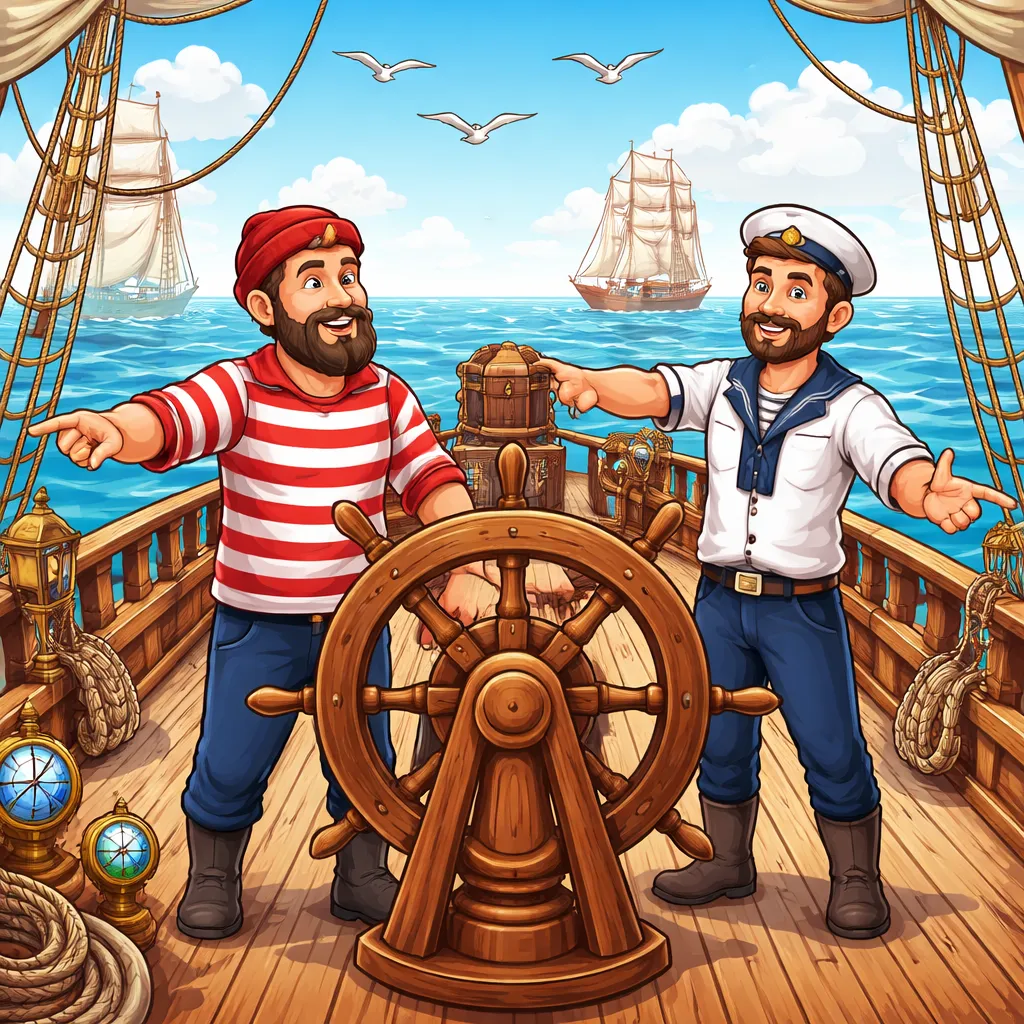

Children learn “right” early. They use it for hands, turns, and answers. Then they meet “starboard”. This word sounds long and funny. Many parents ask why sailors say “starboard” instead of “right”. “Right and starboard” mean the same direction on a boat. But they are not always interchangeable. Right hand is not starboard hand on land. Starboard is a special term for ships. Kids love learning secret sailor words. Parents can help by exploring boats and history together. This article gives you simple rules. You will find friendly explanations. Let’s explore “right and starboard” step by step.
Are Similar Words Really Interchangeable? Similar words often cause confusion. “Right and starboard” seem like odd cousins. Both mean the same side on a vessel. But you cannot always swap them. Turn right works. Turn starboard sounds wrong on land. The starboard side of a ship works. The right side of a ship also works but sailors prefer “starboard”. Language gives special words to different professions. Children benefit from knowing these special words. Parents can point out both words near water or in boat books. This article focuses only on “right and starboard”. We will compare them clearly.
Set 1: Right vs Starboard — Which One Is More Common? “Right” appears much more often. We say right hand. We say right turn. We say right answer. “Starboard” appears only in nautical contexts. We say starboard side. We say starboard engine. We say starboard light. For everyday talk, “right” wins completely. Children hear “right” hundreds of times a day. “Starboard” is a special word for boats and ships. Parents can teach this by using “right” for everything on land. Save “starboard” for trips to the harbor, boat rides, or pirate stories.
Set 2: Right vs Starboard — Same Meaning, Different Contexts “Right and starboard” mean the same direction on a boat. When you face the front of a ship, starboard is right. But the contexts are completely different. “Right” is for general use. “Starboard” is only for vessels. Consider a car. Turn right in a car. Never say turn starboard. Consider a plane. The right wing. Not the starboard wing (though some old planes use it). Consider your body. Your right hand. Not your starboard hand. For children, explain it this way. “Right” is for everything on land and in daily life. “Starboard” is a special word for boats, ships, and sometimes airplanes. Use “right” at home and school. Use “starboard” when pretending to be a sailor.
Set 3: Right vs Starboard — Which Word Is “Bigger” or More Emphatic? “Starboard” feels more specific and professional. It makes you sound like a real sailor. “Right” is simple and everyday. “Starboard” adds a sense of adventure and expertise. For children, this difference is fun. Saying “starboard side” feels like a secret code. Saying “right side” is normal. Parents can practice by playing sailor. “Turn the ship to starboard!” sounds exciting. “Turn right” sounds boring. Use “starboard” for play and imagination. Use “right” for regular instructions. This makes learning new words joyful.
Set 4: Right vs Starboard — Concrete vs Abstract Both “right and starboard” are concrete directions. Your right hand is concrete. The starboard side of a boat is concrete. But “starboard” exists only in the context of vessels. “Right” exists everywhere. For children, this is a simple rule. “Right” is for everything. “Starboard” is only for boats, ships, and sometimes aircraft. A right shoe. The starboard anchor. A right turn. The starboard lookout. Parents can make two columns. One column for right things (hand, foot, side of road). One column for starboard things (side of ship, engine, rail, light).
Set 5: Right vs Starboard — Verb or Noun? First Understand the Role “Right” is an adjective, noun, verb, and adverb. “Starboard” is a noun and adjective. Children know “right” as a direction and as “correct”. Focus on the direction meanings for comparison. Turn right (adverb or adjective). The starboard side (adjective). A useful tip: use “right” for all normal situations. Use “starboard” only when talking about a boat or ship. The right side of the table. The starboard side of the ferry. Teach your child to ask: Am I on a boat or talking about a boat? If yes, “starboard” is fun to use. If not, use “right”.
Set 6: Right vs Starboard — American English vs British English American and British English treat “right and starboard” the same. All sailors worldwide use “starboard” for the right side of a ship. Why “starboard”? History: old ships had a steering board (oar) on the right side. The word “steerboard” became “starboard”. The left side was “port” because ships loaded cargo (port) on that side. Both dialects use this system. No difference. For children, this is a great history fact. “Starboard” is an international sailor word. Parents can share this story. It makes the word memorable.
Set 7: Right vs Starboard — Which Fits Formal Situations? Formal English requires “starboard” on any vessel. A ship captain says “starboard side” in official commands. A coast guard report says “starboard engine failure”. “Right” would sound unprofessional on a ship. On land, “right” is perfectly formal. A driving test says “turn right”. A map says “right side of the river”. For children, school writing about boats should use “starboard”. “The ship turned to starboard” sounds correct. “The ship turned right” sounds less accurate. Use “starboard” for nautical reports. Use “right” for everything else. This builds precision.
Set 8: Right vs Starboard — Which One Is Easier for Kids to Remember? “Right” is much easier for children. It has five letters. Children learn right and left early. “Starboard” has nine letters. It sounds like “star” and “board”. That is a long word. Here is a memory trick: “Starboard” has the word “star”. Stars are in the sky. The right side? Not helpful. Better trick: “Starboard” and “right” both have the letter “r”. “Port” (left) has no “r”. That works! Another trick: “Starboard” sounds like “steer board”. The steering board was on the right side. Parents can make a song: “When you face the bow (front), starboard is right, that’s the rule, hold on tight!” Use hand gestures. Raise your right hand. Say “right”. Then say “on a boat, this is starboard”. This physical connection builds memory.
Mini Exercise: Can You Spot the Differences Between These Similar Words? Let’s practice with ten sentences. Choose “right” or “starboard”. Answers are below.
Raise your __________ hand if you know the answer.
The captain ordered the ship to turn to __________.
I have a watch on my __________ wrist.
The __________ side of the ferry has a green light.
Turn __________ at the next intersection.
The sailor cleaned the __________ anchor.
She writes with her __________ hand.
The __________ engine of the boat is the stronger one.
Please sit on the __________ side of the auditorium.
The pirate pointed to the __________ horizon.
Answers: 1 right, 2 starboard, 3 right, 4 starboard, 5 right, 6 starboard, 7 right, 8 starboard, 9 right, 10 starboard (if on a boat) or right (if on land).
Count the correct answers. For sentence 10, accept both depending on context. 8-10 correct means your child understands “right and starboard” well. 5-7 correct means review the boat vs land rule. Below 5 correct means focus only on “right” for two weeks. Then add “starboard” as a fun boat word.
Parent Tips: How to Help Kids Learn and Remember Similar Words You do not need lesson plans. You just need playful moments. Every day has chances to use “right”. Save “starboard” for special boat talk. At breakfast: “Use your right hand for the cup. If we were on a ship, that would be your starboard hand!” At the park: “Turn right at the fountain. Sailors turn starboard on a boat.” At bath time: “Put a toy boat in the water. The right side is starboard. The left side is port.” Use an excited voice. Make “starboard” feel like a treasure word. If your child says “Turn starboard in the car”, you say “That is right. Starboard is only for boats. But nice try, sailor!” Keep it fun. Another tip: create a boat diagram. Draw a simple ship. Label the front “bow”. Label the back “stern”. Label the right side “starboard”. Label the left side “port”. Hang the chart in the playroom. Children love having secret knowledge. Finally, play the “port and starboard” game. Call out “starboard!” and your child touches the right wall. Call out “port!” and they touch the left wall. This builds fast thinking and physical memory. You and your child will master “right and starboard” through imaginative play. Keep sailing. Every new word is a ticket to adventure.