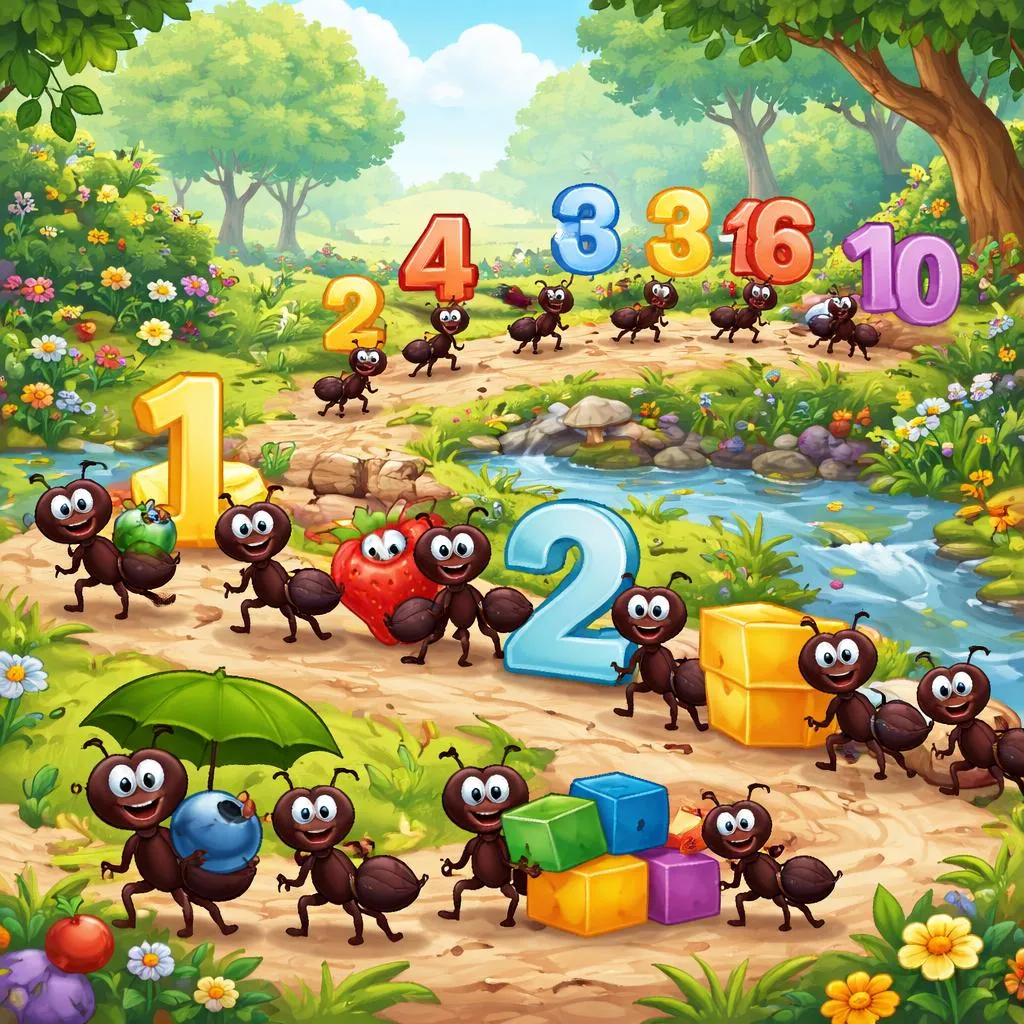

Hello, wonderful educators! Today we are exploring a beloved children's classic. The "ants went marching lyrics" have delighted young learners for generations. This lively tune tells the story of little ants marching together. They face challenges and work as a team. The song offers rich opportunities for learning. We will examine its structure and educational value. We will explore vocabulary, phonics, and grammar points. We will also share engaging classroom activities. This guide will help you maximize this song's potential. Let's discover together what these busy ants can teach our students.
What Is the "Ants Went Marching" Rhyme?
This song is also known as "The Ants Go Marching." It tells the story of ants marching in groups. They march one by one, then two by two. The pattern continues all the way to ten. A little ant stops for various reasons each time. They all march down to escape the rain. The song ends with a loud "BOOM" for thunder.
This cumulative structure makes it perfect for teaching counting. Children love the repetitive pattern. The silly reasons for stopping add humor. The rhyme works well for group singing. It encourages active participation from everyone.
The song teaches teamwork and persistence. The ants keep marching despite obstacles. They work together to reach their goal. These are valuable life lessons for young children.
The Lyrics of the Nursery Rhyme
Let us review the complete traditional lyrics. The most common version begins like this:
The ants go marching one by one. Hurrah! Hurrah!
The ants go marching one by one. Hurrah! Hurrah!
The ants go marching one by one.
The little one stops to suck his thumb.
And they all go marching down to the ground.
To get out of the rain. BOOM! BOOM! BOOM!
The song continues with each number. Two by two, the little one stops to tie his shoe. Three by three, the little one stops to climb a tree. Four by four, the little one stops to shut the door. Five by five, the little one stops to take a dive. Six by six, the little one stops to pick up sticks. Seven by seven, the little one stops to go to heaven. Eight by eight, the little one stops to shut the gate. Nine by nine, the little one stops to check the time. Ten by ten, the little one stops to say "THE END!"
Vocabulary Learning from the Song
This rhyme introduces several key vocabulary words. Let us explore each one carefully.
Ants: These are small insects that live in colonies. They work together in large groups. We can show pictures of real ants. We can talk about ant hills and tunnels. This builds science connections.
Marching: This means walking in a steady rhythm together. Soldiers and bands march in parades. We can practice marching in the classroom. This builds coordination and rhythm skills.
Hurrah: This is a cheerful shout of celebration. People say hurrah when they are happy. We can practice cheering together as a group. This adds emotional expression to learning.
Ground: This is the earth's surface beneath our feet. The ants go down to the ground. We can talk about things we find on the ground. This builds basic vocabulary knowledge.
Rain: This is water that falls from clouds above. The ants want to escape the rain. We can discuss different types of weather. This connects to science learning naturally.
Boom: This is a loud sound representing thunder. Storms make boom sounds during rain. We can practice making boom sounds together. This adds dramatic effect to the song.
Suck: This means to draw something into the mouth. The little ant sucks its thumb. This is a common self-soothing behavior in young children.
Thumb: This is the shortest finger on the hand. We have two thumbs. They help us grasp objects. This builds body part vocabulary.
Tie: This means to fasten with a knot. The ant ties its shoe. This is an important self-care skill.
Shoe: This is footwear that protects our feet. We wear shoes outside. This builds clothing vocabulary.
Climb: This means to go upward using hands and feet. The ant climbs a tree. This is an action word.
Tree: This is a tall plant with a trunk and branches. Trees provide shade and homes for animals. This builds nature vocabulary.
Shut: This means to close something. The ant shuts the door. This is an action word.
Door: This is an entrance to a room or building. We open and close doors. This builds house vocabulary.
Dive: This means to jump headfirst into water. The ant takes a dive. This is a swimming action.
Sticks: These are small pieces of wood. Children often play with sticks. This builds nature vocabulary.
Heaven: This is a spiritual concept. The little one stops to go to heaven. This may need sensitive explanation.
Gate: This is a barrier that opens and closes. Fences have gates. This builds outdoor vocabulary.
Time: This is the measurement of moments. The ant checks the time. This builds abstract vocabulary.
End: This means the final point. The little one says "THE END!" This signals completion.
Phonics Points to Practice
The "ants went marching lyrics" offer excellent phonics opportunities. Let us focus on specific sounds.
The Short A Sound: Ant starts with short A. We can practice the /a/ sound. We can open our mouths wide. We can think of other short A words. Apple, cat, and hat are good examples.
The M Sound: March starts with M. We can practice the /m/ sound. We can feel our lips come together. We can think of other M words. Mom, milk, and moon are good examples.
The R Sound: Rain starts with R. We can practice the /r/ sound. We can feel our tongue curl. We can think of other R words. Run, red, and rabbit are good examples.
The B Sound: Boom starts with B. We can practice the /b/ sound. We can feel our lips pop open. We can think of other B words. Ball, book, and bus are good examples.
The SH Sound: Shut and shoe have the /sh/ sound. This is a digraph. Two letters make one sound. We can practice other SH words. Shop, shell, and fish are good examples.
The CH Sound: March ends with the /ch/ sound. This is another digraph. We can practice other CH words. Chair, cheese, and chicken are good examples.
Rhyming Words: The song has clear rhyming pairs throughout. One and thumb rhyme perfectly together. Two and shoe rhyme nicely. Three and tree rhyme wonderfully. Four and door rhyme well. Five and dive rhyme. Six and sticks rhyme. Seven and heaven rhyme. Eight and gate rhyme. Nine and time rhyme. Ten and end rhyme. Recognizing rhymes builds reading readiness.
Grammar Patterns We Can Teach
The simple sentences in this song provide grammar lessons. Let us look at a few patterns.
Counting and Numbers: The song teaches ordinal and cardinal numbers. One by one shows sequence. One, two, three shows quantity. This builds number vocabulary.
Prepositions of Place: The song uses several location words. Down to the ground. In the rain. To the tree. These show movement and position.
Action Verbs in Context: The song uses many action words. Marching, stops, sucks, ties, climbs, shuts, dives, picks, checks, says. We can act out these verbs together. This builds vocabulary through movement.
Repetition for Emphasis: The song repeats hurrah and boom several times. Repetition adds emphasis and fun to language. We can practice using repetition in our own speech.
Questions and Exclamations: The song uses hurrah as an exclamation. It uses questions in some versions. This teaches different sentence types.
Past Tense Verbs: The song uses past tense consistently. Went, stopped, marched. This tells a story about completed actions.
Learning Activities for the Classroom
Let us explore activities that bring this song to life. These ideas work for various learning styles.
Activity 1: Ant March Line Formation
Have students line up like marching ants together. Count them one by one as they stand. Practice marching around the classroom together. When you call out a number, that student stops and does the corresponding action. This combines movement with number recognition.
Activity 2: Rainstorm Sound Effects Creation
Create a rainstorm using body percussion techniques. Rub hands together for light rain sounds. Snap fingers for medium rain effects. Clap hands for heavy rain noises. Stomp feet for thunder sounds loudly. Add boom sounds at the right moments. This builds listening and coordination skills.
Activity 3: Simple Ant Craft Project
Provide black construction paper and googly eyes. Students cut out ant shapes carefully. They can add pipe cleaner legs for detail. Create a parade of ants on the bulletin board. Count them all together as a class. This builds fine motor skills through crafting.
Activity 4: Number Action Cards Game
Create cards with numbers one through ten clearly shown. On each card, write the matching action from the song. One sucks thumb. Two ties shoe. Three climbs tree. Four shuts door. Five takes a dive. Six picks up sticks. Seven goes to heaven. Eight shuts the gate. Nine checks the time. Ten says THE END. Students pick a card and act it out. Others guess the number.
Activity 5: Rain Shelter Discussion
Talk about why the ants need to get out of the rain. What happens when we get wet? Where do we go when it rains? This builds cause and effect understanding.
Printable Materials for Your Lessons
Visual supports enhance learning for young children significantly. Here are some printable ideas.
Number Sequencing Picture Cards: Create cards showing ants marching in groups. One card shows one ant marching alone. Another shows two ants together marching. Continue through ten ants total marching. Students arrange them in correct order. This builds counting and sequencing skills.
Vocabulary Flashcards for Practice: Create cards for key words from the song. Include ant, march, rain, ground, boom, hurrah, thumb, shoe, tree, door, dive, sticks, heaven, gate, time, end. Use simple pictures on one side. Write the word clearly on the other side.
Coloring Page for Quiet Time: Create a simple coloring page design. Show ants marching in a straight line. Add raindrops and clouds above them. Add a boom symbol for thunder. Students color while listening to the song.
Mini Book for Home Practice: Create a small folded book format. Each page shows one verse of the song clearly. One by one with thumb sucking. Two by two with shoe tying. Continue through ten. Students illustrate each page themselves.
Action Cards: Create cards showing each action from the song. A thumb for sucking. A shoe for tying. A tree for climbing. A door for shutting. A diver for diving. Sticks for picking. A cloud for heaven. A gate for shutting. A clock for checking time. An END sign.
Educational Games to Reinforce Learning
Games make review sessions exciting and effective for everyone. Here are many game ideas.
Game 1: Ant Parade Number Movement
Place number cards around the room in various spots. Students march like ants around the room. When the music stops, they go to a number. Call out a specific number loudly. The students at that number do the corresponding action from the song. This combines movement with number recognition.
Game 2: What's the Action Guessing Game
Do an action from the song without speaking at all. Suck thumb. Tie shoe. Climb tree. Shut door. Dive. Pick up sticks. Look at heaven. Shut gate. Check time. Say THE END silently. Students watch carefully and guess which number and action it represents.
Game 3: Ants in the Rain Shelter Game
Create a safe space designated as the ground area. Scatter hoops or mats around as shelter spots. Play music while students march around happily. When you say "rain" loudly, they must find shelter quickly. Count how many fit in each shelter spot. This teaches counting and quick thinking.
Game 4: Memory Match Counting Game
Create pairs of matching cards for play time. One card shows a number clearly written. The matching card shows that many ants marching. Another set could match numbers to actions. Place cards face down on the table carefully. Students take turns flipping two cards over. They try to find matching pairs successfully.
Game 5: Ants Go Marching Relay Race
Divide the class into small teams evenly sized. Place a pile of objects at one end of the room. These objects represent the ants. Students march to the pile in rhythm together. They pick up one object carefully each time. They march back to their team quickly. They add it to their team's collection pile. Count how many each team collects finally.
Game 6: Rhyming Challenge Creation Activity
After learning the song completely, challenge students creatively. Ask them to create new verses together as a group. Choose a new number and find a rhyming action. For eleven, the little one stops to go to heaven (already used). For eleven, the little one stops to count to seven. For twelve, the little one stops to dig and delve. This builds creativity and phonological awareness.
Game 7: Ant Action Freeze
Play the song. Students march and act out the actions. When the music stops, they freeze in the middle of an action. Call out a number. Students holding that number's action stay frozen. Others sit down. Identify all the actions together.
Game 8: Number Line Hop
Create a number line on the floor with tape or chalk. Students start at one. They hop to each number while saying the verse. When they land on a number, they do the action. This builds gross motor skills and number recognition.
Game 9: Ant Headband Craft
Create simple ant headbands using black paper strips. Add pipe cleaner antennae. Students wear these while singing and marching. This adds costume fun to the learning experience.
Game 10: Raindrop Counting
Create paper raindrops with numbers on them. Scatter them on the floor. Students collect raindrops and arrange them in order. They match each raindrop to the correct ant action.
We have explored the rich learning potential of this classic song. The "ants went marching lyrics" offer so much to young learners every day. We looked at vocabulary development carefully together. We practiced letter sounds and phonics as a group. We explored simple grammar patterns clearly. We shared engaging classroom activities for all. We created printable materials for practice time. We played educational games for review fun. This integrated approach makes learning natural and fun. The song's counting structure builds early math skills. The marching rhythm develops coordination abilities. The teamwork theme teaches cooperation naturally. Use these ideas in your classroom daily lessons. Adapt them to your students' specific needs always. Watch as your learners sing, march, and grow happily. These busy little ants will become beloved teachers in your classroom. Their march to escape the rain will lead your students to new learning adventures every single day.