
Hello, wonderful educators! Today we are exploring a beloved children's classic. The "the bitsy spider lyrics" have delighted young learners for generations. This simple song tells the story of a determined little spider. It faces challenges but keeps trying. We will examine its structure and educational value. We will explore vocabulary, phonics, and grammar points. We will also share engaging classroom activities. This guide will help you maximize this song's potential. Let's discover together what this tiny spider can teach our students.
What Is the "Itsy Bitsy Spider" Rhyme?
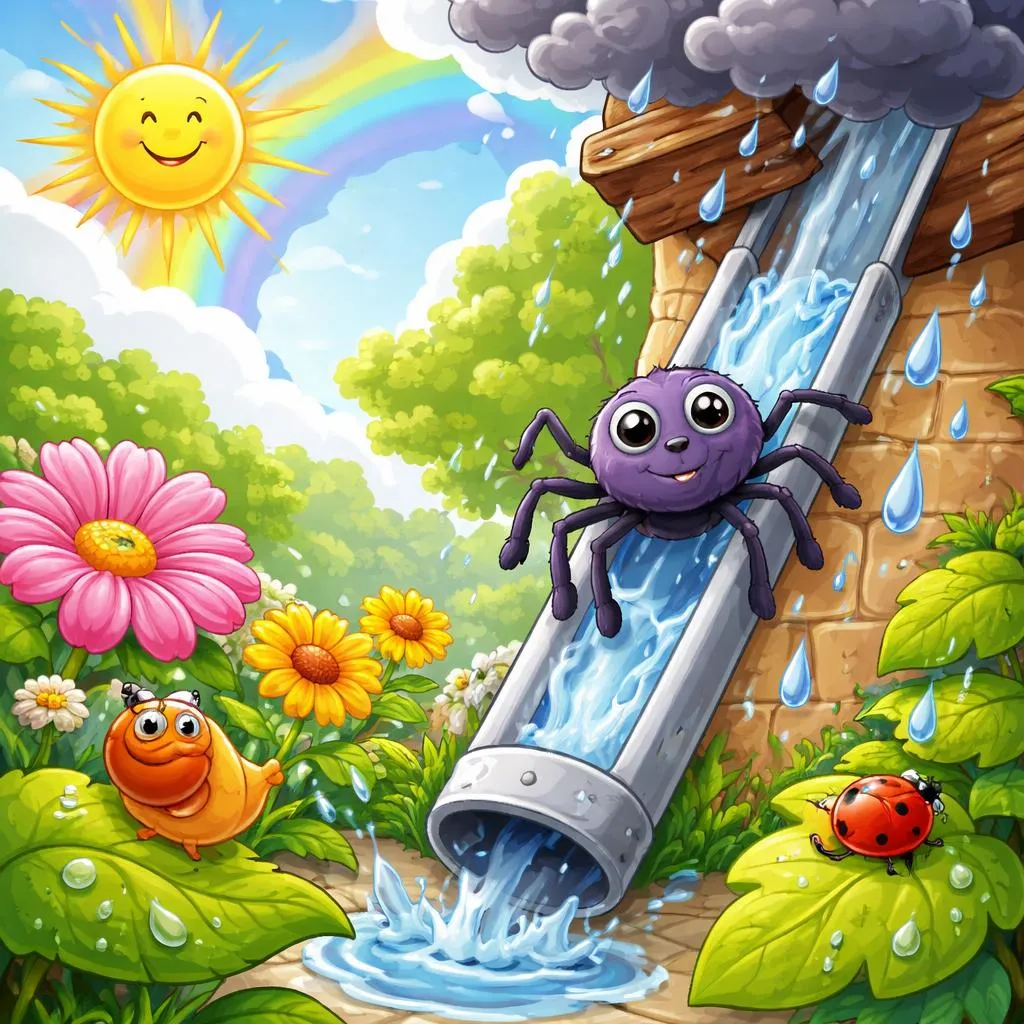
The correct title is "The Itsy Bitsy Spider." "Bitsy" is a common variation of "itsy bitsy." Both mean very small. The song describes a spider climbing up a water spout. Rain washes it out. The sun dries up the rain. The spider climbs again.
This song teaches persistence and resilience. The spider does not give up. It tries again after being washed away. This is a valuable lesson for young children.
The song also introduces weather concepts. Rain, sun, and drying are all part of the story. Children learn about these natural phenomena through the song.
The simple actions make it interactive. Children use finger movements to show the spider climbing. They wiggle fingers down for rain. They make a circle for the sun. This builds fine motor skills.
The Lyrics of the Nursery Rhyme
Let us review the complete traditional lyrics. The most common version goes like this:
The itsy bitsy spider climbed up the water spout.
Down came the rain and washed the spider out.
Out came the sun and dried up all the rain.
And the itsy bitsy spider climbed up the spout again.
Some versions use "eensy weensy" instead of "itsy bitsy." Some use "teensy weensy." The meaning stays the same. The spider is very small.
The repetition makes it easy to learn. Children quickly memorize the pattern. They can sing along after just a few times.
Vocabulary Learning from the Song
This rhyme introduces several key vocabulary words. Let us explore each one carefully.
Itsy bitsy: This means very small. It is a playful way to say tiny. Children love these fun words.
Spider: This is a small creature with eight legs. Spiders spin webs. They are common in nature. This builds animal vocabulary.
Climbed: This means to go upward using legs. Spiders climb up walls and spouts. This builds action vocabulary.
Water spout: This is a pipe that carries water. It might be a downspout from a roof. Rainwater flows through it. This builds household vocabulary.
Down: This means from higher to lower. The rain came down. This builds position vocabulary.
Rain: This is water that falls from clouds. It washed the spider away. This builds weather vocabulary.
Washed: This means to clean with water. The rain washed the spider out. This builds action vocabulary.
Out: This means away from inside. The spider was washed out. This builds position vocabulary.
Sun: This is the star that gives us light and warmth. It came out after rain. This builds science vocabulary.
Dried: This means to make dry. The sun dried up the rain. This builds action vocabulary.
Again: This means one more time. The spider climbed again. This builds time vocabulary.
Phonics Points to Practice
The song offers excellent phonics opportunities. Let us focus on specific sounds.
The Short I Sound: Itsy and bitsy both have the short i sound. We can practice the /i/ sound. We can think of other short i words. It, sit, and pig are good examples.
The S Sound: Spider starts with S. We can practice the /s/ sound. We can feel the air hiss out. We can think of other S words. Sun, soap, and sock are good examples.
The P Sound: Spider has a P in the middle. We can practice the /p/ sound. We can feel our lips pop open. We can think of other P words. Pop, pup, and pip are good examples.
The CL Blend: Climbed starts with CL. This is a consonant blend. We can practice other CL words. Clap, clock, and cloud are good examples.
The R Sound: Rain starts with R. We can practice the /r/ sound. We can feel our tongue curl. We can think of other R words. Run, red, and rabbit are good examples.
The W Sound: Washed starts with W. We can practice the /w/ sound. We can feel our lips round. We can think of other W words. Water, window, and wagon are good examples.
The SH Sound: Washed ends with the /sh/ sound. This is a digraph. We can practice other SH words. Fish, dish, and wish are good examples.
Rhyming Words: The song has rhyming patterns. Spout and out rhyme perfectly. Rain and again rhyme. Recognizing rhymes builds reading readiness.
Grammar Patterns We Can Teach
The simple sentences in this song provide grammar lessons. Let us look at a few patterns.
Past Tense Verbs: The song uses past tense throughout. Climbed, came, washed, dried. This tells a story about things that already happened. We can contrast with present tense. The spider climbs. The rain comes.
Prepositions: The song uses several prepositions. Up the spout. Down came the rain. Out came the sun. These show direction and position.
Sequence Words: The song shows events in order. First the spider climbs. Then the rain comes. Then the sun comes. Then the spider climbs again. This teaches chronological order.
Compound Words: Water spout combines two words. This teaches compound word formation.
Repetition for Emphasis: The song repeats the climbing action. This emphasizes the spider's persistence.
Learning Activities for the Classroom
Let us explore activities that bring this song to life. These ideas work for various learning styles.
Activity 1: Finger Play Practice
Teach the finger actions for the song. Fingers crawl up for spider climbing. Fingers wiggle down for rain. Arms make a circle for sun. Fingers crawl up again. Practice together slowly. Then sing and do actions.
Activity 2: Spider Craft Project
Provide black paper, pipe cleaners, and googly eyes. Students create their own itsy bitsy spiders. They can add eight legs. Display them around the room. This builds fine motor skills.
Activity 3: Water Spout Building
Use building blocks or tubes to create water spouts. Students can make them tall. They can make them twisty. They pretend spiders climb them. This builds engineering skills.
Activity 4: Weather Discussion
Talk about rain and sun. What happens when it rains? Where does rain come from? What does the sun do? How does sun dry things? This builds science knowledge.
Activity 5: Persistence Discussion
Talk about the spider's persistence. It did not give up. When have students needed to try again? Learning to tie shoes. Learning to write letters. This builds social-emotional learning.
Printable Materials for Your Lessons
Visual supports enhance learning for young children. Here are some printable ideas.
Vocabulary Flashcards: Create cards for key words from the song. Include spider, spout, rain, sun, climb, wash, dry. Use simple pictures on one side. Write the word on the other side.
Story Sequencing Cards: Create cards showing each part of the story. Spider climbing up. Rain coming down. Spider washing out. Sun coming out. Spider climbing again. Students arrange them in order.
Coloring Page: Create a coloring page showing the spider, spout, rain, and sun. Students color while listening to the song. This combines art with language exposure.
Mini Book: Create a small folded book. Each page shows one line of the song with simple illustrations. Students can take these home to sing with family.
Spider Counting Cards: Create cards with different numbers of spiders. Students count the spiders. They match number cards to spider cards.
Educational Games to Reinforce Learning
Games make learning fun and memorable. Here are many game ideas.
Game 1: Itsy Bitsy Spider Freeze Dance
Play the song. Students do the finger actions. When the music stops, they freeze in a spider pose. This builds listening and self-control.
Game 2: Spider Scavenger Hunt
Hide small plastic spiders around the room. Students search for them. They count how many they find. They can hide them again for others.
Game 3: Weather Charades
Act out different weather. Fingers down for rain. Arms circle for sun. Shivering for cold. Fanning for wind. Students guess the weather.
Game 4: Spider Bingo
Create bingo cards with pictures from the song. Spider, spout, rain, sun, cloud. Call out words. Students cover matching pictures.
Game 5: Itsy Bitsy Memory Match
Create pairs of cards related to the song. Spider matches spider. Rain matches rain. Sun matches sun. Students find matches and name them.
Game 6: Spider Web Drawing
Provide paper and white crayons or chalk on black paper. Students draw spider webs. They can add their itsy bitsy spider. This builds fine motor skills.
Game 7: Raindrop Counting
Create paper raindrops with numbers. Scatter them on the floor. Students collect raindrops and arrange them in order. They count them together.
Game 8: Sun and Rain Sorting
Create cards with sunny day activities and rainy day activities. Swimming in sun. Reading inside on rainy day. Students sort them by weather.
Game 9: Spider Climb Race
Draw a water spout on paper. Give each student a spider cutout. They move their spider up the spout as they sing. First to the top wins.
Game 10: Itsy Bitsy Story Retell
After learning the song, students retell the story in their own words. They can use the sequencing cards as prompts. This builds narrative skills.
Game 11: Spider Sensory Bin
Fill a bin with black beans or rice. Add plastic spiders. Students search for spiders and count them. They can bury and find them repeatedly.
Game 12: Weather Feelings Discussion
Talk about how weather makes us feel. Rain can feel cozy or sad. Sun can feel happy or hot. Connect to the spider's experience.
Game 13: Spider Web Yarn Art
Provide yarn and glue. Students create spider webs on paper. They add a spider. This builds fine motor and creativity.
Game 14: Itsy Bitsy Song Creation
Create new verses for the song with different weather. "The itsy bitsy spider climbed up the garden wall. Down came the snow and made the spider fall."
Game 15: Spider Size Sorting
Create spiders in different sizes. Very small itsy bitsy ones. Medium ones. Large ones. Students sort them by size. They use descriptive words.
Game 16: Water Spout Building with Playdough
Provide playdough. Students roll it into long snakes. They create water spouts. They add spider toys. This builds fine motor skills.
Game 17: Spider Question Game
Ask questions about the song. "What washed the spider out?" "What dried the rain?" "What did the spider do at the end?" Students answer.
Game 18: Spider Puppet Show
Create simple spider puppets from paper bags or socks. Students act out the song with puppets. They can add dialogue.
Game 19: Weather Prediction
Look outside. What is the weather today? Will the itsy bitsy spider need to worry about rain? This connects the song to real life.
Game 20: Spider Dance
Play different types of music. Students move like spiders. Fast music for quick spiders. Slow music for tired spiders. Happy music for sun coming out.
We have explored the wonderful itsy bitsy spider song. The "the bitsy spider lyrics" teach so much to young learners. Children learn about persistence through the determined spider. They learn weather concepts through rain and sun. They develop fine motor skills through finger actions. They build vocabulary through simple words. We looked at what the song means. We explored vocabulary and phonics. We learned grammar patterns. We shared engaging activities and games. We created printable materials for practice. This integrated approach makes learning natural and joyful. Use these strategies in your classroom. Adapt them to your students' needs. Watch as your learners sing, move, and grow. The tiny spider will become a beloved teacher in your classroom. Its climb up the spout will inspire persistence in every lesson.