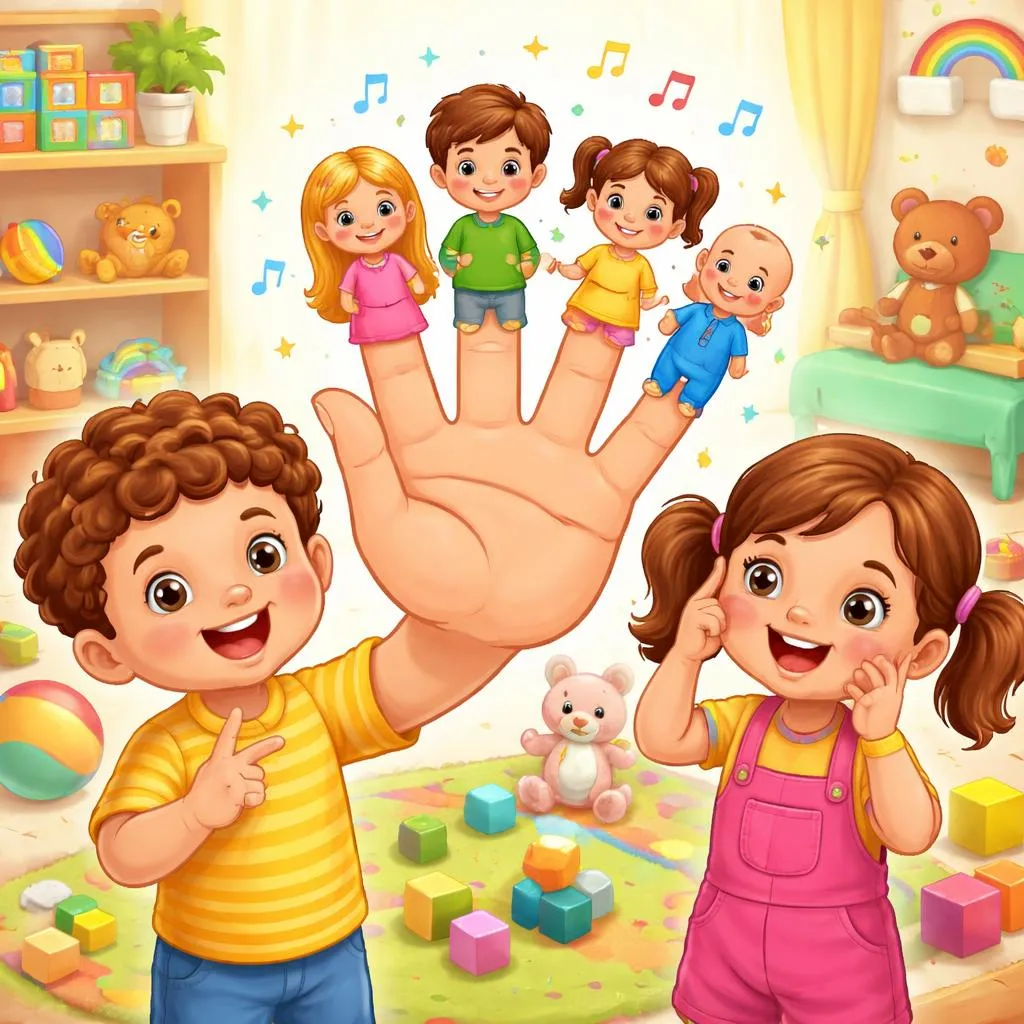

Hello, wonderful educators! Today we are exploring a beloved children's classic. The "finger family song lyrics" have delighted young learners around the world. This simple song combines family vocabulary with finger play. Children learn about family members while developing fine motor skills. We will examine its structure and educational value. We will explore vocabulary, phonics, and grammar points. We will also share engaging classroom activities. This guide will help you maximize this song's potential. Let's discover together what this finger family can teach our students.
What Is the "Finger Family" Rhyme? The finger family song is a popular children's rhyme. It introduces different family members through finger play. Each finger represents a different person. The thumb is usually daddy or mommy. The index finger is brother or sister. The song continues through all five fingers.
Children hold up one hand. They wiggle each finger as it is named. This connects the words to physical actions. The repetition makes it easy to learn. The tune is simple and catchy.
The song exists in many languages around the world. This shows its universal appeal. Families are a familiar topic for all children. The finger connection adds a kinesthetic element that aids memory.
The Lyrics of the Nursery Rhyme Let us review the complete traditional lyrics. The most common version goes like this:
Daddy finger, daddy finger, where are you? Here I am, here I am. How do you do?
Mommy finger, mommy finger, where are you? Here I am, here I am. How do you do?
Brother finger, brother finger, where are you? Here I am, here I am. How do you do?
Sister finger, sister finger, where are you? Here I am, here I am. How do you do?
Baby finger, baby finger, where are you? Here I am, here I am. How do you do?
Some versions use different family members. Grandfather and grandmother sometimes appear. The pattern remains the same. Each verse introduces a new finger with a question and answer.
Vocabulary Learning from the Song This rhyme introduces several key vocabulary words. Let us explore each one carefully.
Finger: This is a body part on the hand. We have five fingers on each hand. They help us hold things and point. This builds body part vocabulary.
Daddy: This is another word for father. He is a parent in the family. Children learn this familiar term for their male parent.
Mommy: This is another word for mother. She is the other parent. This term is common in early childhood.
Brother: This is a male sibling. A brother shares parents with the child. This builds family relationship vocabulary.
Sister: This is a female sibling. A sister also shares parents. This completes the sibling pair.
Baby: This is the youngest family member. Babies are small and need much care. This introduces age and size concepts.
How do you do: This is a polite greeting. It means hello or nice to meet you. This teaches social language.
Phonics Points to Practice The finger family song offers excellent phonics opportunities. Let us focus on specific sounds.
The F Sound: Finger starts with F. We can practice the /f/ sound. We can feel our top teeth on our bottom lip. We can think of other F words. Fish, fun, and farm are good examples.
The D Sound: Daddy starts with D. We can practice the /d/ sound. We can feel our tongue tap the roof of our mouth. We can think of other D words. Dog, duck, and door are good examples.
The M Sound: Mommy starts with M. We can practice the /m/ sound. We can feel our lips come together. We can think of other M words. Milk, moon, and mouse are good examples.
The B Sound: Brother and baby start with B. We can practice the /b/ sound. We can feel our lips pop open. We can think of other B words. Ball, book, and bus are good examples.
The S Sound: Sister starts with S. We can practice the /s/ sound. We can feel the air hiss out. We can think of other S words. Sun, soap, and sock are good examples.
Rhyming Words: The song has rhyming patterns. Are and you appear in the question. Do and you rhyme in the answer. Recognizing rhymes builds reading readiness.
Grammar Patterns We Can Teach The simple sentences in this song provide grammar lessons. Let us look at a few patterns.
Questions with Where: The song asks "where are you?" This is a question about location. We can practice asking where questions about other things. Where is the book? Where is the teacher?
Answers with Here: The answer is "here I am." This shows location near the speaker. We can contrast with "there" for farther away. This teaches basic location words.
Greetings: The song uses "how do you do?" as a greeting. We can teach other greetings too. Hello, hi, good morning. This builds social language.
Possessive Forms: The song uses family words without possessives. But we can extend to "my daddy" or "your mommy." This introduces possessive concepts.
Pronouns: The song uses I and you. These are important pronouns. Children learn to use them correctly through repetition.
Learning Activities for the Classroom Let us explore activities that bring this song to life. These ideas work for various learning styles.
Activity 1: Finger Puppet Craft Create simple finger puppets for each family member. Use paper, felt, or old gloves. Decorate each finger with a face and clothes. Students put on the puppets and sing along. They wiggle the correct finger during each verse.
Activity 2: Hand Tracing Art Have students trace their own hands on paper. They draw faces on each finger. They label each finger with a family member name. They can color and decorate their hand families. Display these around the room.
Activity 3: Family Photo Connection Ask students to bring small photos of family members. Place the photos on a bulletin board. Point to different photos and sing the song. "Mommy finger" points to mom's photo. This connects the song to real families.
Activity 4: Finger Counting Practice Use the song to practice counting fingers. How many fingers on one hand? Count them together. Name each finger as you count. Thumb, pointer, middle, ring, pinky. This builds number and body vocabulary.
Activity 5: Family Discussion Talk about different family structures. Some children live with mom and dad. Some live with grandparents. Some have step-parents or siblings. All families are special. This builds social awareness and inclusion.
Printable Materials for Your Lessons Visual supports enhance learning for young children. Here are some printable ideas.
Finger Puppet Templates: Create printable templates for finger puppets. Each template has a face and simple clothes. Students cut them out and tape them into rings for their fingers.
Hand Coloring Page: Create a large hand outline coloring page. Students color each finger a different color. They write family member names next to each finger.
Family Member Flashcards: Create cards with pictures of each family member. Daddy, mommy, brother, sister, baby. Use these for vocabulary review and games.
Finger Family Mini Book: Create a small folded book. Each page shows one finger family member with the lyrics. Students can take these home to sing with family.
Match the Finger Game: Create cards showing hands with one finger highlighted. Create matching cards with the family member name. Students match the highlighted finger to the correct name.
Educational Games to Reinforce Learning Games make learning fun and memorable. Here are many game ideas.
Game 1: Where Is Your Finger? Call out a family member. "Where is daddy finger?" Students hold up that finger and wiggle it. They answer, "Here I am!" This builds listening and finger identification.
Game 2: Finger Family Freeze Play the song. Students dance and wiggle all fingers. When the music stops, call out a family member. Students freeze with that finger raised. This adds movement and listening.
Game 3: Mystery Finger One student closes their eyes. Another student gently touches one of their fingers. The first student opens eyes and guesses which finger was touched. They name the family member for that finger.
Game 4: Finger Puppet Show Students put on finger puppets. They perform the song for the class. They can add dialogue between family members. This builds confidence and speaking skills.
Game 5: Family Sorting Provide pictures of different people. Students sort them into family categories. Daddies go with daddies. Mommies go with mommies. Babies go with babies. This builds categorization.
Game 6: Finger Painting Family Provide finger painting paper and paint. Students use their fingers to create family pictures. They dip different fingers in different colors. They name which finger made which part.
Game 7: Memory Match Family Create pairs of family member cards. Place them face down. Students turn over two cards trying to match. They must name the family member when they make a match.
Game 8: Family Parade Give each student a finger puppet. Line up by family member. All daddies first. All mommies second. March around the room singing the song. This builds sequencing and group participation.
Game 9: Where Do You Live? Extend the song to talk about where family members live. "Daddy finger, where do you live?" Students answer with home or work locations. "I live in the blue house." This builds sentence expansion.
Game 10: Family Helper Discussion Talk about how each family member helps. Daddy helps fix things. Mommy helps cook dinner. Brother helps play games. Sister helps share toys. Baby helps by smiling. This builds appreciation and descriptive language.
Game 11: Finger Family Obstacle Course Create a simple obstacle course. At each station, students must use a specific finger. Point to a picture with pointer finger. Push a button with thumb. Pick up a small item with baby finger. This builds fine motor skills.
Game 12: Sing and Switch Sing the song normally. Then switch the order. Start with baby finger first. Go backwards through the family. This challenges memory and sequencing.
Game 13: Family Interview Students interview each other about their families. "Do you have a brother?" "What is your mommy's name?" "How old is your baby?" This builds conversational skills.
Game 14: Finger Family Bingo Create bingo cards with family member pictures. Call out descriptions instead of names. "This person is the youngest." Students cover the baby. "This person has a deep voice." Students cover daddy.
Game 15: Create Your Own Version Challenge students to create new verses for other family members. Grandma finger, grandpa finger, cousin finger. They invent actions for each new character. This builds creativity and vocabulary.
Game 16: Finger Family Puppet Theater Create a simple puppet theater from a cardboard box. Students perform the finger family song behind the theater. Only the finger puppets show. This adds dramatic play excitement.
Game 17: Finger Shadow Play Use a flashlight to create finger shadows on the wall. Make each finger wave and dance. Sing the song while watching the shadows. This teaches about light and shadows.
Game 18: Family Rhythm Pattern Clap the rhythm of each family member's name. Dad-dy has two claps. Mom-my has two claps. Ba-by has two claps. Bro-ther has two claps. Sis-ter has two claps. This builds phonological awareness.
Game 19: Finger Family Song in Other Languages If students speak other languages at home, teach the song in those languages. Compare how family words sound different. This builds multicultural awareness.
Game 20: Finger Family Art Gallery Create a class art gallery of finger family pictures. Each student contributes one finger family drawing. Label each drawing with the student's name. Host a gallery walk to admire the artwork.
We have explored the wonderful learning potential of the finger family song. The "finger family song lyrics" teach so much to young learners. Children learn family vocabulary through repetition. They develop fine motor skills through finger play. They practice question and answer patterns. They connect language to their own families. We looked at what the song means. We explored vocabulary and phonics. We learned grammar patterns. We shared engaging activities and games. We created printable materials for practice. This integrated approach makes learning natural and joyful. Use these strategies in your classroom. Adapt them to your students' needs. Watch as your learners sing, wiggle, and grow. Their fingers will dance with delight as they name each family member. The finger family will become beloved teachers in your classroom.