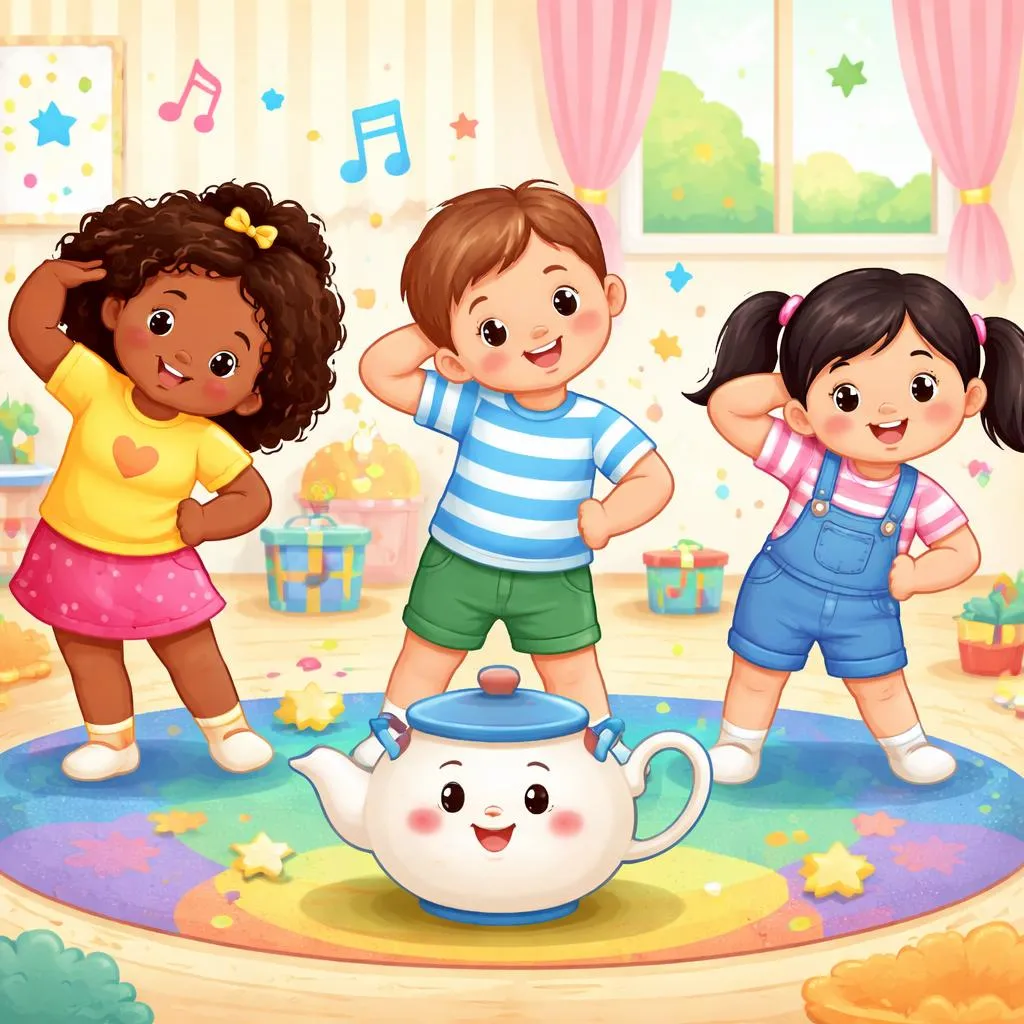

Hello, wonderful educators! Today we are exploring a beloved children's classic. The "ima little teapot song lyrics" have delighted young learners for generations. This playful song combines a fun character with simple actions. Children pretend to be teapots. They learn body parts and movements. We will examine its structure and educational value. We will explore vocabulary, phonics, and grammar points. We will also share engaging classroom activities. This guide will help you maximize this song's potential. Let's discover together what this little teapot can teach our students.
What Is the "I'm a Little Teapot" Rhyme?
The correct title is "I'm a Little Teapot." "Ima" is a common child's pronunciation of "I'm a." This shows how the song adapts to early speech patterns. The song was written in the 1930s by George Harry Sanders and Clarence Kelley.
The song tells the story of a teapot. It describes the teapot's features. It has a handle and a spout. When it gets hot, it shouts. Then it tips over to pour.
The song includes simple actions. Children put one hand on their hip for the handle. They extend the other arm for the spout. They tip to one side when pouring. These actions make the song interactive and memorable.
The Lyrics of the Nursery Rhyme
Let us review the complete traditional lyrics. The most common version goes like this:
I'm a little teapot, short and stout.
Here is my handle, here is my spout.
When I get all steamed up, hear me shout,
"Tip me over and pour me out!"
I'm a very special pot, it's true.
Here's an example of what I can do.
I can turn my handle into a spout.
"Tip me over and pour me out!"
Some versions include additional verses. The basic pattern remains the same. The teapot describes itself and what it does.
Vocabulary Learning from the Song
This rhyme introduces several key vocabulary words. Let us explore each one carefully.
Teapot: This is a container for brewing and pouring tea. It has a handle and a spout. This builds household object vocabulary.
Little: This means small in size. The teapot describes itself as little. This builds size vocabulary.
Short: This means not tall. The teapot is short. This builds measurement vocabulary.
Stout: This means wide or sturdy. The teapot is stout. This is an interesting descriptive word.
Handle: This is the part you hold. Teapots have handles to lift them safely. This builds body part and object vocabulary.
Spout: This is the part where liquid pours out. Teapots have spouts for pouring. This builds object vocabulary.
Steamed up: This means heated until steam comes out. Teapots get steamed up when boiling. This builds science vocabulary.
Shout: This means to speak very loudly. The teapot shouts when ready. This builds action vocabulary.
Tip: This means to tilt or lean to one side. The teapot tips over to pour. This builds action vocabulary.
Pour: This means to cause liquid to flow. Teapots pour tea into cups. This builds action vocabulary.
Special: This means different and important. The teapot is very special. This builds descriptive vocabulary.
Example: This means a demonstration. The teapot shows an example. This builds abstract vocabulary.
Phonics Points to Practice
The song offers excellent phonics opportunities. Let us focus on specific sounds.
The Short I Sound: I'm and little have the short i sound. We can practice the /i/ sound. We can think of other short i words. It, sit, and pig are good examples.
The L Sound: Little starts with L. We can practice the /l/ sound. We can feel our tongue on the roof of our mouth. We can think of other L words. Lion, leaf, and leg are good examples.
The T Sound: Teapot starts with T. We can practice the /t/ sound. We can feel our tongue tap. We can think of other T words. Top, ten, and table are good examples.
The SH Sound: Shout has the /sh/ sound. This is a digraph. Two letters make one sound. We can practice other SH words. Shop, shell, and fish are good examples.
The OU Sound: Shout has the /ou/ sound. This is a diphthong. We can practice other ou words. Out, about, and house are good examples.
The Long A Sound: Handle has the short a sound actually. But spout has the ou sound. We can focus on different vowel sounds in the song.
Rhyming Words: The song has clear rhyming patterns. Stout and shout rhyme perfectly. True and do rhyme wonderfully. Spout and out rhyme. Recognizing rhymes builds reading readiness.
Grammar Patterns We Can Teach
The simple sentences in this song provide grammar lessons. Let us look at a few patterns.
Contractions: The song starts with "I'm" which is a contraction of I am. This teaches how we combine words in speaking. We can practice other contractions. You're, he's, she's, it's, we're, they're.
Present Tense: The song uses present tense throughout. I am, here is, I get, I can. This describes things that are true now.
Descriptive Adjectives: Little, short, stout, special. These adjectives describe the teapot. This builds descriptive language.
Imperative Sentences: "Tip me over" is a command. This is the imperative form. The teapot tells us what to do.
Prepositions: "Here is" shows location. "Over" shows direction. This teaches position words.
Pronouns: I, me, my. These are first person pronouns. The teapot speaks about itself. This teaches pronoun usage.
Learning Activities for the Classroom
Let us explore activities that bring this song to life. These ideas work for various learning styles.
Activity 1: Teapot Craft Project
Provide paper bags or paper plates. Students create their own teapots. They add a handle on one side. They add a spout on the other. They decorate their teapots. This builds fine motor skills and connects to the song.
Activity 2: Teapot Actions Practice
Teach the actions for the song. One hand on hip for handle. Other arm out for spout. Tip to one side for pouring. Practice together slowly. Then sing and do actions together.
Activity 3: Teapot Role Play
Students pretend to be teapots. They curl up small for "little teapot." They stand tall and wide for "short and stout." They show handle and spout. They tip and pour. This builds dramatic play skills.
Activity 4: Tea Party Pretend
Set up a pretend tea party. Use the teapot craft. Have cups and saucers. Students practice pouring and serving. Use tea party manners. This builds social skills.
Activity 5: Hot and Cold Discussion
Talk about what "steamed up" means. When does water get hot? What happens when water boils? Steam comes out. This builds science understanding.
Printable Materials for Your Lessons
Visual supports enhance learning for young children. Here are some printable ideas.
Vocabulary Flashcards: Create cards for key words from the song. Include teapot, handle, spout, steam, shout, tip, pour. Use simple pictures on one side. Write the word on the other side.
Teapot Coloring Page: Create a coloring page showing a teapot. Label the handle and spout. Students color while discussing the song. They can add steam coming out.
Action Sequence Cards: Create cards showing each action from the song. Hand on hip for handle. Arm out for spout. Tipping for pouring. Students arrange them in order.
Teapot Puzzle: Create a simple teapot shape cut into pieces. Students assemble the puzzle. They name the parts as they work.
Tea Party Placemat: Create a placemat with a teapot, cup, and saucer. Students can use it for pretend play. They can color it first.
Educational Games to Reinforce Learning
Games make learning fun and memorable. Here are many game ideas.
Game 1: Teapot Freeze Dance
Play the song. Students dance and do teapot actions. When the music stops, they freeze in a teapot pose. One hand on hip, one arm out. This builds listening and movement.
Game 2: Pass the Teapot
Use a real or pretend teapot. Pass it around while music plays. When music stops, the holder names a teapot part. Handle, spout, lid, steam. This builds vocabulary.
Game 3: Teapot Simon Says
Play Simon Says using teapot actions. "Simon says show your handle." "Simon says tip over." "Show your spout." Students follow commands. This builds listening.
Game 4: Teapot Memory Match
Create pairs of teapot picture cards. Different teapots or teapot parts. Place face down. Students find matches and name what they see.
Game 5: Teapot Bingo
Create bingo cards with teapot pictures and words. Handle, spout, steam, tip, pour, teapot. Call out words. Students cover matching squares.
Game 6: What's Missing?
Place teapot part cards on display. Students close eyes. Remove one card. Students open eyes and guess what's missing. "The spout is missing!"
Game 7: Teapot Charades
Act out teapot actions without speaking. Show handle. Show spout. Tip over. Steam. Students guess the action.
Game 8: Teapot Hot Potato
Pass a small teapot or soft object. When music stops, the holder must say a line from the song. Continue until many have had a turn.
Game 9: Teapot Craft Show
After making teapot crafts, have a show. Each student presents their teapot. They name the parts. They demonstrate the actions.
Game 10: Teapot Song Creation
Create new verses for other objects. "I'm a little coffee pot." "I'm a little kettle." Students invent new words and actions. This builds creativity.
Game 11: Teapot Pattern Game
Create patterns with teapot pictures. Handle, spout, handle, spout. Students continue the pattern. They create their own patterns.
Game 12: Teapot Sorting
Collect pictures of different teapots. Students sort them by color, size, or style. They count how many in each group.
Game 13: Teapot Questions
Ask questions about teapots. "What is the handle for?" "What comes out of the spout?" "Why does the teapot shout?" Students answer and discuss.
Game 14: Teapot Story Time
Read a story about a teapot. There are many children's books featuring teapots. Discuss how the teapot in the story is like the song.
Game 15: Teapot Relay Race
Divide into teams. First student runs to a table, does the teapot pose, and runs back. Next student goes. First team finished wins.
Game 16: Teapot Adjective Game
Show a teapot picture. Students take turns adding adjectives. Little teapot. Shiny teapot. Blue teapot. Old teapot. This builds descriptive language.
Game 17: Teapot and Cup Matching
Create cards with teapots and matching cups. Students match each teapot to its cup. They can be matching colors or patterns.
Game 18: Teapot Sound Effects
Make sounds for the song. Hiss for steam. Whistle for shouting. Pouring sound for tipping. Students add sounds while singing.
Game 19: Teapot Emotions
Discuss how the teapot might feel. Happy when pouring. Excited when steaming. Tired when empty. This builds emotional vocabulary.
Game 20: Teapot Parade
Students wear their teapot crafts. March around the room singing the song. Stop and do the actions together. This builds community and confidence.
We have explored the wonderful little teapot song. The "ima little teapot song lyrics" teach so much to young learners. Children learn body awareness through the handle and spout actions. They learn vocabulary for household objects. They practice following directions. They develop gross motor skills through tipping and pouring. We looked at what the song means. We explored vocabulary and phonics. We learned grammar patterns. We shared engaging activities and games. We created printable materials for practice. This integrated approach makes learning natural and joyful. Use these strategies in your classroom. Adapt them to your students' needs. Watch as your learners sing, tip, and pour their way to new knowledge. The little teapot will become a beloved teacher in your classroom. Its short and stout shape will hold endless learning opportunities.