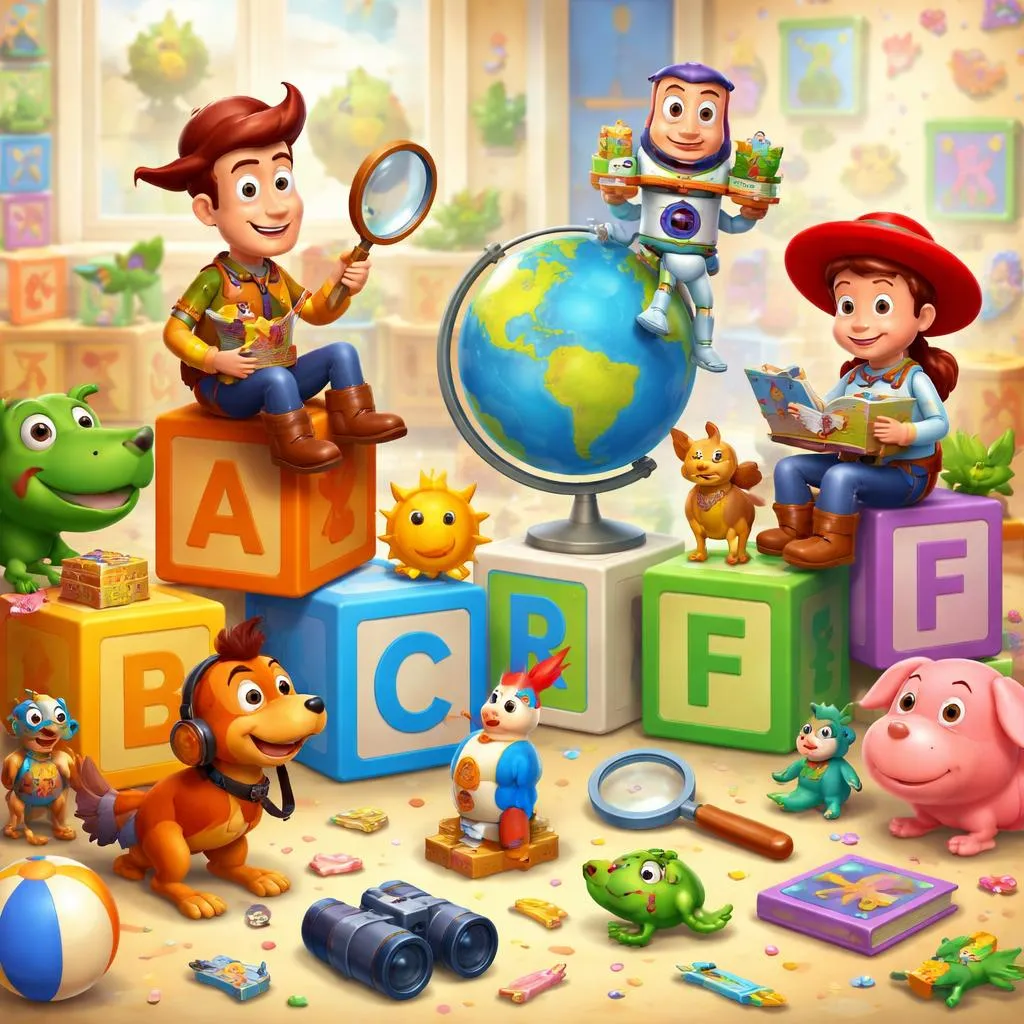

Hello, wonderful educators! Today we are exploring a beloved topic that captures children's imaginations. We will focus on the "toys from toy story." These famous characters have entertained and inspired young learners for decades. Each toy has a unique personality and name. This provides rich opportunities for vocabulary development. We will examine who these toys are. We will explore their names and characteristics. We will share practical teaching strategies. We will provide engaging classroom activities. This guide will help you use these beloved characters effectively. Let's begin this exciting journey into Andy's toy box together.
What Are the Toys from Toy Story?
Toy Story is a beloved animated film series from Pixar. It tells the story of toys that come to life when humans are not watching. The films follow Woody, Buzz Lightyear, and their friends through many adventures.
These toys have become cultural icons. Children around the world know their names and personalities. This familiarity makes them perfect for learning. Students already care about these characters. They want to talk about them and learn more.
The toys represent many different types of playthings. There is a cowboy doll, a space ranger action figure, a potato head, and more. This variety introduces different toy vocabulary naturally.
Using these characters in lessons connects learning to children's interests. It makes vocabulary practice feel like play rather than work.
The Main Characters and Their Names
Let us meet the wonderful toys from the Toy Story films. Each has a unique name and personality.
Woody: He is a pull-string cowboy doll. He wears a cowboy hat and vest. His catchphrase is "There's a snake in my boot!" He is the loyal leader of the toys.
Buzz Lightyear: He is a space ranger action figure. He has wings that pop out. He says "To infinity and beyond!" He believes he is a real space ranger at first.
Jessie: She is a yodeling cowgirl doll. She wears a cowgirl hat and boots. She loves to ride with Woody. She has a fear of being abandoned.
Bullseye: He is Woody's loyal horse. He is a toy horse with a happy expression. He loves to follow Woody everywhere.
Mr. Potato Head: He is a potato-shaped toy with removable parts. His eyes, ears, nose, and mouth can be moved around. He is married to Mrs. Potato Head.
Mrs. Potato Head: She is Mr. Potato Head's wife. She also has removable facial features. She carries extra parts in her purse.
Rex: He is a green plastic dinosaur. He looks scary but is actually very gentle. He worries about many things. He loves to play video games.
Hamm: He is a piggy bank made of cork. He holds money inside his belly. He is smart and sometimes sarcastic. He enjoys playing games.
Slinky Dog: He is a dachshund dog with a slinky spring for a body. He stretches and bends. He is Woody's loyal friend.
Bo Peep: She is a porcelain shepherdess doll. She carries a staff. She takes care of her sheep. She is kind and brave.
The Green Army Men: They are small plastic soldiers. They come in a bucket. They follow orders and go on missions. They say "Ho ho ho!" as they parachute down.
Aliens: They are three-eyed green aliens. They love the claw machine. They say "Ooooh!" and worship the claw. They are very cute and funny.
Vocabulary Learning from the Toys
Each toy introduces specific vocabulary words. Let us explore what we can teach.
Toy Types: Cowboy doll, action figure, piggy bank, dinosaur, slinky dog, shepherdess, potato toy, army men. These are different categories of toys.
Materials: Plastic, porcelain, cork, fabric, springs, vinyl. Toys are made from different materials.
Parts and Features: Pull-string, wings, hat, boots, vest, staff, slinky, removable parts, bucket. Each toy has unique physical features.
Colors: Green for Rex and aliens. Brown for Woody. Purple for the aliens' spaceship. White and purple for Buzz. Colors appear throughout.
Actions: Yodeling, stretching, parachuting, flying, pulling strings, removing parts. Verbs connect to each toy's abilities.
Personality Words: Loyal, brave, worried, funny, kind, smart, gentle, scary-looking but gentle. Describing characters builds adjective vocabulary.
Phonics Points to Practice
The toy names offer excellent phonics opportunities. Let us focus on specific sounds.
The W Sound: Woody starts with W. We can practice the /w/ sound. We can feel our lips round. We can think of other W words. Window, water, and wagon are good examples.
The B Sound: Buzz starts with B. We can practice the /b/ sound. We can feel our lips pop open. We can think of other B words. Ball, book, and bus are good examples.
The J Sound: Jessie starts with J. We can practice the /j/ sound. We can feel our tongue position. We can think of other J words. Jump, jelly, and jet are good examples.
The R Sound: Rex starts with R. We can practice the /r/ sound. We can feel our tongue curl. We can think of other R words. Run, red, and rabbit are good examples.
The H Sound: Hamm starts with H. We can practice the /h/ sound. We can feel the air from our throat. We can think of other H words. Hat, house, and horse are good examples.
The S Sound: Slinky starts with S. We can practice the /s/ sound. We can feel the air hiss out. We can think of other S words. Sun, soap, and sock are good examples.
Grammar Patterns We Can Teach
The toy characters provide contexts for grammar lessons. Let us look at a few patterns.
Descriptive Sentences: Woody is a cowboy. Buzz is a space ranger. Rex is a dinosaur. This builds simple subject-verb-complement sentences.
Possessive Forms: Woody's hat. Buzz's wings. Jessie's lasso. Mr. Potato Head's eyes. This teaches the possessive apostrophe.
Comparative Adjectives: Rex is bigger than Hamm. Buzz is braver than the army men. Jessie is faster than Bullseye? This builds comparison language.
Prepositions of Location: Woody is on the bed. Buzz is in the box. The aliens are under the claw. This teaches location words.
Questions and Answers: Who is your favorite toy? My favorite is Jessie. What color is Rex? He is green. This builds conversational skills.
Learning Activities for the Classroom
Let us explore activities that bring these toys to life. These ideas work for various learning styles.
Activity 1: Toy Story Character Cards
Create cards with each character's picture and name. Use these for identification games. Show a card. Students say the character's name. Add facts about each toy.
Activity 2: Describe the Toy
Show a picture of a toy. Ask students to describe it. What color is it? What does it wear? What special features does it have? This builds descriptive language.
Activity 3: Toy Story Sorting
Provide pictures of all the toys. Have students sort them by different categories. Toys with hats. Toys with wheels. Toys that are animals. Green toys. This builds categorization skills.
Activity 4: Favorite Toy Discussion
Ask students which Toy Story character is their favorite. Why do they like that toy? What makes that character special? This builds opinion expression and reasoning.
Activity 5: Toy Story Puppets
Create simple puppets of the characters using paper bags or craft sticks. Students use them to act out scenes. They can create new adventures. This builds narrative skills.
Printable Materials for Your Lessons
Visual supports enhance learning for young children. Here are some printable ideas.
Character Flashcards: Create cards with each character's picture and name. Include Woody, Buzz, Jessie, Bullseye, Mr. Potato Head, Mrs. Potato Head, Rex, Hamm, Slinky, Bo Peep, Army Men, Aliens.
Character Fact Sheets: Create simple fact sheets for each character. Include name, toy type, color, special features, and personality trait. Students can read and learn facts.
Toy Story Bingo Cards: Create bingo cards with character pictures. Call out character names or descriptions. Students cover matching characters.
Coloring Pages: Create coloring pages featuring the toys. Students color while discussing the characters. This combines art with language exposure.
Matching Game Cards: Create two sets of character cards. Students play memory match by finding pairs. They must name the character when they make a match.
Educational Games to Reinforce Learning
Games make learning fun and memorable. Here are many game ideas.
Game 1: Who Am I?
Describe a character without naming them. "I am a cowboy doll. I have a pull-string. My best friend is Buzz. Who am I?" Students guess Woody. This builds listening and deduction.
Game 2: Toy Story Charades
Act out a character without speaking. Pretend to fly for Buzz. Pretend to be scared for Rex. Pretend to stretch for Slinky. Students guess the character.
Game 3: Toy Story Bingo
Play bingo with character pictures. Call out names or descriptions. Students cover matching characters. First to cover a row wins.
Game 4: Memory Match
Place character cards face down. Students turn over two trying to find matches. They must name the character when they make a match.
Game 5: Toy Story Sorting Race
Place mixed character cards at one end. Call out a category. "Find all the green toys!" Students race to collect characters in that category. This builds quick thinking.
Game 6: What's Missing?
Place several character cards on display. Students close their eyes. Remove one card. Students open eyes and guess which character is missing.
Game 7: Toy Story Interview
One student pretends to be a character. Other students interview them. "Buzz, why do you think you are a real space ranger?" "Woody, why are you jealous of Buzz?" This builds perspective taking.
Game 8: Design a New Toy
Ask students to invent a new toy for the Toy Story world. What would it look like? What would its name be? What special features would it have? Students draw and describe their creations.
Game 9: Toy Story Story Chain
Start a story about the toys. "One day, Woody decided to explore the backyard." The next student adds a sentence. Continue around the class. This builds narrative skills.
Game 10: Toy Story Alphabet
Go through the alphabet naming Toy Story characters or related words. A is for alien. B is for Buzz. C is for cowboy. See how many the class can name.
Game 11: Toy Story Pictionary
Draw a character on the board. Students guess who it is. The drawer cannot speak or write words. This builds visual literacy.
Game 12: Toy Story Categories
Name a category. "Toys with hats." Students list all characters with hats. Woody, Jessie, Bo Peep. "Toys that are animals." Rex, Bullseye, Slinky, aliens? This builds categorization.
Game 13: Toy Story Opinion Line
Create a line across the room. One end says "agree." The other end says "disagree." Say statements. "Buzz is the best toy." Students move to show their opinion. Discuss why.
Game 14: Toy Story Scavenger Hunt
Hide printed character pictures around the room. Give clues. "Find the toy that says to infinity and beyond." Students search and find Buzz.
Game 15: Toy Story Song Creation
Create a simple song about the toys using a familiar tune. "Woody is a cowboy, cowboy, cowboy. Woody is a cowboy, he has a pull-string." Add verses for each character.
Game 16: Toy Story Venn Diagram
Compare two characters using a Venn diagram. How are Woody and Buzz alike? How are they different? This builds analytical thinking.
Game 17: Toy Story Adjective Game
Show a character picture. Students take turns adding an adjective. "Woody is loyal." "Woody is brave." "Woody is friendly." See how many they can generate.
Game 18: Toy Story Emotions
Discuss how different characters feel in different scenes. Rex feels scared. Jessie feels sad about being abandoned. Woody feels jealous. This builds emotional vocabulary.
Game 19: Toy Story Price Tags
Imagine the toys are for sale in a store. Give each toy a price. Students practice money vocabulary. "How much is Woody?" "He is five dollars."
Game 20: Toy Story and Me
Ask students to bring a favorite toy from home. They introduce their toy to the class. They describe it like a Toy Story character. This connects learning to their lives.
We have explored the wonderful world of toys from Toy Story. These beloved characters make learning vocabulary fun and meaningful. Children already know and love Woody, Buzz, and their friends. This familiarity creates engagement and motivation. We looked at who the characters are. We explored their names and features. We learned vocabulary and phonics. We practiced grammar patterns. We shared engaging activities and games. We created printable materials for practice. This integrated approach makes learning natural and joyful. Use these strategies in your classroom. Adapt them to your students' needs. Watch as your learners talk, play, and grow with their favorite toy friends. The toys from Toy Story will become beloved teachers in your classroom. Their adventures will inspire language learning every single day.