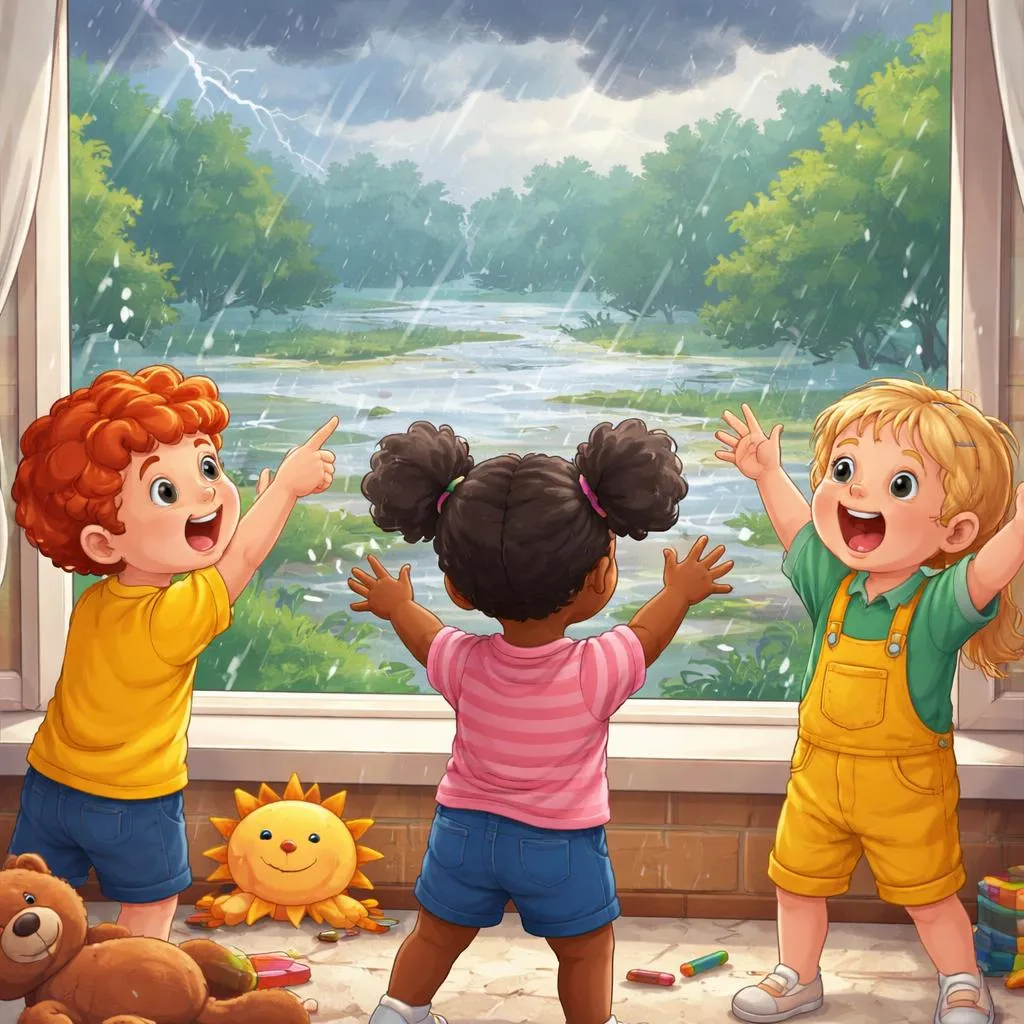

Hello, wonderful educators! Today we are exploring a simple but powerful phrase. The words "go away rain" appear in many children's songs and chants. This expression helps children voice their feelings about weather. It gives them language to express preferences. We will examine its meaning and uses. We will explore vocabulary, phonics, and grammar points. We will also share engaging classroom activities. This guide will help you use this phrase effectively. Let's discover together what this weather wish can teach our students.
What Is the "Go Away Rain" Rhyme? This is a simple children's chant or song. It expresses a wish for rain to stop. Children often sing it when they want to play outside. The rain keeps them indoors. The song gives them a way to express this feeling.
Many versions exist. Some are very simple. "Go away rain, come again another day." Others are longer with more verses. The basic idea remains the same. Children want the rain to leave so they can play.
This type of chant helps children feel in control. They cannot actually stop the rain. But they can express their feelings about it. This builds emotional intelligence and language skills.
The song also teaches about weather. It introduces rain as a weather phenomenon. Children learn to name and talk about different weather types.
The Lyrics of Common Versions Let us review some popular versions of this chant. Many variations exist with different words.
Simple Version: Go away, rain, go away. Come again another day. Little children want to play. Go away, rain, go away.
Extended Version: Rain, rain, go away. Come again another day. Little Johnny wants to play. Rain, rain, go away.
Rain, rain, go away. Come again another day. Little Susie wants to play. Rain, rain, go away.
Rain, rain, go away. Come again another day. All the children want to play. Rain, rain, go away.
Weather Version: Go away, rain, go away. Let the sun come out to play. We want sunshine bright and gay. Go away, rain, go away.
Action Version: Rain is falling on my head. Go away, rain, I said! I want to go outside and play. Go away, rain, go away!
Vocabulary Learning from the Phrase This simple phrase introduces several key vocabulary words. Let us explore each one carefully.
Go away: This means to leave or move from here. We use it when we want someone or something to depart. This builds command vocabulary.
Rain: This is water that falls from clouds. It is a type of precipitation. We need rain for plants to grow. This builds weather vocabulary.
Come again: This means to return or arrive again. We ask rain to come another day. This builds time vocabulary.
Another: This means one more or a different one. Another day means a different day. This builds quantity vocabulary.
Day: This is a 24-hour period. It includes morning, afternoon, and night. This builds time vocabulary.
Children: These are young people. The song is about children wanting to play. This builds people vocabulary.
Play: This means to have fun and enjoy activities. Children play games and use toys. This builds action vocabulary.
Want: This means to desire or wish for something. Children want to play outside. This builds feeling vocabulary.
Sun: This is the star that gives us light and warmth. It comes out when rain goes away. This builds science vocabulary.
Sunshine: This is the light from the sun. It makes us feel warm and happy. This builds descriptive vocabulary.
Bright: This means full of light. Sunshine is bright. This builds descriptive vocabulary.
Gay: In older versions, this means happy and cheerful. Today we might use "happy" instead. This shows how language changes.
Falling: This means moving downward. Rain falls from clouds. This builds action vocabulary.
Head: This is the top part of the body. Rain falls on our heads. This builds body part vocabulary.
Outside: This means not inside a building. Children want to go outside to play. This builds location vocabulary.
Phonics Points to Practice The phrase "go away rain" offers excellent phonics opportunities. Let us focus on specific sounds.
The G Sound: Go starts with G. We can practice the /g/ sound. We can feel the back of our tongue. We can think of other G words. Game, good, and garden are good examples.
The Long A Sound: Away has the long a sound. Rain also has the long a sound. We can practice other long a words. Day, play, and say are good examples.
The R Sound: Rain starts with R. We can practice the /r/ sound. We can feel our tongue curl. We can think of other R words. Run, red, and rabbit are good examples.
The N Sound: Rain ends with N. We can practice the /n/ sound. We can feel our tongue on the roof of our mouth. We can think of other N words. No, new, and nut are good examples.
The W Sound: Away has the W sound in the middle. We can practice the /w/ sound. We can feel our lips round. We can think of other W words. Water, window, and wagon are good examples.
Rhyming Words: The phrase has clear rhyming patterns. Rain and again rhyme perfectly. Day and play rhyme wonderfully. Head and said rhyme. Recognizing rhymes builds reading readiness.
Grammar Patterns We Can Teach The simple sentences in this chant provide grammar lessons. Let us look at a few patterns.
Imperative Sentences: "Go away" is a command. It tells someone or something to do something. This is the imperative form. We use it for requests and orders.
Subject-Verb Agreement: "Children want to play" uses correct plural subject with plural verb. One child wants. Many children want. This teaches agreement.
Infinitives: "Want to play" uses the infinitive form. To play shows the purpose of the wanting. This builds understanding of verb patterns.
Prepositions: "On my head" uses the preposition on. "Outside" shows location. This teaches position words.
Pronouns: "My head" uses the possessive pronoun my. This shows ownership.
Conjunctions: "Let the sun come out" implies and then we play. This shows sequence and connection.
Learning Activities for the Classroom Let us explore activities that bring this phrase to life. These ideas work for various learning styles.
Activity 1: Weather Feelings Discussion Talk about how different weather makes us feel. Rainy days can feel cozy or disappointing. Sunny days often feel happy. Students share their feelings about different weather.
Activity 2: Rainy Day Activities Discuss what we can do on rainy days. Read books. Draw pictures. Play board games. Sing songs. This builds problem-solving and positivity.
Activity 3: Sunny Day Wishes Ask students what they would do if the rain went away. Play outside. Go to the park. Ride bikes. Have a picnic. This builds imagination and language.
Activity 4: Rain Maker Craft Create rain makers from paper tubes. Decorate them. Add rice or beans inside. Seal the ends. Shake to make rain sounds. This builds fine motor skills and connects to the theme.
Activity 5: Weather Chart Create a daily weather chart. Observe the weather each day. Mark it on the chart. Count rainy days and sunny days. This builds observation and math skills.
Printable Materials for Your Lessons Visual supports enhance learning for young children. Here are some printable ideas.
Weather Flashcards: Create cards showing different weather. Rain, sun, clouds, snow, wind. Use simple pictures on one side. Write the word on the other side.
Go Away Rain Coloring Page: Create a coloring page showing rain with a sad child indoors. On the other side, show sun with happy children playing outside. Students color both scenes.
Weather Chart Printable: Create a weekly chart with spaces for each day. Students draw or place stickers showing the weather each day. Count rainy days at the end of the week.
Rainy Day Activity Cards: Create cards showing different rainy day activities. Reading, drawing, puzzles, singing. Students choose activities and name them.
Sunny Day Activity Cards: Create cards showing outdoor activities. Swinging, sliding, running, playing ball. Students discuss which they like best.
Educational Games to Reinforce Learning Games make learning fun and memorable. Here are many game ideas.
Game 1: Go Away Rain Freeze Dance Play music with rain sounds. Students dance like they are playing in rain. When the music stops, they freeze. When you say "go away rain," the music changes to sunny music and they dance differently.
Game 2: Weather Charades Act out different types of weather. Flutter fingers down for rain. Arms circle for wind. Hands above head for sun. Students guess the weather.
Game 3: Rainy Day Bingo Create bingo cards with weather pictures. Rain, sun, clouds, snow, wind, rainbow. Call out weather words. Students cover matching pictures.
Game 4: What's the Weather? Show pictures of different weather. Students name the weather and say how it makes them feel. "It is rainy. I feel sleepy." This builds descriptive language.
Game 5: Go Away Rain Memory Match Create pairs of weather cards. Place them face down. Students turn over two trying to find matches. They name the weather when they make a match.
Game 6: Weather Dress-Up Provide clothing for different weather. Rain boots, umbrella, raincoat for rain. Sunglasses, hat, sunscreen for sun. Students dress for the weather called out.
Game 7: Raindrop Counting Create paper raindrops with numbers. Scatter them on the floor. Students collect raindrops and arrange them in order. Count them together.
Game 8: Sunny Day Hop Place sun shapes on the floor. Students hop from sun to sun. When you say "rain," they must find shelter. This adds movement to learning.
Game 9: Weather Interview Students interview each other about favorite weather. "Do you like rain?" "What do you do on sunny days?" They record answers and share.
Game 10: Go Away Rain Song Creation Create new verses for the song. Add different children's names. Add different activities. "Little Maria wants to swing." "Little Jamal wants to run." This builds creativity.
Game 11: Weather Sorting Create cards with different activities. Swimming, building a snowman, flying a kite, using an umbrella. Students sort them by the weather needed.
Game 12: Rain Sound Patterns Make rain sounds with bodies. Rub hands for light rain. Snap fingers for medium rain. Pat legs for heavy rain. Stomp for thunder. Create patterns and copy them.
Game 13: Weather Opinion Line Create a line across the room. One end says "love rain." The other says "don't love rain." Students stand where they agree. Discuss why they chose that spot.
Game 14: Rainbow Hunt After talking about rain, discuss rainbows. Hide colored items around the room representing rainbow colors. Students find them and arrange in rainbow order.
Game 15: Weather Puppets Create simple puppets for sun and rain. Students use them to act out conversations. "Go away, rain!" "I will come back another day." This builds dialogue skills.
Game 16: Rainy Day Story Start a story about a rainy day. "It was raining hard. The children looked outside." Students take turns adding sentences. This builds narrative skills.
Game 17: Weather Word Hunt Hide weather word cards around the room. Students find them and read them. They act out the weather word they found.
Game 18: Sun and Rain Painting Provide blue and yellow paint. Students paint rainy scenes and sunny scenes. They can mix to make green for rainbows. This builds art skills.
Game 19: Weather Feelings Chart Create a chart with weather pictures. Add feeling words. Rainy can be cozy or sad. Sunny can be happy or hot. Students match feelings to weather.
Game 20: Go Away Rain Parade Create rain sticks or shakers. March around the room chanting "go away rain." When the sun comes out (a signal), switch to happy music and dancing.
We have explored the simple but powerful phrase "go away rain." This expression helps children voice their feelings about weather. It gives them language to express preferences. It teaches about weather and emotions. We looked at what the phrase means. We explored vocabulary and phonics. We learned grammar patterns. We shared engaging activities and games. We created printable materials for practice. This integrated approach makes learning natural and meaningful. Use these strategies in your classroom. Adapt them to your students' needs. Watch as your learners express themselves about the weather. They will learn that all feelings about rain are okay. They will discover that sunny days and rainy days both have value. Their language skills will grow with every weather conversation.