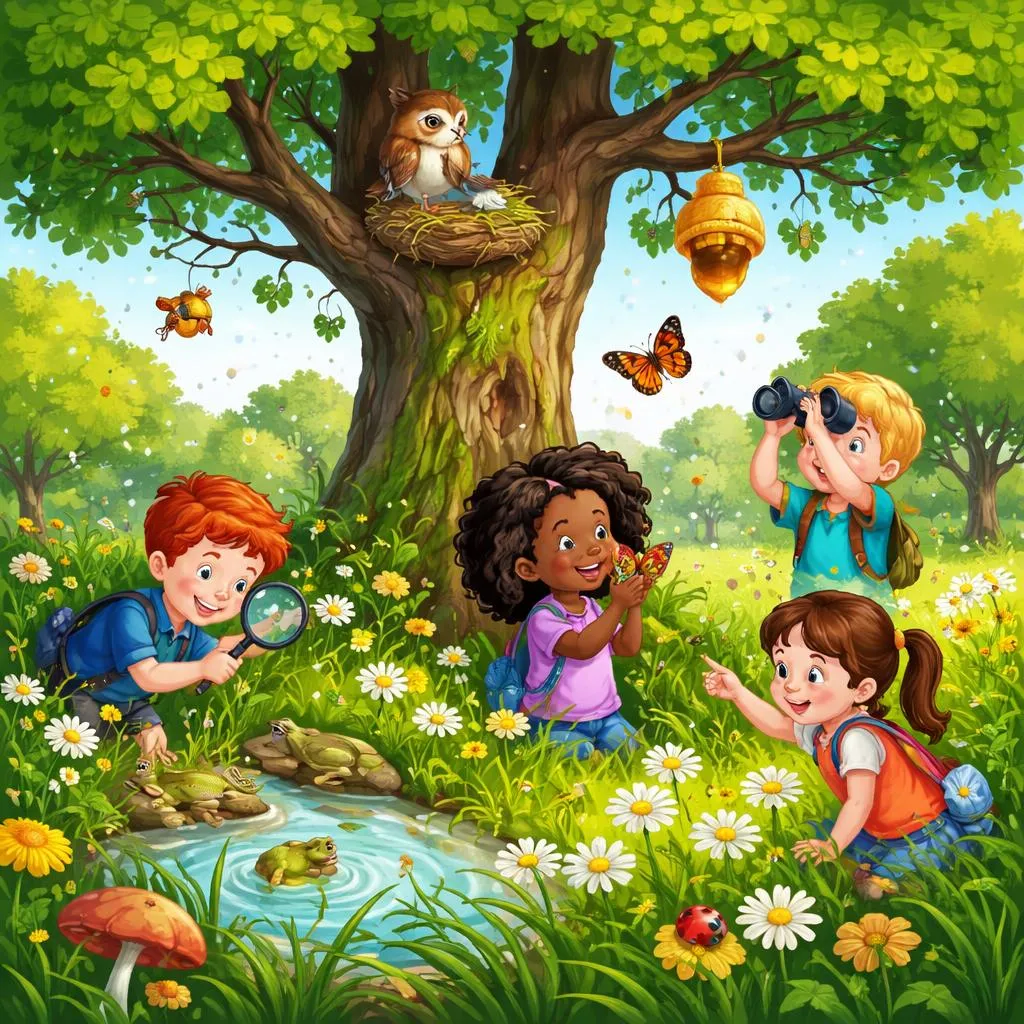

Hello, wonderful educators! Today we are exploring a delightful cumulative song. The phrase "green grass grew all around" begins a charming folk song. This song tells about nature growing in layers. It starts with grass and adds a tree, a branch, a nest, and more. The cumulative structure makes it perfect for teaching sequencing and vocabulary. We will examine its structure and educational value. We will explore vocabulary, phonics, and grammar points. We will also share engaging classroom activities. This guide will help you maximize this song's potential. Let's discover together what this growing song can teach our students.
What Is the "Green Grass Grew All Around" Song?
This is a traditional folk song and cumulative rhyme. It describes nature growing in layers. The song starts with grass. Then it adds a tree growing in the grass. Then a branch on the tree. Then a nest on the branch. Then eggs in the nest. Then a bird in the eggs. Each verse adds a new layer.
The cumulative structure builds memory skills. Children must remember each previous part as they add the new one. This is excellent for cognitive development.
The song celebrates nature and growth. It shows how living things connect. Trees need grass. Birds need trees. Everything is connected. This builds environmental awareness.
The song has a cheerful, bouncy tune. Children enjoy singing along. The repetition makes it easy to learn.
The Lyrics of the Nursery Rhyme
Let us review the complete traditional lyrics. The most common version goes like this:
Verse 1:
Oh, the green grass grew all around, all around,
Oh, the green grass grew all around.
And in the grass there grew a tree,
The fairest tree you ever did see.
Oh, the green grass grew all around, all around,
Oh, the green grass grew all around.
Verse 2:
And on that tree there grew a branch,
The fairest branch you ever did see.
And on that branch there grew a limb,
The fairest limb you ever did see.
And on that limb there was a nest,
The fairest nest you ever did see.
And in that nest there was an egg,
The fairest egg you ever did see.
And in that egg there was a bird,
The fairest bird you ever did see.
Final Verse (sometimes):
And on that bird there was a feather,
The fairest feather you ever did see.
And on that feather there was a bug,
The fairest bug you ever did see.
And that's the way the story goes,
The way the story always goes.
Oh, the green grass grew all around, all around,
Oh, the green grass grew all around.
Vocabulary Learning from the Song
This rhyme introduces several key vocabulary words. Let us explore each one carefully.
Green: This is a color. Grass is green. Trees have green leaves. This builds color vocabulary.
Grass: This is a common plant with narrow leaves. Lawns are made of grass. Animals eat grass. This builds nature vocabulary.
Grew: This is the past tense of grow. Plants grow from seeds. They get bigger over time. This builds action vocabulary.
Around: This means in every direction. The grass grew all around the tree. This builds position vocabulary.
Tree: This is a tall plant with a trunk and branches. Trees provide shade and homes for animals. This builds nature vocabulary.
Fairest: This means most beautiful. The tree is the fairest ever seen. This builds descriptive vocabulary.
Branch: This is a part of a tree that grows from the trunk. Leaves grow on branches. This builds plant vocabulary.
Limb: This is another word for a large branch. Animals sit on limbs. This builds synonym vocabulary.
Nest: This is a home built by birds. Nests hold eggs and baby birds. This builds animal vocabulary.
Egg: This is laid by birds. Baby birds hatch from eggs. This builds science vocabulary.
Bird: This is an animal with feathers, wings, and a beak. Birds fly and sing. This builds animal vocabulary.
Feather: This is what covers birds. Feathers are light and help birds fly. This builds animal vocabulary.
Bug: This is a small insect. Bugs crawl on plants. This builds nature vocabulary.
Story: This is a tale or account. The song tells a story. This builds literature vocabulary.
Phonics Points to Practice
The song offers excellent phonics opportunities. Let us focus on specific sounds.
The G Sound: Green and grass start with G. We can practice the /g/ sound. We can feel the back of our tongue. We can think of other G words. Go, game, and garden are good examples.
The R Sound: Grew and grass have the R sound. We can practice the /r/ sound. We can feel our tongue curl. We can think of other R words. Run, red, and rabbit are good examples.
The Long E Sound: Green has the long e sound. Tree also has long e. We can practice other long e words. See, bee, and me are good examples.
The GR Blend: Green and grass start with GR. This is a consonant blend. We can practice other GR words. Grow, grab, and grape are good examples.
The TR Blend: Tree starts with TR. This is another consonant blend. We can practice other TR words. Train, truck, and trip are good examples.
The BR Blend: Branch starts with BR. This is a consonant blend. We can practice other BR words. Bread, brown, and brush are good examples.
The N Sound: Nest starts with N. We can practice the /n/ sound. We can feel our tongue on the roof of our mouth. We can think of other N words. No, new, and nut are good examples.
The Short E Sound: Egg has the short e sound. Nest also has short e. We can practice other short e words. Bed, red, and leg are good examples.
The F Sound: Feather starts with F. We can practice the /f/ sound. We can feel our top teeth on our bottom lip. We can think of other F words. Fish, fun, and farm are good examples.
The B Sound: Bug starts with B. We can practice the /b/ sound. We can feel our lips pop open. We can think of other B words. Ball, book, and bus are good examples.
Rhyming Words: The song has rhyming patterns. Around and ground rhyme. Tree and see rhyme. Branch and branch is the same word. Nest and best rhyme. Bird and heard rhyme. Recognizing rhymes builds reading readiness.
Grammar Patterns We Can Teach
The simple sentences in this song provide grammar lessons. Let us look at a few patterns.
Past Tense Verbs: The song uses past tense throughout. Grew, was, had. This tells a story about things that already happened. We can contrast with present tense. The grass grows. The tree has branches.
Prepositions: The song uses several prepositions. In the grass. On the tree. In the nest. These show location and relationship.
Cumulative Structure: Each verse adds new information. This teaches how stories build. Children learn to track multiple details.
Superlative Adjectives: The song uses "fairest" which is a superlative. It means the most beautiful. This teaches comparison language.
Repetition for Emphasis: The song repeats phrases often. This repetition helps children remember the sequence.
Articles: The song uses "a" and "the" correctly. A tree (first mention). The tree (already mentioned). This teaches article usage.
Learning Activities for the Classroom
Let us explore activities that bring this song to life. These ideas work for various learning styles.
Activity 1: Nature Layers Craft
Provide paper and art supplies. Students create a layered picture showing each element. Grass at the bottom. A tree growing from the grass. A branch on the tree. A nest on the branch. Eggs in the nest. A bird in the eggs. This builds sequencing and fine motor skills.
Activity 2: Story Sequencing Cards
Create cards showing each element from the song. Grass, tree, branch, limb, nest, egg, bird, feather, bug. Students arrange them in the correct order. This builds sequencing and memory.
Activity 3: Nature Walk Observation
Take a walk outside. Look for real grass, trees, branches, nests, birds, and bugs. Discuss how they connect. This builds real-world connections.
Activity 4: Build a Nest STEM Challenge
Provide materials like twigs, grass, and yarn. Challenge students to build a nest. Discuss why nests need to be strong and cozy. This builds engineering thinking.
Activity 5: Bird Discussion
Talk about birds and their nests. What do birds use to build nests? Why do they lay eggs? How do baby birds grow? This builds science knowledge.
Printable Materials for Your Lessons
Visual supports enhance learning for young children. Here are many printable ideas.
Vocabulary Flashcards: Create cards for key words from the song. Include grass, tree, branch, limb, nest, egg, bird, feather, bug. Use simple pictures on one side. Write the word on the other side.
Story Sequencing Cards: Create cards with pictures of each element. Students arrange them in the order the song introduces them.
Coloring Page: Create a coloring page showing the complete scene. Grass, tree with branch, nest, eggs, bird. Students color while listening to the song.
Mini Book: Create a small folded book. Each page shows one layer of the song with simple illustrations. Students can take these home to sing with family.
Nature Layer Chart: Create a chart showing each layer building on the previous one. This visual helps students understand the cumulative structure.
Educational Games to Reinforce Learning
Games make learning fun and memorable. Here are many game ideas.
Game 1: Memory Chain Game
Start with the first line. "The green grass grew all around." The next student adds the tree. "And in the grass there grew a tree." Continue adding layers. See how far the class can go.
Game 2: What's Missing?
Place picture cards in order. Students close eyes. Remove one card. Students open eyes and guess which layer is missing. This builds observation and memory.
Game 3: Nature Bingo
Create bingo cards with pictures from the song. Grass, tree, branch, nest, egg, bird, feather, bug. Call out the names. Students cover matching pictures.
Game 4: Build the Scene
Provide playdough or clay. Students build each element. Grass first, then a tree, then a branch, then a nest. This builds fine motor skills and sequencing.
Game 5: I Spy in Nature
Say, "I spy with my little eye, something that grows in the ground." Students guess grass. "I spy something that birds live in." Students guess nest.
Game 6: Nature Scavenger Hunt
If possible, go outside and look for real items from the song. Grass, trees, branches, nests (from a distance), birds, bugs. Check off each find.
Game 7: Memory Match
Create pairs of nature cards. Grass with grass. Tree with tree. Place face down. Students find matches and name the item.
Game 8: Story Retell
After learning the song, students retell the story in their own words. They can use the sequencing cards as prompts. This builds narrative skills.
Game 9: Nature Art Collage
Provide magazines with nature pictures. Students cut out grass, trees, birds, and bugs. They create a collage showing the layers of the song.
Game 10: Song Creation
Create new verses for the song. What else could be in the scene? A flower in the grass. A caterpillar on the leaf. Students invent their own layers.
Game 11: Nature Question Game
Ask questions about the song. "What grew first?" "What was on the branch?" "What was in the egg?" Students answer.
Game 12: Nature Charades
Act out different elements from the song without speaking. Pretend to be a tree with arms as branches. Pretend to be a bird in a nest. Pretend to be a bug crawling. Students guess.
Game 13: Nature Pattern Game
Create patterns using nature pictures. Grass, tree, grass, tree. Students continue the pattern. They create their own nature patterns.
Game 14: Nature Sorting
Provide pictures of many nature items. Students sort them into categories. Plants, animals, bird homes. This builds categorization.
Game 15: Nature Writing
Give writing prompts related to the song. "If I were a bird in a nest, I would..." "The fairest tree I ever saw was..."
Game 16: Nature Measurement
Measure how tall grass grows. Measure how tall trees are outside. Compare sizes. This builds math skills.
Game 17: Nature Observation Journal
Create simple journals. Students draw and write about nature they see each day. Grass growing. Birds building nests. This builds observation and writing.
Game 18: Nature Riddles
Create riddles about items in the song. "I am green and grow on the ground. What am I?" "I am a home for birds. What am I?" Students guess.
Game 19: Nature Freeze Dance
Play the song. Students dance like growing things. When the music stops, they freeze in a nature pose. A tree pose. A bird pose.
Game 20: Nature Pictionary
Draw an item from the song on the board. Students guess what it is. The drawer cannot speak or write words.
Game 21: Nature Interview
Students interview each other about nature. "Have you ever seen a bird's nest?" "What is your favorite tree?" "Do you like bugs?" They share answers.
Game 22: Nature Bingo with Sounds
Instead of words, play nature sounds. Birds chirping. Wind in trees. Bugs buzzing. Students identify the sound and find the matching picture.
Game 23: Nature Story Chain
Start a nature story. "Once upon a time, there was a field of green grass." The next student adds a tree. Continue building the story like the song.
Game 24: Nature Color Hunt
Go on a color hunt outside. Find green grass. Brown tree bark. Blue sky. Yellow flowers. This connects nature to color learning.
Game 25: Nature Poetry
Create simple poems about nature using the song's pattern. "The green grass grew, the tall tree stood, the little bird sang in the wood."
Game 26: Nature Mobile Craft
Create a hanging mobile with all the layers. Grass at the bottom. Tree above. Branch above that. Nest above that. Bird at the top. Hang in the classroom.
Game 27: Nature Comparison
Compare different trees. Different birds. Different bugs. How are they alike? How are they different? This builds observation and comparison skills.
Game 28: Nature Counting
Count how many trees near the school. How many birds seen in a day. How many blades of grass in a small square. This builds counting skills.
Game 29: Nature Habitat Discussion
Discuss where each thing lives. Grass grows in fields. Trees grow in many places. Birds live in nests. Bugs live on plants. This builds habitat understanding.
Game 30: Nature Celebration Day
Have a nature celebration day. Go outside and appreciate nature. Sing the song. Draw pictures. Share what was learned.
We have explored the wonderful cumulative song "green grass grew all around." This delightful rhyme teaches nature vocabulary through layers. Children learn about grass, trees, branches, nests, eggs, birds, and bugs. They understand how nature connects. They build memory skills through cumulative repetition. We looked at what the song means. We explored vocabulary and phonics. We learned grammar patterns. We shared engaging activities and games. We created printable materials for practice. This integrated approach makes learning natural and joyful. Use these strategies in your classroom. Adapt them to your students' needs. Watch as your learners sing, create, and grow. Their understanding of nature will deepen with each layer of the song. The green grass will lead them to a greater appreciation of the natural world.