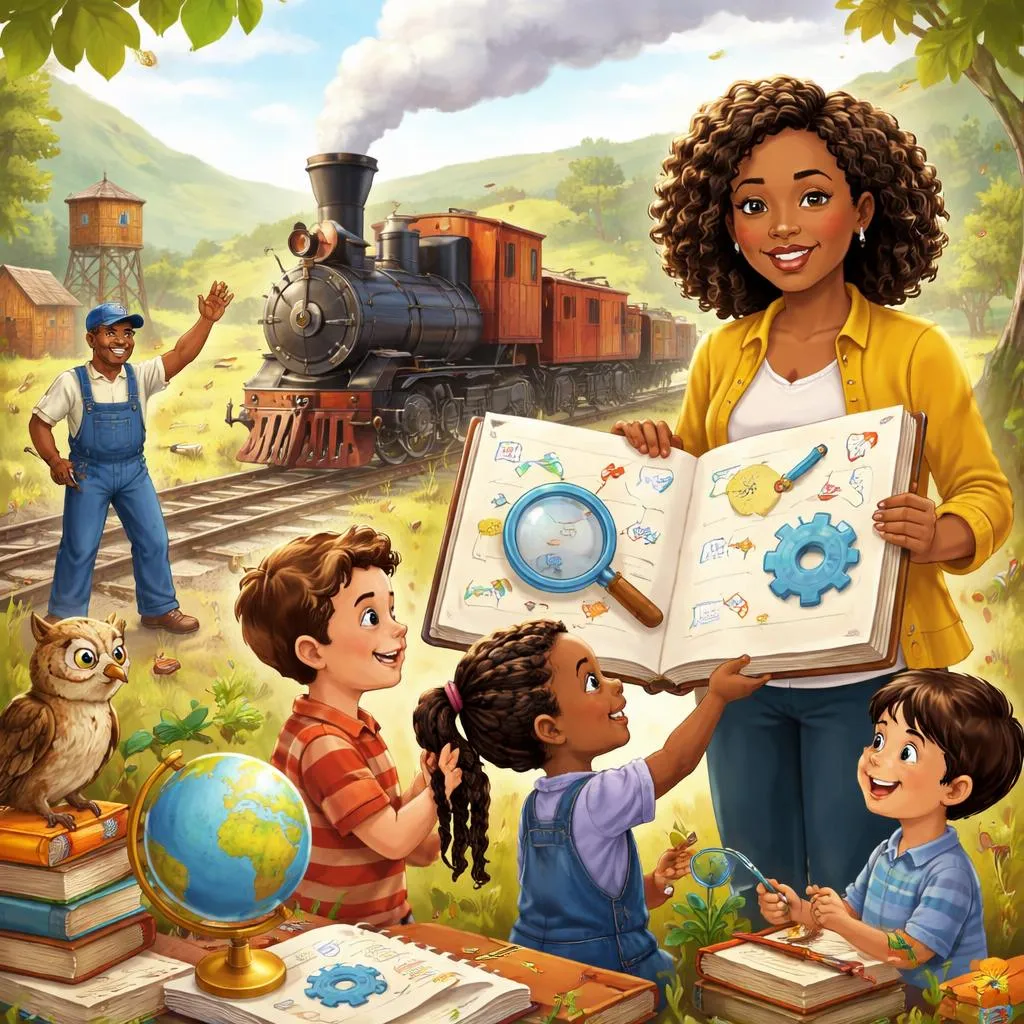

Hello, wonderful educators! Today we are exploring a classic American work song. The phrase "i be working on the railroad" appears in a beloved folk song. This song offers rich opportunities for learning. We will examine its meaning and historical context. We will explore vocabulary, phonics, and grammar points. We will also share engaging classroom activities. This guide will help you maximize this song's educational value. Let's discover together what this railroad worker can teach our students.
What Is the "I've Been Working on the Railroad" Song?
This is a traditional American folk song. It dates back to the late 19th century. The song describes the life of a railroad worker. It has a lively, energetic tune that children love. The lyrics tell about working on the railroad, passing time, and hearing whistles blow.
The song has several verses. Some versions include a yodeling section. Others include a part about Dinah blowing the horn. The song captures the spirit of railroad construction in American history. It connects music to social studies in meaningful ways.
The phrase "i be working on the railroad" uses non-standard grammar. This reflects historical speech patterns. It opens discussions about language variation and change.
The Lyrics of the Song
Let us review the complete traditional lyrics. The most common version goes like this:
I've been working on the railroad,
All the live-long day.
I've been working on the railroad,
Just to pass the time away.
Can't you hear the whistle blowing?
Rise up so early in the morn.
Can't you hear the captain shouting?
Dinah, blow your horn!
Dinah, won't you blow,
Dinah, won't you blow,
Dinah, won't you blow your horn?
Dinah, won't you blow,
Dinah, won't you blow,
Dinah, won't you blow your horn?
Someone's in the kitchen with Dinah,
Someone's in the kitchen I know.
Someone's in the kitchen with Dinah,
Strumming on the old banjo.
And singing, fee, fie, fiddle-dee-i-o,
Fee, fie, fiddle-dee-i-o-o-o,
Fee, fie, fiddle-dee-i-o,
Strumming on the old banjo.
Vocabulary Learning from the Song
This rhyme introduces several key vocabulary words. Let us explore each one carefully.
Railroad: This is a track with rails for trains. Trains carry people and goods. Railroads connected America across the country. This builds history connections.
Working: This means doing a job. People work to earn money. The song describes labor and effort. This builds career vocabulary.
Whistle: This is a loud sound made by blowing. Trains have whistles to warn people. The whistle blows at crossings. This builds transportation vocabulary.
Captain: This is a leader or boss. The captain gives orders on the railroad. Other workers follow instructions. This builds job title vocabulary.
Horn: This is another sound-making device. Dinah blows the horn. Horns signal important moments. This builds instrument vocabulary.
Kitchen: This is a room where people cook. Someone is in the kitchen with Dinah. This builds house vocabulary.
Banjo: This is a musical instrument. It has strings and a round body. People strum it to make music. This builds instrument vocabulary.
Phonics Points to Practice
The song offers excellent phonics opportunities. Let us focus on specific sounds.
The R Sound: Railroad starts with R. We can practice the /r/ sound. We can feel our tongue curl. We can think of other R words. Run, red, and rabbit are good examples.
The W Sound: Working starts with W. We can practice the /w/ sound. We can feel our lips round. We can think of other W words. Water, window, and wagon are good examples.
The WH Sound: Whistle starts with WH. This is a special sound. In some accents, it sounds like /hw/. We can practice other WH words. White, wheel, and whale are good examples.
The Long I Sound: I've and I contain the long i sound. We can practice other long i words. Ice, like, and time are good examples.
Rhyming Words: The song has rhyming patterns. Day and away rhyme. Morn and horn rhyme. Know and banjo rhyme. Recognizing rhymes builds reading readiness.
Grammar Patterns We Can Teach
The simple sentences in this song provide grammar lessons. Let us look at a few patterns.
Present Perfect Tense: The song begins with "I've been working." This is the present perfect continuous tense. It shows an action that started in the past and continues. We can explain this gradually to older students.
Questions: The song asks questions. "Can't you hear the whistle blowing?" "Dinah, won't you blow your horn?" This teaches question formation with negatives.
Commands: The song gives commands. "Dinah, blow your horn!" This is an imperative sentence. We use this form for requests and orders.
Non-Standard Grammar: The phrase "i be working" uses non-standard English. We can discuss how language varies in different times and places. Some dialects use "be" in this way. This builds language awareness.
Learning Activities for the Classroom
Let us explore activities that bring this song to life. These ideas work for various learning styles.
Activity 1: Railroad Worker Discussion
Talk about what railroad workers did. They laid tracks. They drove spikes. They maintained trains. They worked long hours. This builds history knowledge and appreciation for workers.
Activity 2: Train Whistle Sounds
Practice making whistle sounds with voices. Use high and low pitches. Create a pattern like a real train whistle. Two long blasts, one short, one long. This builds auditory discrimination.
Activity 3: Kitchen Band Instruments
Create simple instruments for the kitchen part. Use pots as drums. Use spoons as rhythm sticks. Use combs and paper as kazoos. Students play along with the Dinah section.
Activity 4: Banjo Craft
Make simple banjos from paper plates and rubber bands. Stretch rubber bands across the plate. Pluck them to make sounds. Sing the banjo part while playing. This builds fine motor skills and music connections.
Activity 5: Railroad History Timeline
Create a simple timeline of railroad history. First trains. Transcontinental railroad. Modern trains. Students place pictures in order. This builds sequencing and history understanding.
Printable Materials for Your Lessons
Visual supports enhance learning for young children. Here are some printable ideas.
Vocabulary Flashcards: Create cards for key words from the song. Include railroad, working, whistle, captain, horn, kitchen, banjo. Use simple pictures on one side. Write the word on the other side.
Railroad Scene Coloring Page: Create a coloring page showing a train on tracks. Add a worker nearby. Add a kitchen scene in a small house. Students color while listening to the song.
Train Whistle Pattern Cards: Create cards showing whistle patterns. Long, long, short, long. Students clap or sound out the patterns. This builds rhythm and pattern recognition.
Dinah's Kitchen Picture: Create a picture of a kitchen with someone playing banjo. Students can add details. They can draw Dinah and the visitor. This builds imagination and art skills.
Song Sequencing Cards: Create cards showing each part of the song. Working on railroad. Whistle blowing. Captain shouting. Dinah blowing horn. Kitchen with Dinah. Banjo playing. Students arrange in order.
Educational Games to Reinforce Learning
Games make learning fun and memorable. Here are some game ideas.
Game 1: Railroad Worker Says
Play a version of Simon Says. "Railroad worker says swing your hammer." "Railroad worker says lay down tracks." Students follow commands. This builds listening and following directions.
Game 2: Whistle Pattern Copy
Make whistle sounds in patterns. Students listen and copy the pattern. Start simple. Two short whistles. Long whistle. Short whistle. Increase complexity. This builds auditory memory.
Game 3: Dinah's Kitchen Charades
Act out actions from the kitchen section. Stirring a pot. Peeling potatoes. Strumming a banjo. Rolling dough. Students guess the action. This builds observation and vocabulary.
Game 4: Train Car Counting
Create paper train cars with numbers. Students arrange them in order. They count the cars. They can add cargo to each car. This builds counting and number skills.
Game 5: Railroad Vocabulary Bingo
Create bingo cards with song vocabulary. Railroad, whistle, captain, horn, kitchen, banjo. Call out definitions or pictures. Students cover matching words. First to cover a row wins.
Game 6: I've Been Working Memory Match
Create pairs of cards related to the song. One card shows a train. Its match shows tracks. One card shows a whistle. Its match shows a horn. Students find matching pairs.
Game 7: Dinah Says (Musical Chairs Variation)
Play the song. Students walk around. When the music stops, they freeze. Call out a character. "Dinah!" Students strike a pose like Dinah blowing a horn. This adds movement and character connection.
Game 8: Railroad Rhythm Band
Use rhythm instruments or body percussion. Play the song. Students keep the beat with instruments. Some play on the whistle parts. Some play on the banjo parts. This builds rhythm skills.
Game 9: What's That Sound?
Play recordings of different sounds. Train whistle. Banjo. Kitchen sounds. Hammering. Students identify each sound. This builds listening discrimination.
Game 10: Story Extension
Imagine what happens next in the song. Where does the train go? Who is in the kitchen? Why is someone playing banjo? Students create new verses. This builds creativity and language skills.
Game 11: Railroad Worker Tools
Show pictures of railroad worker tools. Hammer, spike, shovel, lantern. Name each tool. Students match tools to their uses. This builds vocabulary and practical knowledge.
Game 12: Geography Connection
Look at maps showing railroad routes. Find where students live in relation to railroads. Discuss how trains helped towns grow. This builds geography and history connections.
We have explored the rich learning potential of this classic folk song. The phrase "i be working on the railroad" opens many doors. We looked at vocabulary development carefully. We practiced letter sounds and phonics together. We explored grammar patterns clearly. We discussed historical context meaningfully. We shared engaging classroom activities for all. We created printable materials for practice. We played educational games for review. This integrated approach makes learning natural and fun. The song teaches about American history and workers' lives. It introduces musical concepts and instruments. It provides grammar discussions about language variation. Use these ideas in your classroom daily. Adapt them to your students' specific needs. Watch as your learners sing, create, and grow happily. The railroad worker's song will become a beloved part of your classroom. Its whistle will call your students to new learning adventures every single day.